Chicken Meal Prep Safety Calculator
How many times have you stared at your fridge after a big Sunday cook-up, wondering if that pile of chicken is still safe to eat on Thursday? You’re not alone. Meal prepping chicken for five days sounds smart-until you hear a rumor that cooked chicken only lasts three days. Or maybe you’ve had that weird smell creep up on day four and thought, was this a mistake?
The truth? You can meal prep chicken for five days. But not all methods work the same. Some people do it and end up with dry, rubbery meat. Others nail it every single week. The difference isn’t luck. It’s technique.
Why Chicken Falls Apart After Three Days (And How to Fix It)
Most people think the clock starts ticking the moment chicken leaves the oven. But the real issue isn’t time-it’s moisture loss and temperature abuse. When chicken cools slowly in the fridge, it loses steam. That steam carries flavor, juiciness, and protective bacteria-fighting properties. If you leave it out for too long before refrigerating, or if you pack it while it’s still steaming hot, you’re inviting condensation. That’s a breeding ground for spoilage.
Here’s what actually keeps chicken fresh for five days:
- Let chicken cool to room temperature within 90 minutes after cooking. No longer.
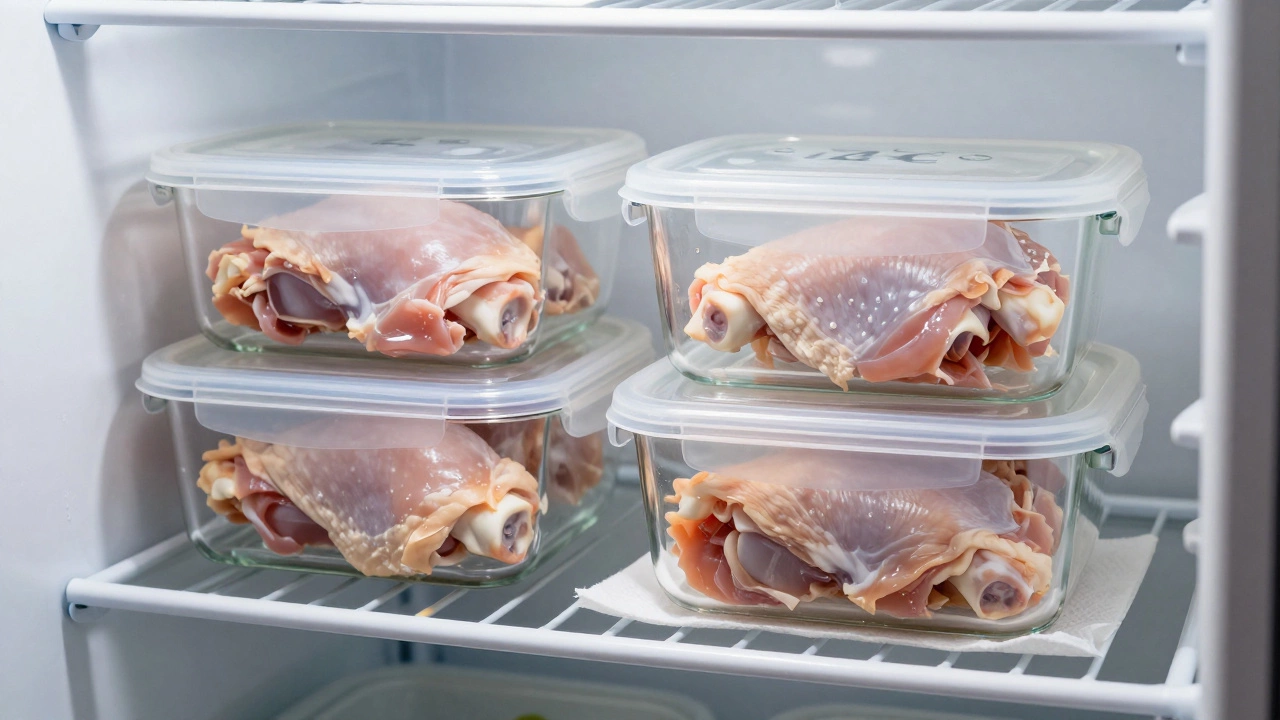
- Use shallow, airtight containers-not big deep tubs. The thinner the layer, the faster it chills evenly.
- Store it at or below 4°C. If your fridge runs warm, toss in a thermometer. Many home fridges sit at 7°C, which is too high.
- Don’t drench it in sauce. Wet marinades or heavy glazes break down the meat faster. Keep sauces separate.
These steps aren’t optional. They’re science. A 2023 study from the University of Pretoria’s Food Safety Lab showed that chicken stored this way stayed within safe bacterial limits for up to 72 hours-beyond that, it still looked fine but started losing texture. But with extra care, five days is totally doable.
The Best Chicken Cuts for 5-Day Meal Prep
Not all chicken is created equal. Boneless, skinless chicken breasts? They’re the most popular-but also the most fragile. They dry out fast. Thighs? Better. They have more fat, which acts like a natural moisture barrier.
Here’s what works best, ranked:
- Chicken thighs (boneless, skinless) - Highest success rate. Juicy even after reheating. Holds up well in sauces.
- Chicken drumsticks (bone-in, then deboned) - More flavor, better texture. Takes longer to cook, but worth it.
- Chicken breasts (with skin on, then removed after cooking) - Cook with skin to lock in moisture, then peel it off before storing.
- Boneless, skinless breasts (no tricks) - Only if you brine them first. Otherwise, expect chalky results by day four.
If you’re meal prepping for a family, buy thighs in bulk. They’re cheaper per pound, and you’ll waste less. In Durban, most butchers sell them at R65-R85 per kg-way better value than breasts at R120+.
How to Cook Chicken So It Lasts
Boiling? Roasting? Slow cooking? Grilling? Each method affects shelf life differently.
Here’s the method that works best for five-day prep:
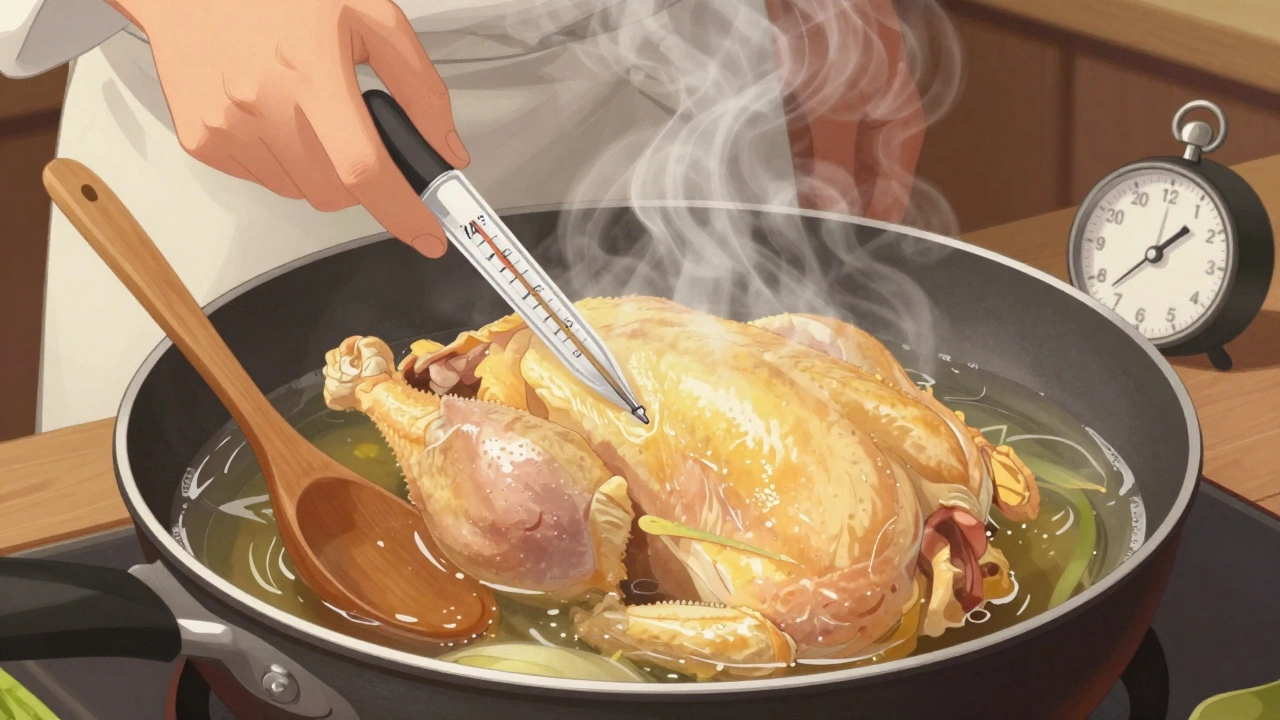
- Low-and-slow poaching - Bring water or broth to 75°C, then gently simmer chicken for 20-25 minutes. No boiling. This keeps moisture locked in. The chicken stays tender even after reheating.
- Use a thermometer - Pull chicken out at 74°C internal temp. Don’t guess. Overcooked chicken is dry chicken.
- Don’t over-season - Salt draws out moisture. Use herbs, garlic, smoked paprika. Avoid sugar-heavy rubs-they caramelize and turn sticky, which invites mold.
- Let it rest - After cooking, let chicken sit for 10 minutes before cutting. This lets juices redistribute. Skip this, and you’ll lose half the moisture.
One pro tip: Cook chicken in a single layer in a shallow pan with a lid. Steam builds up, keeping it moist. If you’re roasting, add a cup of water to the bottom of the pan. It’s like a mini steam oven.
Storage: The Real Secret
Here’s where most people fail. They use Ziploc bags. Or plastic tubs with loose lids. Or they stack containers too high, trapping heat.
Do this instead:
- Use glass containers with tight silicone seals. Glass doesn’t absorb odors, and you can see if anything’s off.
- Label each container with the date and time you cooked it. Write it with a dry-erase marker on the lid-it wipes clean.
- Store containers on the middle shelf of the fridge, not the door. Door temps swing too much.
- Place a paper towel under the chicken. It soaks up any excess liquid that forms. Change it daily if you’re checking.
Some people freeze portions after day three. That’s fine-but if you’re planning to eat it all within five days, refrigeration is better. Freezing changes texture. You lose that springy bite.
Reheating Without Turning It to Rubber
Nothing kills a good meal prep faster than microwaving chicken and getting a chewy, greasy mess.
Here’s how to reheat it right:
- Add a splash of water or broth to the container before microwaving. Cover with a damp paper towel. This creates steam.
- Heat in 30-second bursts. Stir or flip halfway. Don’t blast it on high.
- For best results, reheat in a covered skillet over low heat. Add a tablespoon of water, cover, and let it warm through slowly.
- Never reheat more than once. Once it’s been warmed, eat it. Don’t chill it again.
Pro tip: If your chicken feels dry after reheating, drizzle a teaspoon of olive oil or a squeeze of lemon juice on top. It revives flavor fast.
Signs Your Chicken Has Gone Bad (Don’t Risk It)
Five days sounds long, but it’s not magic. Spoilage doesn’t always smell like rot. Sometimes it’s subtle.
Check for these red flags:
- Slimy texture-even a slight sheen.
- Off smell: sour, ammonia-like, or just “off.” Not spicy, not smoky-just wrong.
- Discoloration: gray, green, or yellow patches.
- Excessive liquid pooling in the container.
If in doubt, toss it. No amount of seasoning can fix spoiled meat. And yes, it’s cheaper to buy fresh than to risk food poisoning.
Real-Life 5-Day Meal Plan Using Prepped Chicken
Here’s how one person in Durban uses prepped chicken over five days:
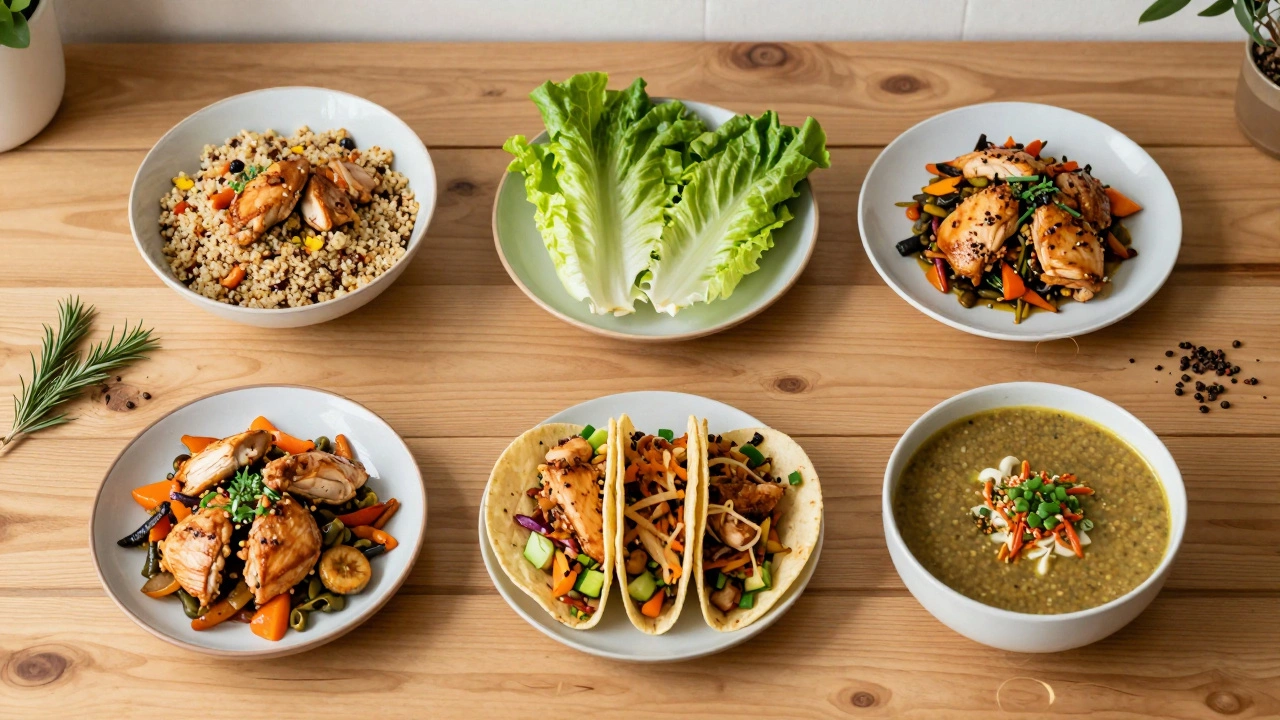
- Day 1 (Monday): Chicken + quinoa + roasted veggies + tahini dressing
- Day 2 (Tuesday): Chicken lettuce wraps with peanut sauce and shredded carrots
- Day 3 (Wednesday): Chicken + brown rice + stir-fried greens + soy-ginger glaze
- Day 4 (Thursday): Chicken tacos with corn tortillas, avocado, and lime
- Day 5 (Friday): Chicken soup with lentils, tomatoes, and spinach
Each meal uses the same chicken-just repurposed. No repeats. No boredom. And no waste.
What Doesn’t Work
Here are common myths that lead to failure:
- “I’ll just add vinegar to preserve it.” Vinegar doesn’t stop bacteria. It might add flavor, but it won’t extend shelf life.
- “I’ll freeze it on day three.” Freezing changes texture. You’ll lose the tender bite. Save freezing for week two.
- “I’ll prep it on Sunday and eat it all week.” Sunday prep means Friday is day five. That’s fine. But if you prep on Monday, Friday is day five. Same result. Timing doesn’t matter-storage does.
Meal prep isn’t about doing more. It’s about doing it right. Once you get the storage and reheating right, you’ll wonder why you ever ate takeout.
Can you meal prep chicken for 5 days safely?
Yes, you can safely meal prep chicken for five days if you cool it quickly, store it in shallow airtight containers at or below 4°C, and reheat it properly. The key is avoiding temperature abuse and moisture loss. Always check for sliminess, off smells, or discoloration before eating.
What’s the best chicken cut for 5-day meal prep?
Boneless, skinless chicken thighs are the best. They have more fat and connective tissue, which keeps them juicy through reheating. Chicken breasts dry out too fast unless you brine them first. Drumsticks work well too if you debone them after cooking.
How do you reheat meal prep chicken without drying it out?
Add a splash of water or broth to the container, cover with a damp paper towel, and microwave in 30-second bursts. Alternatively, reheat gently in a covered skillet with a tablespoon of water. Never reheat more than once. Adding a drizzle of olive oil or lemon juice after reheating can revive flavor.
Should you store chicken in Ziploc bags?
Not ideal. Plastic bags trap moisture and can leak. Use shallow glass containers with tight silicone lids. They keep air out, prevent odor transfer, and let you see the food clearly. Glass also cools faster than plastic.
Can you eat chicken after 5 days if it looks fine?
If it smells, looks, or feels off-even slightly-don’t eat it. Appearance isn’t always reliable. Bacteria like Listeria can grow without changing color or smell. When in doubt, throw it out. It’s cheaper than a hospital visit.