Fashion Sustainability: What It Really Means and How to Make It Work
When we talk about fashion sustainability, the practice of designing, producing, and consuming clothing in ways that reduce environmental harm and support fair labor. Also known as sustainable fashion, it’s not about buying less—it’s about buying better. Too many brands slap "eco-friendly" on a t-shirt and call it a win, but real sustainability means looking at the whole life cycle: where the cotton was grown, how much water was used, who stitched it, and what happens when you’re done with it.
It’s not just about materials. thrifting, buying secondhand clothing to extend its life and keep it out of landfills. Also known as secondhand shopping, it’s one of the most direct ways to fight fast fashion. And it’s not just for budget shoppers—people are choosing thrifted denim, vintage coats, and restored sneakers because they’re unique, well-made, and don’t require new resources. Then there’s the circular economy, a system where clothes are designed to be reused, repaired, or recycled instead of thrown away. Also known as closed-loop fashion, it’s the opposite of the "take, make, waste" model that dominates today. Brands that offer repair services, take-back programs, or use recycled polyester are starting to make this real—but you still have to dig to find them.
What you’ll find here aren’t idealistic rants or guilt trips. These are real stories from people who swapped fast fashion for smarter habits, broke down what "sustainable" actually means in a store, and figured out how to make eco-friendly choices without going broke. You’ll see how thrifting isn’t always the greenest option if you buy things you don’t need, how certifications can be misleading, and why the best sustainable garment might already be in your closet. No fluff. No jargon. Just what works.
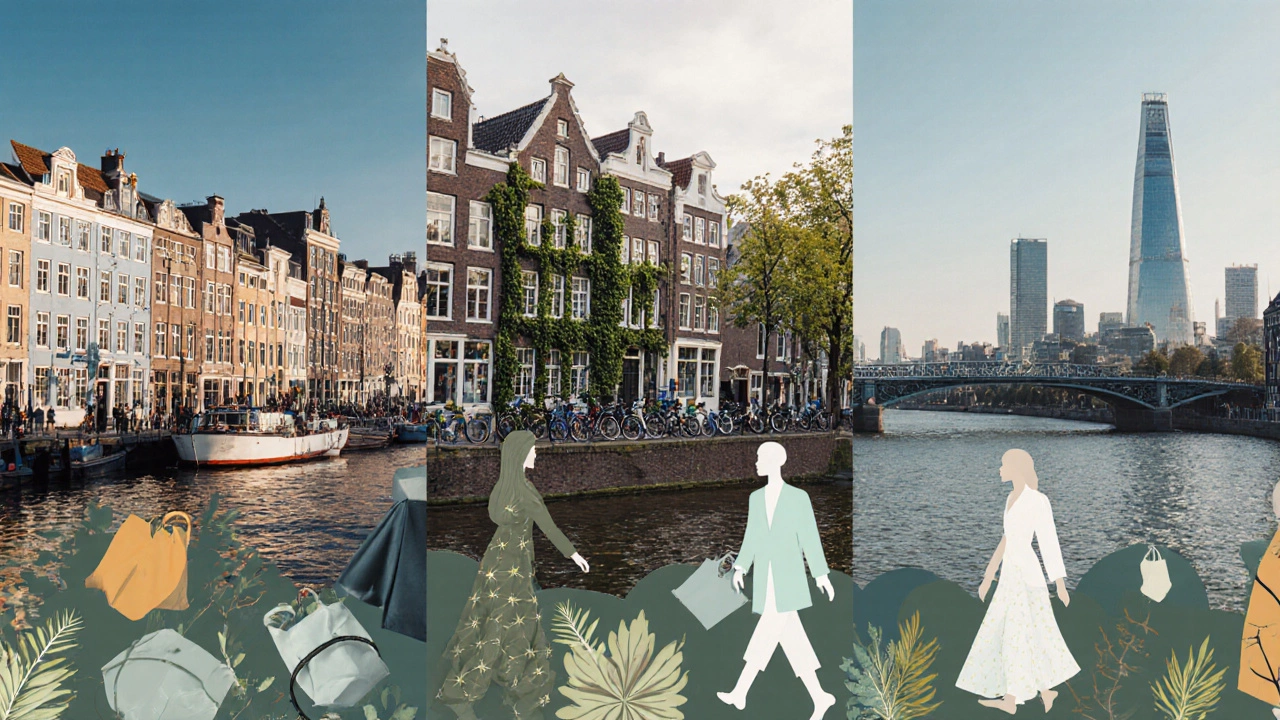
The Capital of Sustainable Fashion: Which City Leads the Eco‑Style Movement?
Explore why Copenhagen, Amsterdam, and London vie for the title of sustainable fashion capital, learn the criteria that define the lead, and discover how you can support the green‑style movement.