Green Consumerism: What It Really Means and How to Practice It
When you hear green consumerism, the practice of choosing products and services with lower environmental impact. Also known as sustainable consumption, it's not about perfection—it's about progress. It’s not just about buying a bamboo toothbrush or a reusable tote. Real green consumerism means asking: Where did this come from? Who made it? What happens when I’m done with it?
This isn’t just a trend. It’s a shift in how people interact with the economy. sustainable living, a lifestyle focused on reducing environmental harm through daily choices is built on small, repeated actions. Choosing secondhand over new, supporting local makers, skipping single-use packaging—these add up. And they’re not always expensive. Thrifting, for example, isn’t just trendy—it cuts waste and saves money. Meanwhile, eco-friendly, a term often misused by brands to sound green without real change. Also known as environmentally friendly, it only means something when backed by transparent practices. Look beyond the labels. A product labeled ‘eco-friendly’ might still be shipped halfway across the world in plastic. That’s not green. That’s greenwashing.
True green consumerism connects to bigger systems. It’s linked to sustainable fashion, an approach to clothing that values durability, ethical production, and circular reuse. Fast fashion drains resources and floods landfills. Buying less, repairing more, and choosing quality over quantity changes that cycle. It’s also tied to your carbon footprint, the total greenhouse gases produced by your daily activities. Every meal, every trip, every purchase adds to it. You don’t need to eliminate it—but you can reduce it, one smart choice at a time.
You’ll find real examples here—not theory, not ads. Articles that show how to tell if your thrifted clothes are truly helping the planet. How to spot greenwashing in product claims. How simple swaps in your kitchen, wardrobe, or routine make a measurable difference. No guilt trips. No perfection required. Just clear, practical steps that fit into real life. Whether you’re just starting out or already doing a lot, there’s something here that will help you go further.
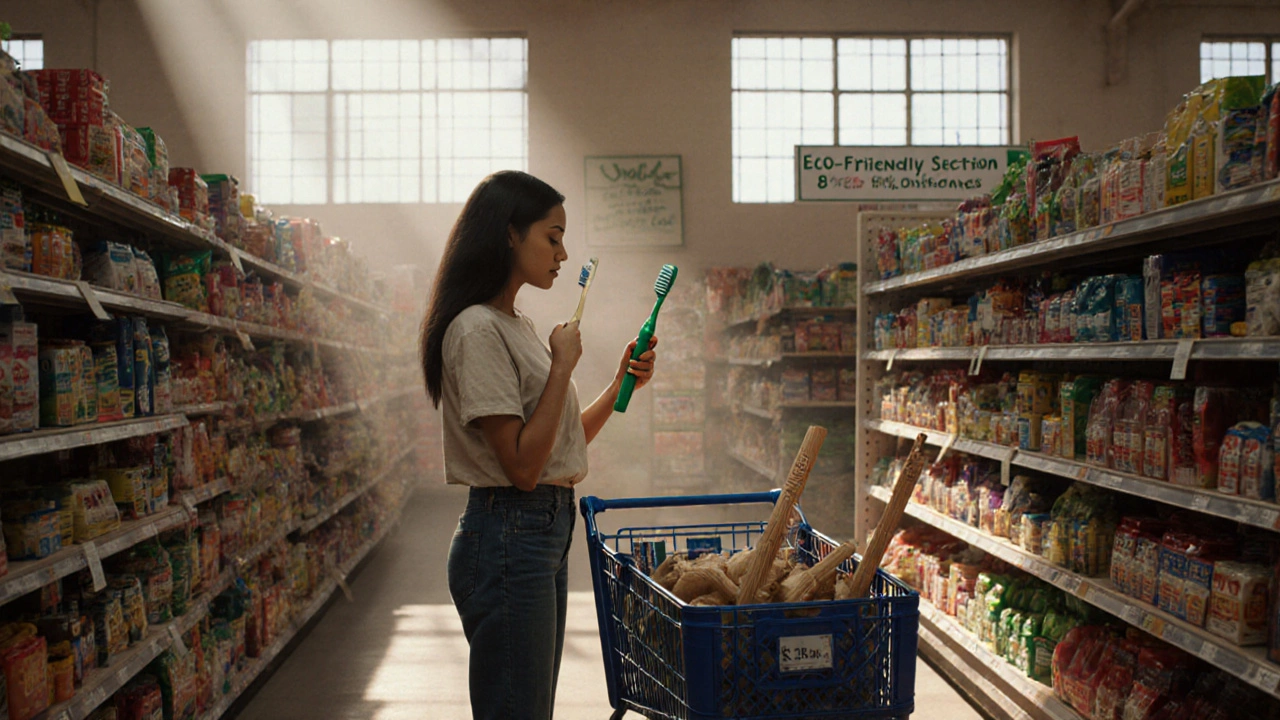
Do People Really Buy Eco-Friendly Products? The Truth Behind the Green Shopping Trend
Many say they want to buy eco-friendly products, but do they actually do it? This article explores the real buying habits behind green consumerism, price barriers, greenwashing, and who’s truly making the switch in 2025.