Mixing Skincare Products: What Works, What Doesn’t, and Why
When you mixing skincare products, combining active ingredients like retinoids, acids, and peptides in one routine. Also known as layering skincare, it can either transform your skin—or wreck it. Too many people throw on every new serum they buy, hoping for magic. But skin isn’t a smoothie blender. Some ingredients fight. Others cancel each other out. And some just irritate your skin barrier—something you can’t afford to break.
The skin barrier, the outermost layer of skin that keeps moisture in and irritants out is your first line of defense. When you overload it with vitamin C, niacinamide, and glycolic acid all at once, especially in the same step, you’re asking for redness, peeling, or worse. You don’t need to use everything. You need to use the right things, at the right time, in the right order. For example, retinoids, a class of vitamin A derivatives used to renew skin cells work best at night, away from acids. Mixing them with AHAs or BHAs? That’s a recipe for sensitivity. But pairing niacinamide, a calming, barrier-strengthening vitamin B3 derivative with zinc or hyaluronic acid? That’s a safe, powerful combo that helps with redness and dryness.
Then there’s the timing. Some ingredients need space between them. Others are designed to be layered. A 2023 study in the Journal of Clinical and Aesthetic Dermatology found that applying vitamin C before retinol reduced irritation by 40% compared to using them together. That’s not magic—that’s chemistry. Your skin doesn’t care about TikTok trends. It cares about pH levels, molecular stability, and how long ingredients sit on your skin before you add the next one. Even something as simple as waiting 10 minutes between steps can make a difference.
And don’t forget the base. A heavy moisturizer can lock in actives too well—especially if you’re using something like salicylic acid. It might sit on your skin too long and cause irritation. Or worse, it might not penetrate at all. Thin serums go first. Thick creams go last. That’s the golden rule. But even then, not all serums play nice. Retinol and benzoyl peroxide? Don’t mix. They break each other down. Hyaluronic acid and alcohol-based toners? The alcohol pulls moisture out, undoing the hydration.
What you’ll find in the posts below isn’t a list of products to buy. It’s a practical guide to what actually happens when you combine things. From the 7-day glowing skin routine that shows you how to layer safely, to the toner guide that tells you when to skip it entirely, these articles cut through the noise. You’ll see real examples of what works for different skin types, what to avoid if you’re sensitive, and how to build a routine that doesn’t leave you red, flaky, or confused.
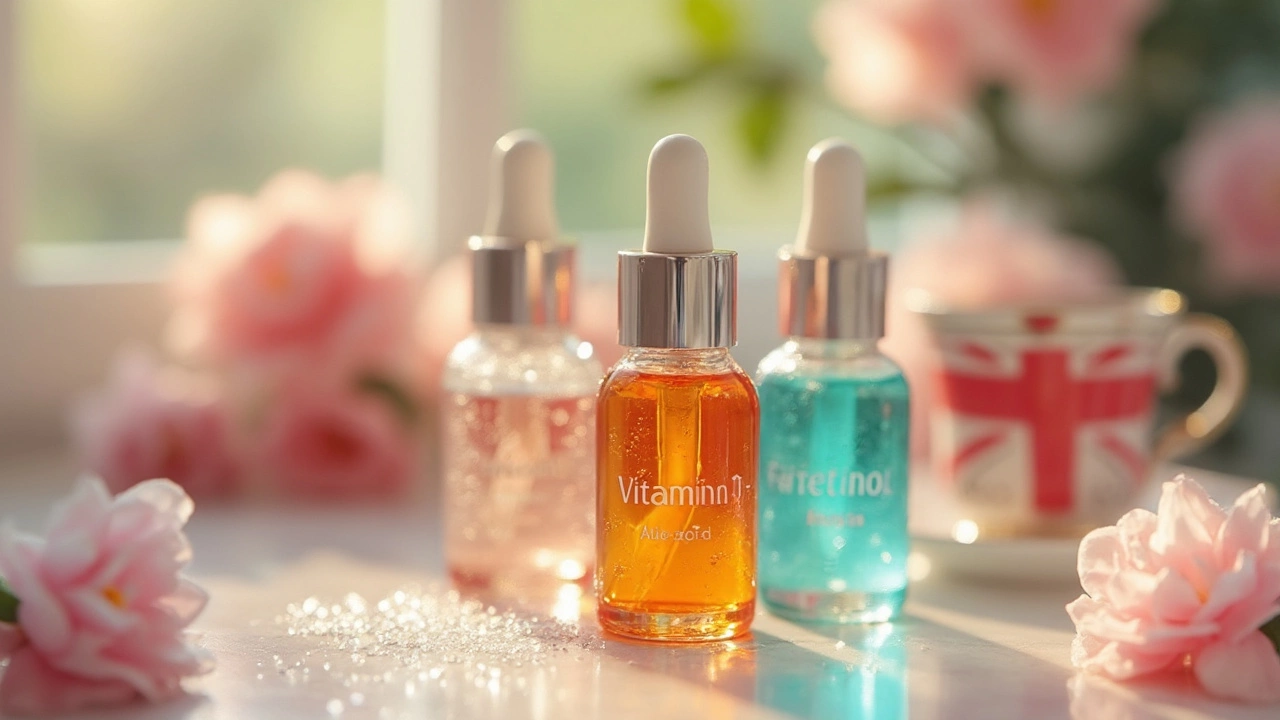
Can You Use Vitamin C, Hyaluronic Acid, and Retinol Together? Expert-Backed Guide
Curious about using vitamin C, hyaluronic acid, and retinol together? Get practical advice, safety tips, and facts for combining powerhouse ingredients for radiant skin.