Eco-House Cost Calculator
Calculate Your Eco-House Budget
Your Eco-House Estimate
Estimated Total Cost: R0
Monthly Utility Savings: R0
Cost Breakdown
Building a cheap eco-friendly house doesn’t mean you need to live in a tent or give up comfort. It means using smart choices-materials you can find locally, designs that work with nature, and systems that cut costs over time. In Durban, where summers are hot and rains are heavy, a well-built green home doesn’t just save money; it keeps you cool, dry, and safe without high electricity bills.
Start with the design, not the materials
The cheapest green house is the one you don’t have to heat or cool. That means design comes before bricks and solar panels. A simple rectangular shape with windows facing north (in the Southern Hemisphere) lets in winter sun to warm the house naturally. In summer, overhangs or deciduous vines block the high sun. Thick walls made from rammed earth or recycled bricks hold cool air inside longer. A well-placed cross-ventilation window on opposite sides pulls in breeze-no AC needed.Most people spend too much on fancy gadgets before fixing the basics. Skip the $10,000 smart thermostat if your house doesn’t have proper insulation or airflow. Start with passive design. It costs almost nothing but saves thousands later.
Use local, recycled, and natural materials
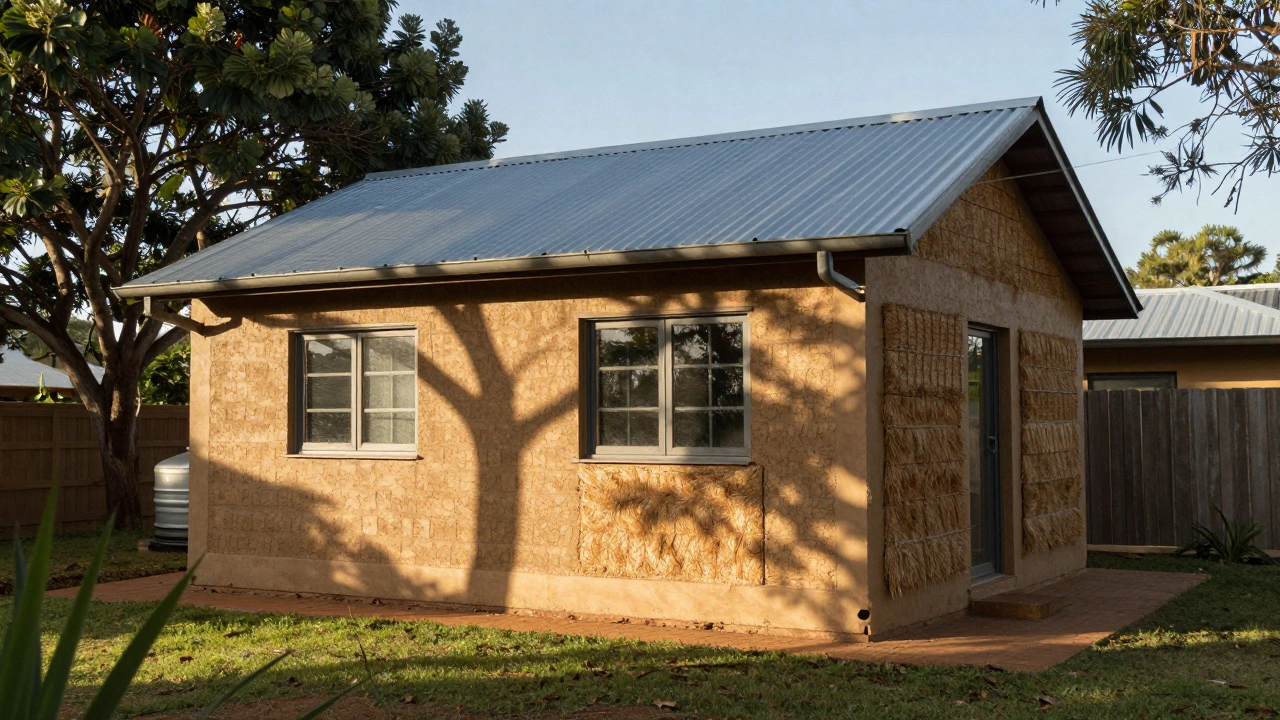
You don’t need imported bamboo or carbon-neutral steel to build green. In South Africa, you have options that are cheap, strong, and low-impact:- Rammed earth walls: Mix local soil with 5-10% cement, compact it in forms, and let it dry. It’s fireproof, lasts 100+ years, and costs about R300 per square meter. Many rural homes in KwaZulu-Natal use this.
- Recycled bricks: Salvage bricks from demolished buildings. Clean them, reuse them. They cost half the price of new ones and keep the character of old homes.
- Straw bale insulation: Buy unused bales from local farms. Stack them like bricks, plaster with lime or clay, and you’ve got insulation better than fiberglass. A 200m² house can be insulated for under R15,000.
- Recycled timber: Look for old railway sleepers, shipping pallets, or demolition wood. Sand and treat with linseed oil-no toxic varnishes needed.
These materials don’t need factories or long truck rides. They’re made by the land and the people around you. That cuts emissions and keeps money in your community.
Go solar, but start small
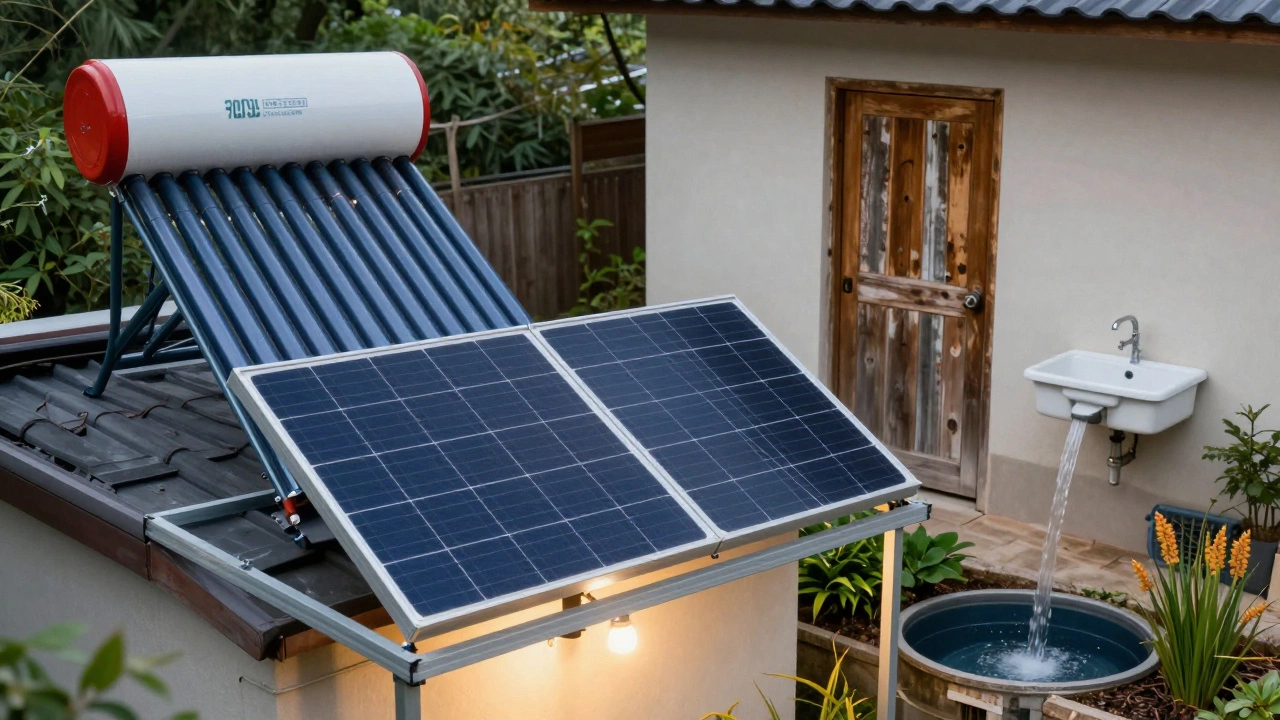
Solar panels aren’t cheap upfront, but you don’t need a full system to start saving. A single 300W panel with a 12V battery and charge controller can power LED lights, a phone charger, and a small fridge. That’s enough for basic needs while you save up for more.Look for second-hand panels from solar installers upgrading their systems. Many sell them for 60% off. A 1kW system (four panels) can be built for under R12,000. It won’t run your aircon, but it’ll cut your grid use by 40%.
Pair it with a 100L solar water heater. These cost R4,000-R6,000 and work even on cloudy days. No electric geyser means you’re saving R800-R1,200 a month on electricity.
Water is your next big saving
In Durban, water isn’t free. But you can collect it for almost nothing. Install a 5,000L rainwater tank under your roof gutter. Use a simple first-flush diverter (R500) to clean the first rainwater that carries dust and leaves. Then, pipe it into a gravity-fed system for flushing toilets and watering the garden.Greywater from your sink or shower can go to the garden with a basic filter (sand and gravel in a bucket). No pumps needed. A 2023 study by the University of KwaZulu-Natal showed that households using rainwater and greywater cut municipal water use by 70%.
Don’t buy expensive low-flow taps. Just install aerators-they cost R80 each and cut water use by half without changing how it feels.
Build it yourself, or with neighbors
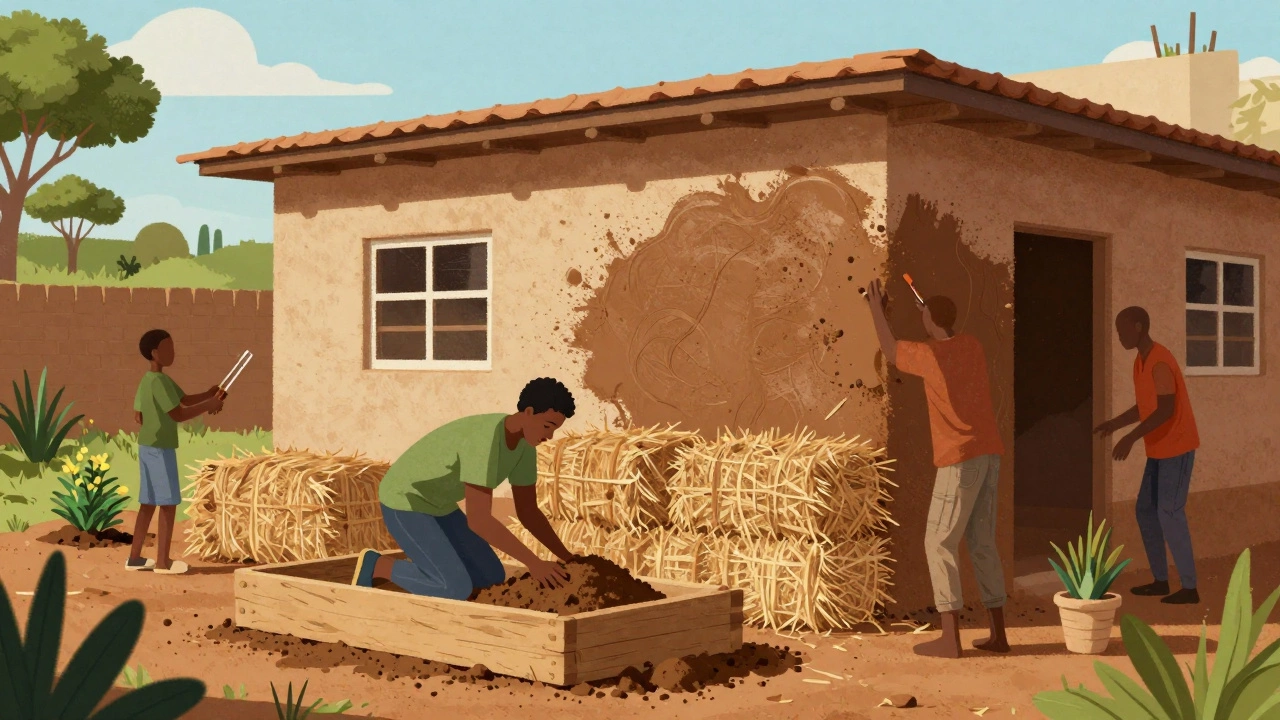
Labor is the biggest cost in most homes. You can save 30-50% by doing the work yourself. Start small: build a compost toilet, lay a gravel path, plant native trees around the house for shade.Organize a “build day” with friends. Swap skills: one person welds, another mixes plaster, someone else knows how to lay bricks. In rural communities, this is called ubuntu building-helping each other, not paying contractors. You’ll learn, you’ll save, and you’ll build something that lasts.
Avoid these expensive green traps
Not everything labeled “eco-friendly” is worth it:- Green roofs: Beautiful, but expensive. They need special waterproofing, drainage, and maintenance. Skip unless you’re building a luxury home.
- Smart home systems: Wi-Fi thermostats, automated blinds-they use power and break often. Stick to manual, simple controls.
- Imported recycled plastic lumber: It looks nice, but it’s made in China, shipped halfway across the world, and costs 3x local timber. Use reclaimed wood instead.
- Zero-energy claims: A house that claims to use no grid power usually needs huge battery banks. Those cost R100,000+ and last only 5-7 years. Aim for low-energy, not zero-energy.
What a real cheap eco-house looks like
Here’s what a 70m² home in Empangeni, built in 2024, actually cost:- Land: Already owned
- Walls: Rammed earth (R18,000)
- Roof: Corrugated steel from scrap yard (R6,500)
- Insulation: Straw bales (R12,000)
- Windows: Salvaged double-glazed (R7,000)
- Solar: 1kW system + battery (R11,000)
- Solar water heater (R5,000)
- Rainwater tank (R3,500)
- Plumbing and fixtures: Recycled (R4,000)
- Labour: Self-built (R0)
Total: R67,000. That’s less than the cost of a new car. Monthly bills? Under R500 for water and a little grid power. No debt. No rent. Just a home that breathes with the climate.
Start now, not next year
You don’t need permission to build better. Start with one thing: plant a row of indigenous trees on the west side of your property. They’ll shade your walls in summer. Next month, install a rainwater diverter. In six months, you’ll have saved money and learned how to do more.Green building isn’t about perfection. It’s about progress. One recycled brick at a time.
Can I build an eco-friendly house without a permit in South Africa?
No. All permanent structures, even small ones, need municipal approval. But small outbuildings under 10m² (like a compost toilet or storage shed) often don’t. Check with your local council-many offer free advice for eco-builders. Skip permits, and you risk fines or being forced to tear it down.
How long does it take to build a cheap eco-house?
If you’re doing it yourself with help, a 70m² home can be built in 3-6 months. Rammed earth walls dry slowly, so plan for 2-3 weeks per wall. Roofing and windows go fast. Most people underestimate drying times for natural materials. Build in the dry season-winter in Durban is ideal.
Are eco-houses safe in storms or fires?
Yes, if built right. Rammed earth and brick walls resist fire better than wood. Straw bales, when properly plastered, are fire-resistant-tested to hold 2 hours of flame. For storms, use steel roofing with proper fasteners and anchor walls to a solid foundation. A well-built eco-home is often stronger than a standard brick-and-tile house.
Can I get government grants for eco-building in South Africa?
There are no national grants for private eco-homes yet. But some municipalities, like Cape Town and eThekwini (Durban), offer rebates for solar water heaters or rainwater tanks. Check with your local council’s environmental department. Some NGOs also run workshops or small funding programs for low-income builders.
What’s the biggest mistake people make when building cheap eco-homes?
Trying to do everything at once. People buy solar panels, buy fancy insulation, install a green roof-and run out of money before finishing the walls. Build in stages. Focus on shelter first: walls, roof, and rainwater. Then add energy and water systems. A simple, finished home is better than a half-built dream.
If you’re ready to start, grab a notebook. Walk your land. Note where the sun rises and sets. Count how many trees you can plant. Visit a salvage yard. Talk to a local farmer about straw. Your eco-house isn’t out there-it’s already here, waiting for you to begin.