
Weight Loss Calculator
Daily Input
Exercise Results
Tips will appear here based on your results
People ask this question all the time: Is 30 minutes of working out daily enough to lose weight? The answer isn’t yes or no-it’s "it depends." You can lose weight with just 30 minutes a day, but only if you’re doing the right kind of movement, eating the right amount of food, and staying consistent. It’s not about how long you sweat-it’s about how hard you work, what you do after you finish, and whether your body is actually in a calorie deficit.
What happens in 30 minutes of exercise?
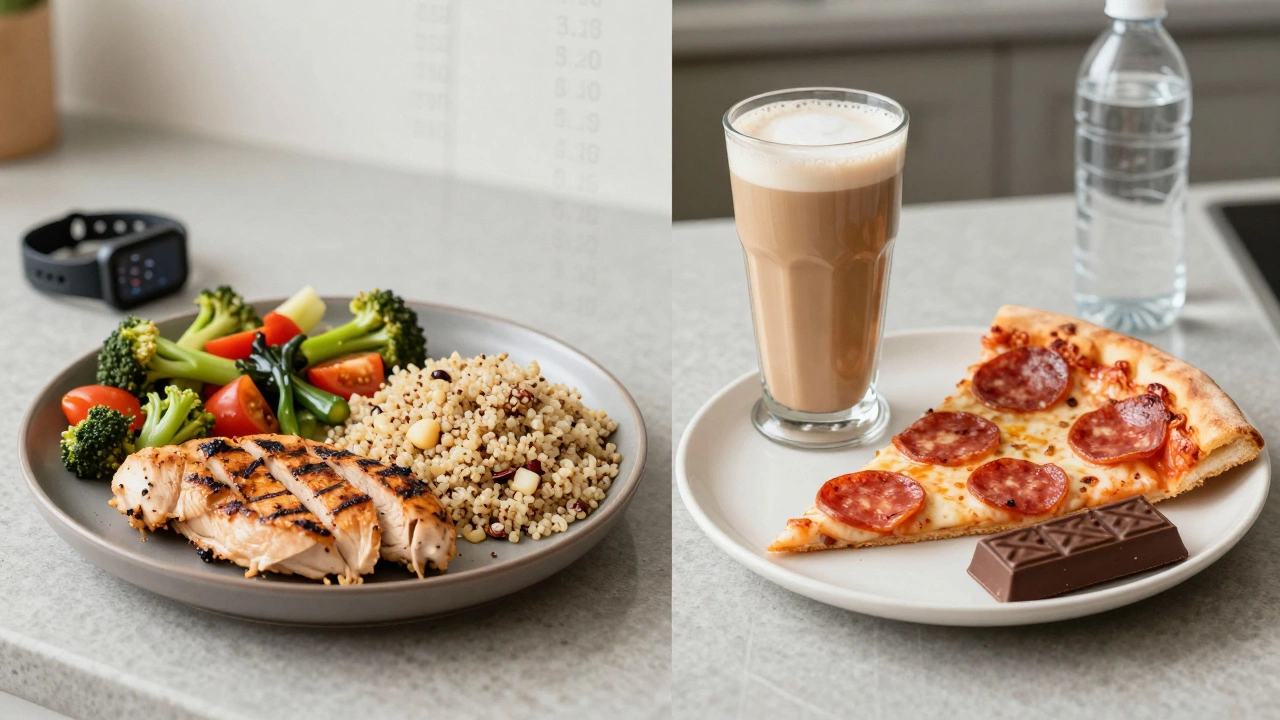
Thirty minutes of moderate-intensity exercise, like brisk walking or cycling, burns about 150 to 250 calories for most adults. If you go harder-say, high-intensity interval training (HIIT), bodyweight circuits, or jumping rope-you can burn 250 to 400 calories in that same time. That’s not a huge number when you think about it. A single large latte with whole milk and syrup? That’s 300 calories. A slice of pepperoni pizza? Around 280. One small chocolate bar? 200.
So if you’re burning 300 calories during your workout but then eat a lunch that adds back 500, you’re not losing weight. You’re just exercising to feel good, not to drop pounds. Weight loss happens when you burn more than you consume. That’s the only rule that never changes.
Can you lose weight with just 30 minutes a day?
Yes, but only if you pair it with smart eating. People who lose weight successfully with short workouts usually don’t just rely on exercise. They cut out sugary drinks, stop mindless snacking, eat more protein and fiber, and track their portions. One study from the University of Copenhagen followed 60 overweight adults for 12 weeks. Half did 30 minutes of moderate exercise daily. The other half did 60 minutes. Both groups lost the same amount of weight-about 7 pounds-because both stuck to the same calorie-controlled diet. The extra 30 minutes didn’t help. The diet did.
That’s the key insight: exercise supports weight loss, but it doesn’t drive it. Your kitchen is the real battlefield.
What kind of 30-minute workouts work best?
If you’re short on time, you need workouts that pack a punch. Steady-state cardio like walking or slow cycling won’t cut it if your goal is fat loss. You need movement that spikes your heart rate and keeps your metabolism elevated after you’re done.
- HIIT circuits: 30 seconds of burpees, 30 seconds of rest. Repeat 8 rounds. That’s 8 minutes of work. Add squats, mountain climbers, and push-ups, and you’ve got a full 30-minute session that burns more than 300 calories.
- Bodyweight strength circuits: Do 4 rounds of 12 squats, 10 lunges per leg, 15 plank shoulder taps, and 12 glute bridges. Rest 30 seconds between rounds. This builds muscle, which helps you burn more calories even when you’re sitting.
- Jump rope: Just 10 minutes of jumping rope burns as much as 30 minutes of jogging. Do three 10-minute sets with 1-minute breaks in between.
These workouts don’t require equipment. But if you have a pair of dumbbells, a resistance band, or a yoga mat, you can make them even more effective. You don’t need a gym. You just need intensity.
Why muscle matters more than you think
When you lose weight, you don’t just lose fat. You also lose muscle-unless you train to keep it. Losing muscle slows your metabolism. That means you burn fewer calories every day, even at rest. That’s why people hit plateaus. They lose weight, then stop losing-even though they’re still working out 30 minutes a day.
Strength training during your 30 minutes changes that. Lifting weights or doing bodyweight resistance builds muscle. Muscle tissue burns 5 to 10 calories per pound per day just to stay alive. Fat burns almost nothing. So if you gain 5 pounds of muscle and lose 5 pounds of fat, your body starts burning 25 to 50 extra calories daily. That’s like eating one less cookie every day-without even trying.
That’s why a 30-minute routine with weights or resistance is better than 30 minutes of walking for long-term weight loss. You’re not just burning calories during the workout. You’re turning your body into a more efficient fat-burning machine.
What most people get wrong
Most people think if they exercise, they can eat whatever they want. That’s a trap. A 30-minute workout doesn’t give you a free pass to eat a whole pizza or two donuts. You can’t out-exercise a bad diet. Ever.
Another mistake? Doing the same workout every day. Your body adapts. After 3 to 4 weeks, you burn fewer calories doing the same routine. You need to keep challenging yourself. Increase reps. Shorten rest. Add weight. Change the order. Even small tweaks keep your metabolism guessing.
And then there’s recovery. If you’re exhausted, stressed, or sleeping less than 6 hours a night, your body holds onto fat. Cortisol, the stress hormone, tells your body to store energy. So pushing through 30 minutes of exercise while running on fumes might actually make weight loss harder.
Realistic expectations
With 30 minutes of intense daily exercise and a balanced diet, you can expect to lose about 0.5 to 1 pound per week. That’s not fast. But it’s sustainable. Most people who lose weight quickly gain it back because they starved themselves or worked out for hours every day. That’s not a lifestyle. It’s a punishment.
Slow, steady loss means you’re more likely to keep it off. You learn how to eat without feeling deprived. You build habits that last. And you don’t burn out.
One woman in her 40s started with 30 minutes of bodyweight HIIT every morning before work. She cut out soda and started eating eggs for breakfast. In three months, she lost 14 pounds. She didn’t join a gym. She didn’t buy fancy equipment. She just moved better and ate smarter.

What you need to start
You don’t need a treadmill, a Peloton, or dumbbells that cost $200. Here’s what you actually need:
- A timer (your phone works)
- A mat or towel for floor work
- Two water bottles or a pair of light dumbbells (if you have them)
- A clear plan (even a simple 5-exercise circuit)
Download a free 30-minute HIIT app, or just follow a YouTube video. Do it five days a week. Rest or walk on the other two. That’s it.
When 30 minutes isn’t enough
There are times when 30 minutes won’t be enough:
- If you’re carrying over 50 pounds of excess weight and want to lose it fast
- If you have a very high daily calorie intake (like 3,000+ calories)
- If you’re training for an event and need to improve fitness, not just lose fat
In those cases, you’ll need to add more movement-maybe two 30-minute sessions, or add walking after meals. But even then, diet still matters more.
Final answer: Yes-but only if you do it right
Thirty minutes a day is absolutely enough to lose weight. But only if you’re working hard enough during those minutes, eating with awareness, and staying consistent for months, not weeks. It’s not about the clock. It’s about the effort. It’s about the food. It’s about showing up even when you don’t feel like it.
Start small. Move with purpose. Eat with intention. And don’t let anyone tell you that you need more time. You just need better habits.
Can I lose weight with just walking 30 minutes a day?
You can, but it’s slow. Walking burns about 150 calories in 30 minutes for most people. To lose one pound a week, you need a 3,500-calorie deficit. That means you’d need to cut 200 calories from your diet every day on top of walking. It’s possible, but combining walking with light strength training and better eating will give you faster, more lasting results.
Do I need equipment for a 30-minute home workout?
No. Bodyweight exercises like squats, push-ups, lunges, and planks are all you need to start. Dumbbells or resistance bands help you get stronger faster, but they’re not required. Many people lose weight using only a yoga mat and their own body.
Why am I not losing weight even though I work out 30 minutes every day?
You’re probably eating more than you think. Track your food for a week with a free app like MyFitnessPal. You might be surprised how many hidden calories are in snacks, drinks, or "healthy" meals. Also, are you pushing yourself during workouts? If you’re not out of breath or sweating, you’re not working hard enough.
Is it better to do 30 minutes every day or 60 minutes three times a week?
For weight loss, daily movement is better than longer, less frequent sessions. Daily activity keeps your metabolism active, helps control hunger, and builds consistency. A 30-minute daily workout is easier to stick with than a 60-minute one you skip because you’re tired. Consistency beats intensity every time.
How long until I see results from 30 minutes of daily exercise?
You’ll start feeling stronger and more energetic in 2 to 3 weeks. Visible fat loss usually takes 4 to 8 weeks, depending on your starting point and diet. Don’t wait for the scale. Take progress photos and notice how your clothes fit. Muscle gain can hide fat loss on the scale, but your body will change.