Fast Fashion Impact: What It Really Does to People, Planet, and Your Wallet
When you buy a $10 t-shirt, you’re not just getting a piece of clothing—you’re participating in a system that fast fashion impact, the environmental and social damage caused by mass-produced, low-cost clothing designed to be worn once or twice. Also known as disposable fashion, it thrives on speed, low wages, and waste. This isn’t a distant problem. It’s in your closet, your local landfill, and the rivers near factories that pump dye into water supplies.
The clothing waste, the massive volume of discarded garments that end up in landfills or are incinerated each year is staggering. Over 90% of unwanted clothes don’t get recycled—they’re shipped overseas, burned, or buried. Meanwhile, ethical clothing, garments made under fair labor conditions with minimal environmental harm still feels like a niche choice, not a standard. Why? Because fast fashion makes it easy to ignore the cost. You don’t see the worker stitching your hoodie for $2 a day. You don’t see the chemical runoff turning a river orange. You just see the sale tag.
And here’s the twist: fast fashion impact isn’t just about the planet. It’s about your money. Buying more, cheaper clothes doesn’t save you—it costs you more in the long run. A $5 shirt that falls apart after two washes is more expensive than a $40 one that lasts five years. It’s also about your mental space. Constantly chasing the next trend drains your time, energy, and peace of mind. That’s why so many people are starting to ask: Do I really need this? The posts below don’t preach. They show you what’s really happening—from the factories to the landfill—and how real people are pushing back, one thoughtful purchase at a time.
You’ll find stories about why people are ditching fast fashion, how to spot greenwashing when it’s hiding in plain sight, and what actually makes a garment sustainable—not just labeled as such. There’s no magic solution, but there are clear patterns. And if you’ve ever wondered why your drawer is full but you still feel like you have nothing to wear, you’re not alone. The answers are here.
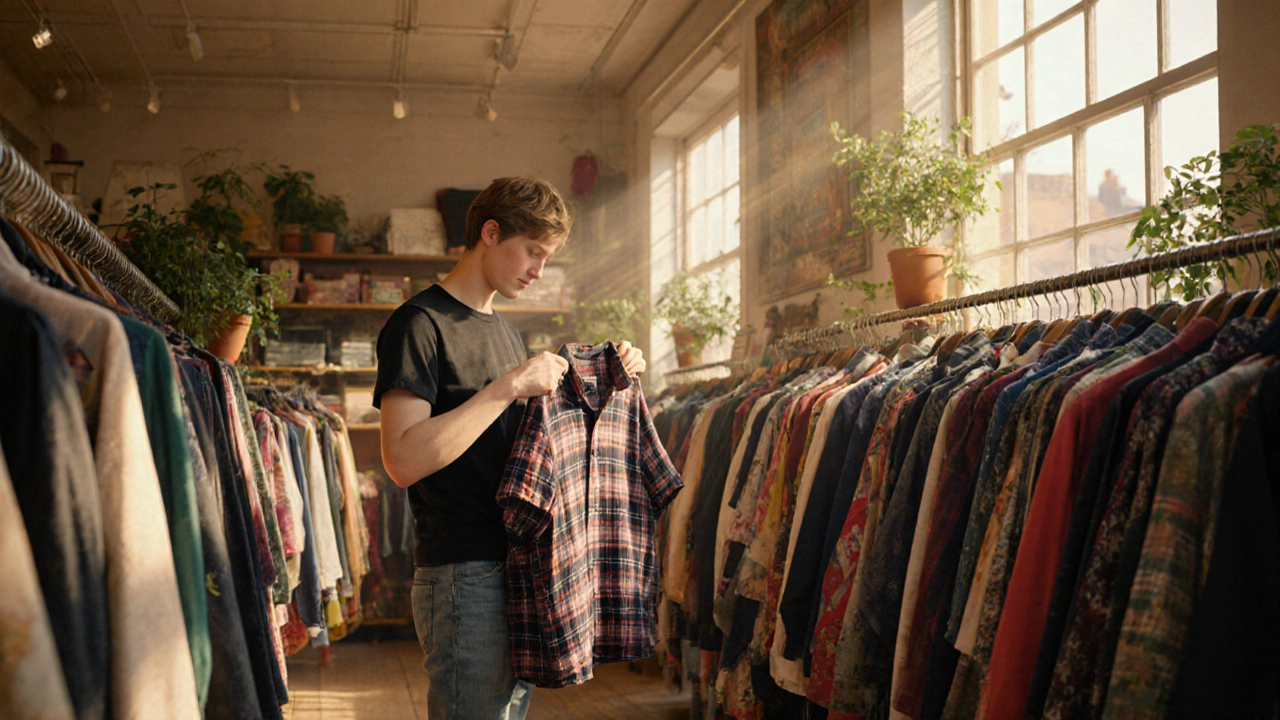
Thrifting and Sustainable Fashion: Is Buying Secondhand Really Eco‑Friendly?
Explore whether thrifting truly counts as sustainable fashion, learn the environmental pros and cons, and get practical tips to make secondhand shopping eco‑friendly.