Suitcase Food Restrictions
When you’re packing for a trip, suitcase food restrictions, the rules that govern what edible items you can carry in your luggage on a flight. Also known as airline food rules, they’re not just about liquids—they cover everything from cheese to sandwiches, nuts to homemade sauces. These rules exist for safety, hygiene, and border control, and they vary slightly depending on where you’re flying from and to. But if you’re flying out of the UK or into the EU, US, or Canada, the core guidelines are mostly the same.
Let’s break it down simply. Solid foods like bread, fruit, sandwiches, and snacks like granola bars or jerky? Almost always fine in your checked or carry-on bag. But anything that’s liquid, gel, or paste—like jam, peanut butter, yogurt, or soup—falls under the 100ml rule for carry-ons. That means if you want to bring a jar of honey or a tub of hummus in your hand luggage, it has to fit in a clear plastic bag, and each container must be 100ml or less. If you’re packing more than that, stick it in your checked suitcase. And yes, that includes baby food and medication—those get special handling, but you still need to declare them.
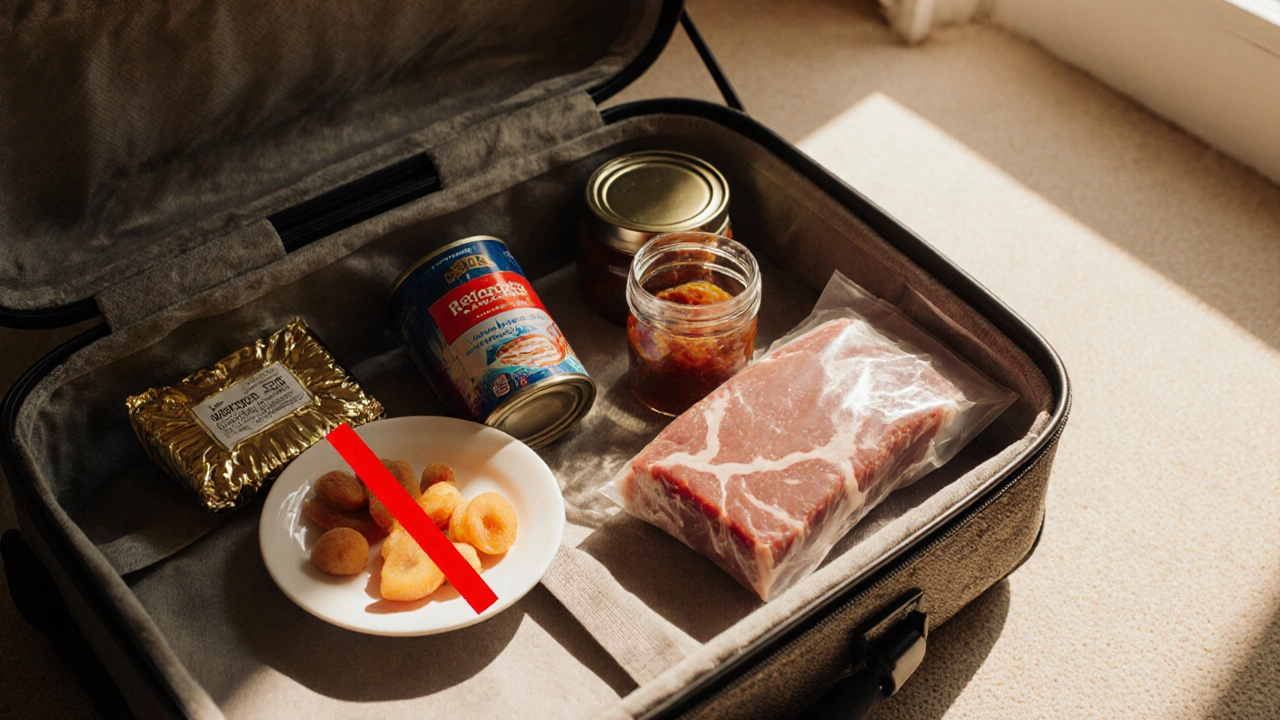
Here’s what trips people up: fresh produce. Apples? Usually okay. Oranges? Fine. But if you’re flying internationally, especially into the US, Australia, or parts of Europe, some fruits and vegetables are banned outright to stop pests and diseases. Same goes for meat, dairy, and eggs. Even if it’s vacuum-sealed or packaged, customs officers can and will confiscate it. No exceptions. And don’t assume your airline knows the rules—they don’t. It’s your job to check the destination country’s agricultural restrictions before you pack.
Then there’s the smell factor. Strong-smelling foods like blue cheese, durian, or spicy curries might be allowed, but they’ll make your fellow passengers miserable. Airlines have no rule against them, but they’ll ask you to repack or even refuse boarding if the odor is overwhelming. Think about it: you’re in a sealed tube at 35,000 feet. No one wants to eat next to a jar of kimchi.
What about leftovers? Leftover pasta or rice? Fine in checked bags. But if you’re trying to bring it back home, customs might ask if it contains meat or dairy. If it does, you’re likely out of luck. Same with baked goods from abroad—cookies and cakes? Usually fine. But if they contain unapproved meat or dairy fillings, they’ll get tossed.
And don’t forget the airport security scanners. A block of cheese might look like plastic explosives on the X-ray. A jar of nut butter could trigger a manual search. That’s why it’s smarter to pack food in clear containers, label them, and keep them easily accessible. If you’re unsure, leave it behind. You can always buy local snacks at your destination.
These suitcase food restrictions aren’t meant to ruin your trip—they’re meant to protect crops, animals, and public health. But they’re also not always clear. That’s why so many people end up throwing out perfectly good food at security or paying for it to be shipped home later. The key is knowing what’s allowed before you pack. Whether you’re bringing snacks for the plane, a picnic for the beach, or a gift for a friend, there’s a way to do it right.
Below, you’ll find real advice from people who’ve been there—what they packed, what got confiscated, and how they learned the hard way. No fluff. Just the facts you need to avoid the mess.
Flying to England with Food: What’s Allowed in Your Suitcase?
Learn what food you can pack in your suitcase for a trip to England, including allowed items, prohibited foods, declaration tips, and common pitfalls.