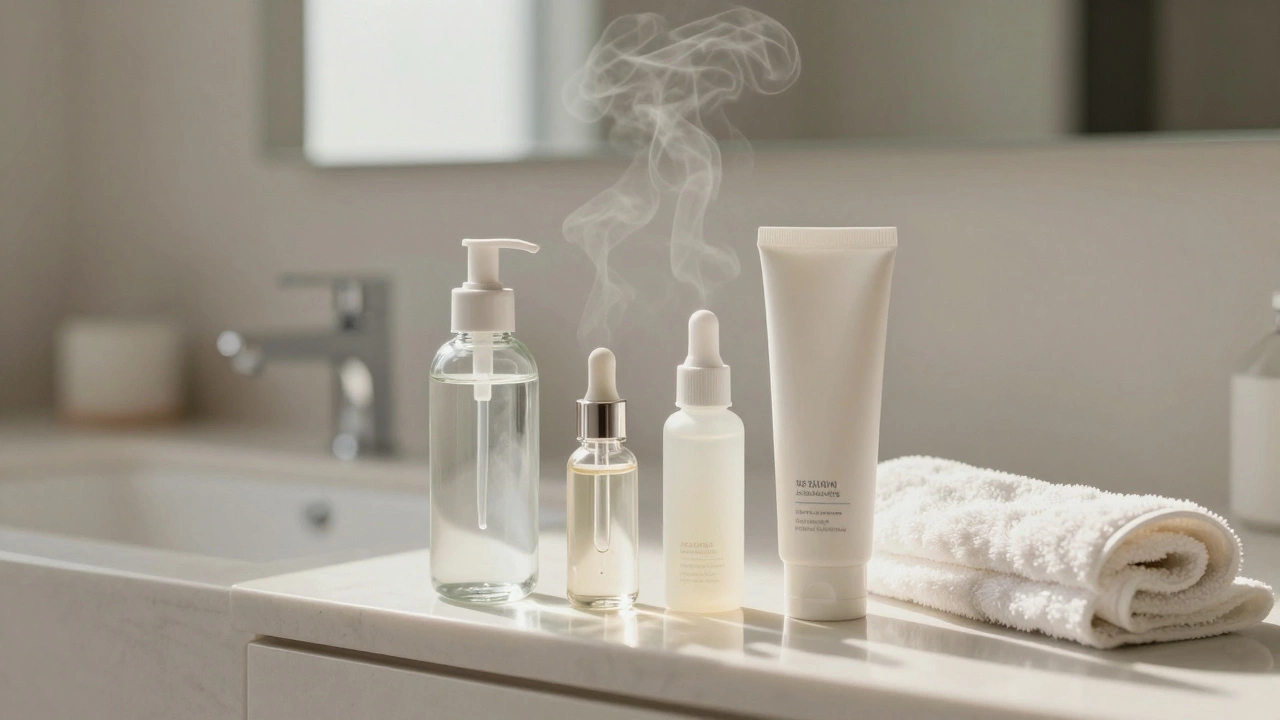
Skincare Order Checker
Select Your Products
Choose which products you're using in your routine
Results
Select products and click 'Check Order' to see your sequence
Ever dumped five products on your face at once, only to wonder why your skin still feels greasy, irritated, or breakouts keep showing up? You’re not alone. Most people mess up their skincare routine not because the products are bad, but because they’re applied in the wrong order. The truth? skincare order matters more than the price tag on your serum.
Your skin isn’t a sponge. It’s a layered barrier that needs each product to do its job before the next one comes in. If you slap on a thick cream before a thin toner, that toner can’t penetrate. If you use a retinol right after an exfoliant, you risk irritation. It’s not magic-it’s science. And once you get the sequence right, your skin starts to respond in ways you didn’t think possible.
Why Order Matters
Think of your skin like a house. You wouldn’t paint the walls before fixing the foundation, right? Same logic applies here. Skincare products have different textures and active ingredients that work best when applied from thinnest to thickest, and from most active to least. Water-based formulas go first because they can slip through pores. Oils and creams sit on top to seal everything in.
Also, some ingredients need time to activate. Vitamin C, for example, needs to absorb into the skin before you layer on sunscreen. Retinol works best on clean, dry skin-slathering on moisturizer first can reduce its effectiveness or cause redness. Skipping the right sequence doesn’t just waste product. It can actually make your skin worse.
Morning Skincare: Protect and Prep
Your morning routine is about defense. You’re waking up to pollution, UV rays, and environmental stressors. Here’s what works:
- Cleanse - Use a gentle, water-based cleanser. No need to scrub hard. Just remove overnight oil and sweat. If you didn’t sweat or wear makeup, a splash of water is fine.
- Toner or Essence - Not mandatory, but helpful. A hydrating toner (alcohol-free) preps your skin to absorb what comes next. Look for ingredients like hyaluronic acid or glycerin.
- Serum - This is where your targeted treatment goes. Vitamin C is ideal here-it brightens, fights free radicals, and boosts collagen. Niacinamide works too if you’re dealing with redness or pores.
- Eye Cream - The skin around your eyes is thinner. Apply a pea-sized amount gently with your ring finger. Don’t tug.
- Moisturizer - Even oily skin needs hydration. Pick a lightweight, non-comedogenic formula. It locks in the actives from your serum.
- Sunscreen - Non-negotiable. Use SPF 30 or higher. Apply it as the last step, even if your moisturizer has SPF. You need the full amount (about half a teaspoon for your face) to get the protection listed on the bottle.
Pro tip: Wait 60 seconds between each product. Let each one dry before moving on. Rushing = wasted effort.
Nighttime Skincare: Repair and Renew
At night, your skin shifts into repair mode. This is when you hit it with the heavier hitters. Here’s the right flow:
- Double Cleanse - First, use an oil-based cleanser or balm to dissolve sunscreen, makeup, and sebum. Follow with a water-based cleanser to remove anything left behind. Skipping this step means your actives are fighting dirt instead of your skin.
- Toner or Essence - Same as morning. Hydration sets the stage.
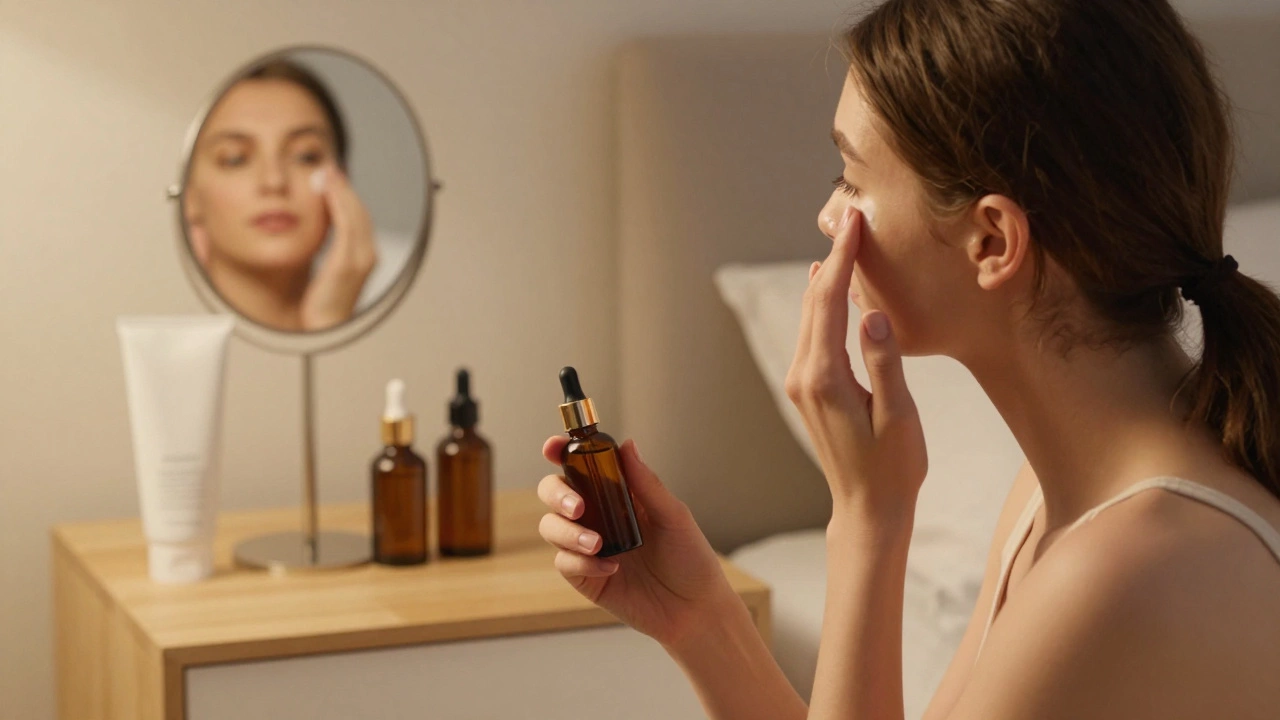
- Treatment Serums - This is where retinol, AHA/BHA exfoliants, or peptides come in. Use one at a time. If you’re using retinol, skip exfoliants that night. They’re too harsh together. Apply retinol to dry skin-wet skin increases irritation.
- Eye Cream - Use the same one as morning, or switch to a richer formula at night if needed.
- Moisturizer - Go thicker here. Look for ceramides, squalane, or shea butter. These help repair your skin barrier while you sleep.
- Oil (optional) - If your skin is dry, add a few drops of facial oil like rosehip or jojoba after moisturizer. It seals everything in. Don’t use oils if you’re acne-prone unless they’re non-comedogenic.
Important: If you use retinol, start slow-2-3 nights a week. Build up slowly. Your skin needs time to adjust.

What to Avoid
Here are the top three mistakes people make:
- Layering too many actives - Vitamin C + retinol + AHA/BHA in one routine? That’s a recipe for redness and peeling. Stick to one strong active per night.
- Using products on damp skin - Unless the label says otherwise, apply serums and treatments to dry skin. Moisture can dilute them or cause stinging.
- Skipping sunscreen - Even on cloudy days. UV damage adds up. Sunscreen isn’t optional-it’s the most important step in any routine.
Also, don’t follow TikTok trends blindly. Just because someone says ‘layer 10 products’ doesn’t mean it works for you. Your skin type, climate, and age matter more than viral hacks.
Simple Routine for Beginners
If you’re overwhelmed, start with this bare-bones routine:
- Morning: Cleanse → Moisturizer → Sunscreen
- Night: Cleanse → Moisturizer
Stick with this for 4 weeks. Then, if your skin feels good, add one product at a time-maybe a vitamin C serum in the morning or a gentle retinol at night. Let your skin tell you what it needs.
Special Cases
Not everyone’s skin is the same. Here’s how to adjust:
- Oily or acne-prone skin: Skip oils. Use niacinamide and salicylic acid serums. Avoid heavy creams. Look for ‘non-comedogenic’ labels.
- Dry or sensitive skin: Use ceramide-rich moisturizers. Skip alcohol-based toners. Apply oils after moisturizer. Reduce exfoliation to once a week.
- Mature skin: Prioritize peptides and retinoids. Hyaluronic acid helps plump fine lines. Don’t skip sunscreen-it prevents further aging.
What works in Durban’s humid climate might not work in a dry desert. Pay attention to how your skin reacts. If something stings or turns red, stop it. You don’t need to force it.
Final Rule
The golden rule? Thinnest to thickest. Water before oil. Light before heavy. Actives before sealants. If you remember nothing else, remember this.
Skincare isn’t about buying the most expensive bottle. It’s about letting each product do its job. Do it right, and your skin will thank you-with fewer breakouts, less redness, and a glow that comes from health, not filters.
What if I use my moisturizer before my serum?
If you apply moisturizer before serum, the serum can’t penetrate properly. Moisturizers are designed to seal in moisture, so they create a barrier that blocks lighter products underneath. You’ll waste the serum’s active ingredients. Always apply serums before moisturizers.
Can I use retinol and vitamin C in the same routine?
Yes, but not at the same time. Use vitamin C in the morning for antioxidant protection and retinol at night for cell turnover. Using them together can irritate your skin, especially if you’re new to either ingredient. If you want to try both, space them out-use one in the AM and the other in the PM.
Do I need an eye cream?
Not strictly, but it helps. The skin around your eyes is thinner and lacks oil glands, so it dries out faster. A dedicated eye cream with hydrating ingredients like hyaluronic acid or peptides can reduce puffiness and fine lines. If you’re short on products, use your regular moisturizer-it’s better than nothing.
How long should I wait between skincare steps?
Wait about 60 seconds between each product. This lets each layer absorb fully. You don’t need to time it perfectly, but rushing means products sit on top of each other instead of sinking in. If your skin feels tacky, give it more time.
Is double cleansing necessary every night?
Only if you wear sunscreen, makeup, or live in a polluted area. If you just washed your face and didn’t use anything, a single cleanse is fine. Double cleansing is meant to remove buildup without stripping your skin. If your skin feels tight or dry after, you’re overdoing it.