Sustainable Shopping: How to Buy Smarter, Not More
When you hear sustainable shopping, the practice of choosing products that minimize environmental harm and support fair labor practices. Also known as ethical consumption, it’s not about perfection—it’s about making better choices one purchase at a time. It’s not just about reusable bags or bamboo toothbrushes. Real sustainable shopping means asking: Who made this? What’s it made from? And what happens when I’m done with it?
This approach connects directly to eco-friendly products, items designed to have lower environmental impact across their lifecycle. But not all "green" labels are real. Some brands use vague terms like "natural" or "green" without proof. True eco-friendly products come with clear details—recycled materials, carbon-neutral shipping, or certifications like Fair Trade or GOTS for textiles. That’s why thrifting and secondhand shopping, covered in our posts, are powerful tools. Buying used keeps clothes out of landfills and cuts demand for new resources. It’s not just cheap—it’s circular economy, a system where products are reused, repaired, or recycled instead of discarded. Also known as closed-loop fashion, it flips the script on fast fashion’s "buy, wear, toss" model. And when you do buy new, look for durability. A $50 jacket that lasts five years beats a $20 one that falls apart after three washes.
It’s not about being perfect. It’s about progress. You don’t need to overhaul your whole closet overnight. Start by swapping one impulse buy for a secondhand find. Choose a brand that shares its supply chain. Skip the plastic packaging. These small shifts add up—and they’re all covered in the posts below. You’ll find real advice on spotting greenwashing, building a capsule wardrobe, and making meal prep more sustainable too. No fluff. No guilt. Just clear, doable steps that fit into real life.
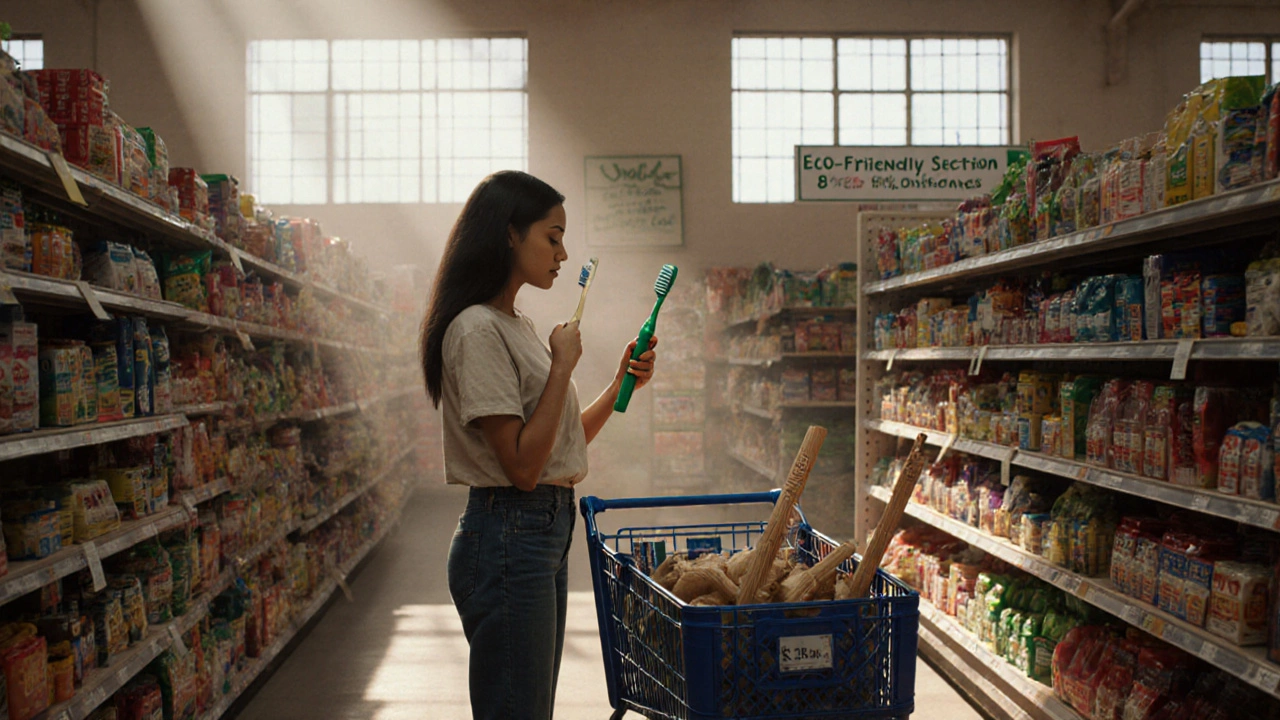
Do People Really Buy Eco-Friendly Products? The Truth Behind the Green Shopping Trend
Many say they want to buy eco-friendly products, but do they actually do it? This article explores the real buying habits behind green consumerism, price barriers, greenwashing, and who’s truly making the switch in 2025.