UK Travel Food Rules: What You Need to Know Before You Eat
When you’re traveling in the UK travel food rules, the official guidelines on bringing food into the UK, eating in public spaces, and following local hygiene standards. Also known as UK food regulations, these rules affect everything from airport security to pub snacks and picnic baskets. Whether you’re flying in from Europe, driving through Calais, or just grabbing a sandwich on the train, ignoring these rules can mean fines, confiscated food, or worse—being turned away at the border.
Many travelers assume the UK is like the EU when it comes to food, but post-Brexit, the rules changed. You can’t just bring in ham, cheese, or fresh fruit from most countries without declaring it. The UK food regulations, the legal framework enforced by Border Force and local councils to control disease, pests, and unsafe products. Also known as food hygiene UK, they’re strict for good reason—think foot-and-mouth disease outbreaks and invasive species hitching a ride in your backpack. Even packaged snacks like chocolate bars or biscuits from outside the UK can be flagged if they contain meat, dairy, or unapproved additives. And yes, that includes your grandma’s homemade jam.
It’s not just about what you bring in—it’s about what you do once you’re here. Public spaces like parks, train stations, and even some beaches have rules about eating certain foods. You can’t just sit down with a greasy burger and throw the wrapper on the ground; littering fines in the UK start at £150. Then there’s the unspoken etiquette: ordering a pint in a pub? Don’t expect a free refill. Asking for ketchup with your fish and chips? You might get side-eye. These aren’t laws, but they’re part of the dining in UK, the cultural norms around food service, portion sizes, and social behavior when eating out. Also known as travel snacks UK, this includes knowing that a £2.50 sandwich in a train station isn’t a scam—it’s the price of convenience.
And don’t forget the small stuff: if you’re camping, you can’t just leave food out overnight. Wildlife, especially in Scotland and the Lake District, has learned to raid unattended coolers. Some campsites ban coolers altogether. If you’re visiting London, avoid eating while walking—you’ll blend in faster if you sit down. And if you’re buying from a market stall, always ask if the food is cooked on-site. Some vendors sell reheated pre-packaged items and label them as "fresh."
The truth? Most people don’t know the rules until they get caught. One traveler brought a packet of salami from Spain and got fined £200. Another tried to bring in 10kg of cheese from France and had it all dumped. These aren’t rare cases—they happen every week. But you don’t need to be scared. You just need to know what’s allowed, what’s not, and how to pack smart.
Below, you’ll find real advice from people who’ve been there. From what snacks survive airport scanners to how to eat like a local without breaking the rules, these articles cut through the noise. No fluff. No guesswork. Just what actually works when you’re on the move in the UK.
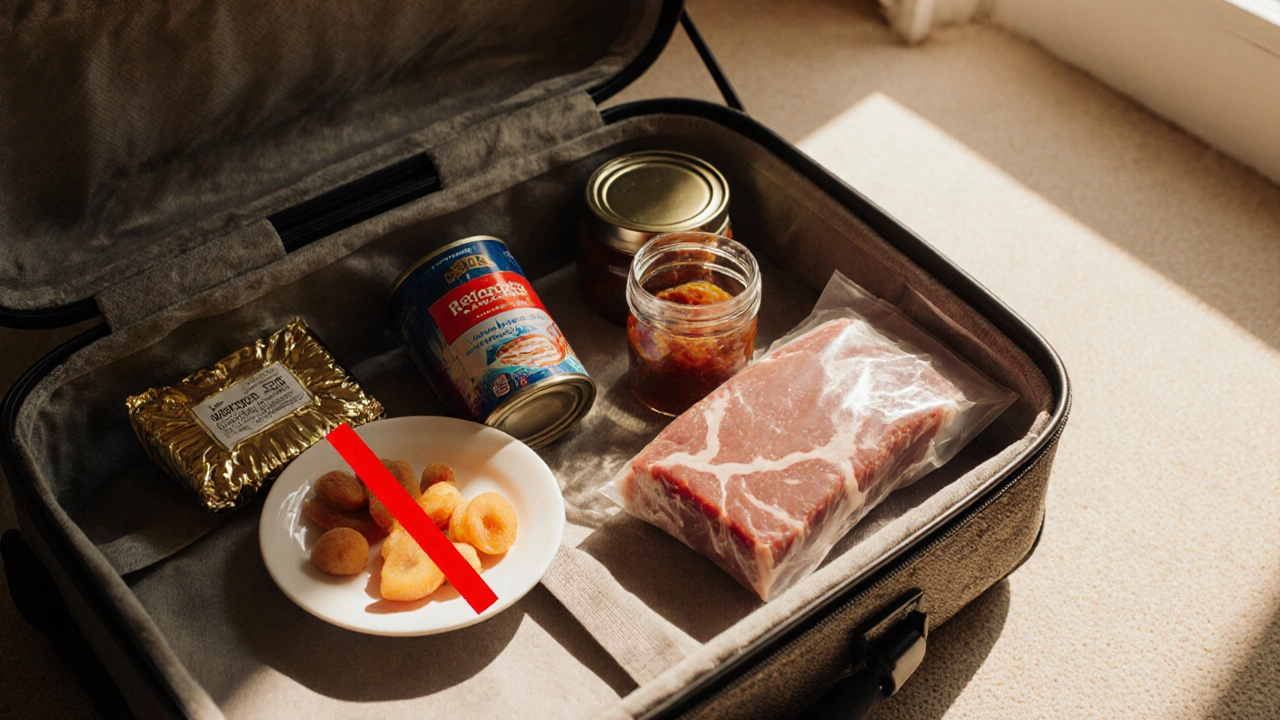
Flying to England with Food: What’s Allowed in Your Suitcase?
Learn what food you can pack in your suitcase for a trip to England, including allowed items, prohibited foods, declaration tips, and common pitfalls.