Meal Prep Sugar Calculator
Check Your Meal Prep Sugar Content
See how much sugar is in your prepped foods. Hidden sugars cause energy crashes and cravings.
Meal prep saves time, cuts junk food cravings, and helps you stick to your goals-but only if you avoid the wrong foods. Too many people spend hours chopping, cooking, and portioning meals, only to feel sluggish, bloated, or hungry by midweek. The problem isn’t the prep-it’s what they’re prepping.
Processed meats are a silent sabotage
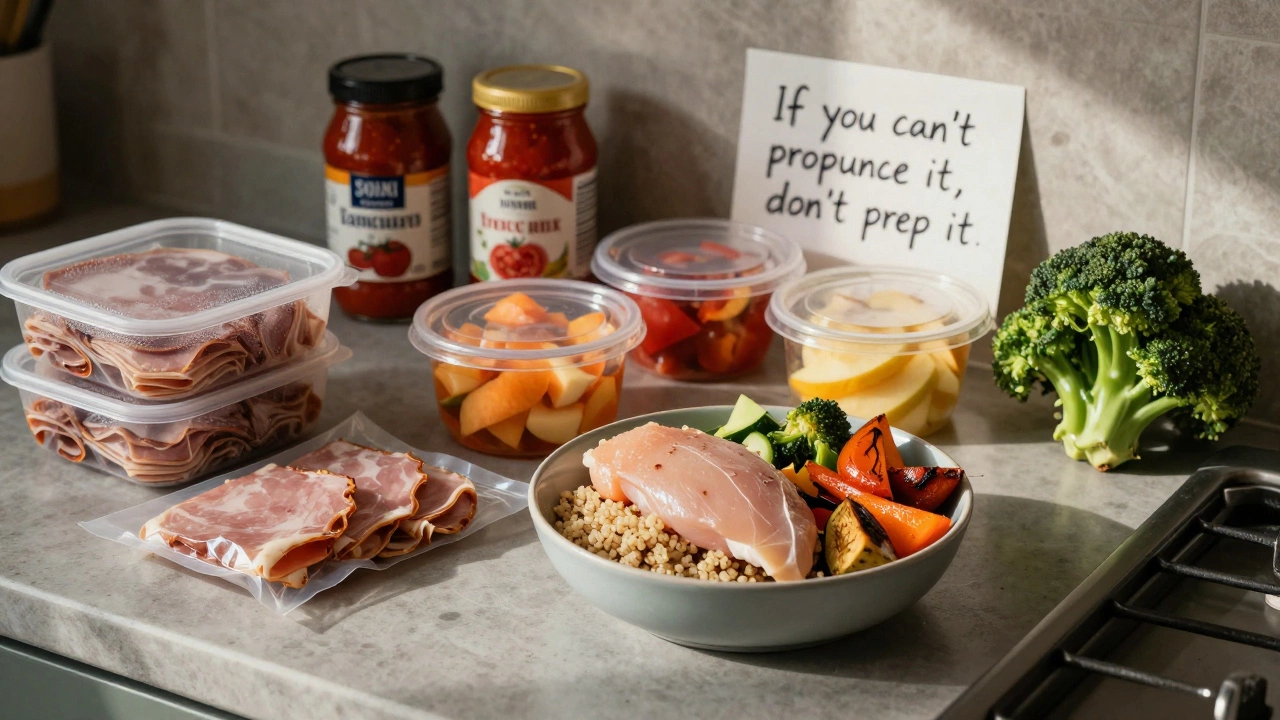
Pre-packaged deli meats, sausages, bacon, and chicken nuggets might seem convenient, but they’re loaded with sodium, nitrates, and preservatives. A single serving of sliced turkey breast can contain over 400mg of sodium-nearly 20% of your daily limit. When you prep these on Sunday, you’re not just storing protein; you’re storing inflammation triggers. Studies show high sodium intake linked to water retention and higher blood pressure, especially when eaten daily. Swap them for fresh, unseasoned chicken breast, lean beef, or tofu you season yourself. You’ll taste the difference-and feel it in your energy levels.
Sugary sauces and dressings ruin everything
That jar of teriyaki, BBQ sauce, or creamy Caesar dressing you poured over your prepped veggies? It’s sugar in disguise. Most store-bought sauces contain 3-8 grams of sugar per tablespoon. One cup of prepped stir-fry with store-bought sauce can easily hit 20 grams of added sugar-equivalent to five teaspoons. That spike and crash is why you’re hungry again by 3 p.m. Instead, make your own dressings with olive oil, vinegar, lemon juice, garlic, and a pinch of salt. Keep a small bottle in your fridge. It lasts two weeks and tastes way better than anything from a shelf.
White rice and refined grains
White rice, white pasta, and regular bread are quick to prep and fill you up-but they don’t keep you full. These refined carbs break down fast, spiking blood sugar and then dropping it hard. You’ll feel tired, foggy, and reach for snacks before lunch. Swap them for brown rice, quinoa, barley, or farro. They have more fiber, more protein, and digest slower. A 2023 study from the University of Cape Town found people who replaced white rice with brown rice in their meal prep lost 1.5kg more over 8 weeks-without changing anything else.
Flavored yogurts and protein shakes
Prepped Greek yogurt with granola and fruit sounds healthy-until you check the label. Most flavored yogurts have 15-20g of sugar per container. Even protein shakes labeled “low sugar” often use maltodextrin or sucralose, which can trigger cravings. Stick to plain, unsweetened yogurt and add your own berries or a drizzle of honey. For shakes, mix whey or pea protein powder with water or unsweetened almond milk. Add a banana for natural sweetness and fiber. You control the sugar. You control the energy.
Pre-chopped fruits and veggies with added preservatives
It’s tempting to buy pre-cut bell peppers, baby carrots, or fruit cups. They’re convenient, but many come packed in sugar water or sodium citrate to keep them looking fresh. A 2024 analysis by the South African Food Safety Agency found 68% of pre-cut produce in Durban supermarkets contained added sugars or preservatives not listed on the front label. You’re trading time for hidden additives. Buy whole produce and chop it yourself. It takes 10 extra minutes on Sunday. Your gut will thank you.
Energy bars and protein snacks
These are the hidden traps of meal prep. A bar labeled “high protein” or “low carb” might have 18g of sugar, hydrogenated oils, and artificial sweeteners. They’re designed to look healthy, not to fuel you. Instead of prepping 10 of these bars, prep hard-boiled eggs, roasted chickpeas, or a small batch of homemade trail mix with nuts, seeds, and dark chocolate chips. Real food. Real nutrition. No fine print.
Stale, overcooked vegetables
Boiling broccoli or zucchini until it’s mushy doesn’t just kill the texture-it kills the nutrients. Overcooked veggies lose up to 50% of their vitamin C and antioxidants. They also turn soggy and unappetizing by Wednesday. Steam or roast them instead. Toss Brussels sprouts with olive oil and roast at 200°C for 25 minutes. Keep them crisp-tender. Store them in a dry container with a paper towel to absorb moisture. They’ll stay fresh, crunchy, and tasty all week.
What to prep instead
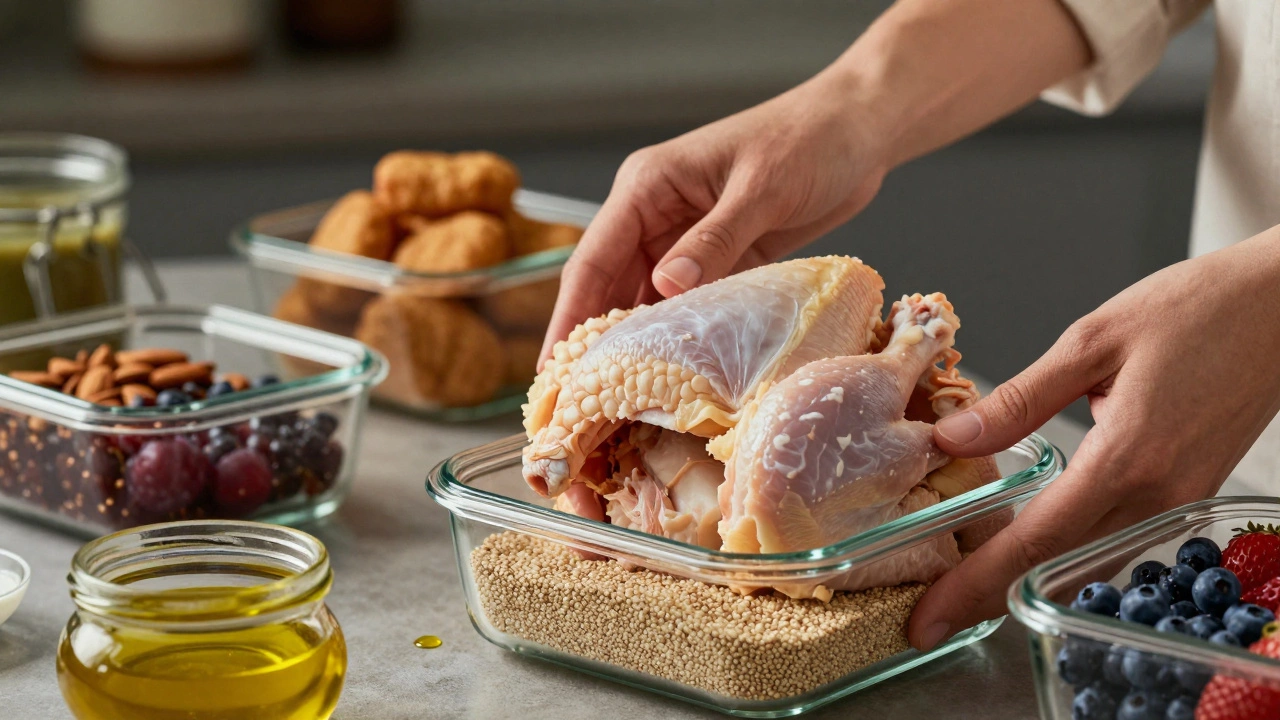
Here’s what actually works:
- Grilled chicken thighs (skin-on for flavor, not fat)
- Quinoa or wild rice blends
- Roasted sweet potatoes
- Steamed broccoli and snap peas
- Plain Greek yogurt with chia seeds
- Hard-boiled eggs
- Homemade vinaigrette (olive oil, apple cider vinegar, Dijon mustard)
- Raw almonds and pumpkin seeds
These foods keep well, taste better after a few days, and actually support your goals. No additives. No surprises. Just real fuel.
One simple rule to remember
If you can’t pronounce it, don’t prep it. That’s not a marketing slogan-it’s a practical filter. Ingredients like maltitol, carrageenan, and potassium sorbate don’t belong in your body. They’re there to extend shelf life, not improve health. Stick to foods with five ingredients or fewer. If it’s in a plastic tub with a nutrition label longer than your arm, leave it on the shelf.
Real-life example: What changed for a Durban mom
Lindiwe, a 38-year-old teacher from Durban, started meal prepping to save time and eat healthier. For six months, she used pre-made sauces, flavored yogurt, and frozen chicken strips. She felt tired, bloated, and frustrated. Then she switched: she bought whole chicken, roasted it with herbs, swapped white rice for brown, and made her own dressing. Within two weeks, her afternoon crashes disappeared. By month three, she lost 4kg without trying. She didn’t change her schedule. She just changed what she put in the containers.
Final tip: Don’t prep junk-just because it’s convenient
Meal prep is a tool. It doesn’t make bad food healthy. If you prep cookies, you’ll still eat cookies. If you prep sugary yogurt, you’ll still get sugar crashes. The power isn’t in the containers. It’s in the choices you make before you even turn on the oven. Choose real food. Choose simple. Choose to feel good all week-not just on Monday.
Can I still eat fruit on a prep diet?
Yes-whole fruit is excellent for meal prep. Berries, apples, oranges, and pears hold up well in the fridge. Avoid pre-cut fruit cups, which often have added syrup or preservatives. Stick to whole fruit you wash and chop yourself. Fruit gives you fiber, vitamins, and natural sweetness without the sugar spikes from processed snacks.
Is frozen food okay for meal prep?
Frozen vegetables and unseasoned meats are fine-and sometimes better than fresh. They’re frozen at peak ripeness, locking in nutrients. Just avoid frozen meals with sauces, breading, or added sugars. Look for ingredients you recognize: chicken, broccoli, rice. If it has more than five, skip it. Frozen is a time-saver, not a cheat code.
How long can prepped meals last in the fridge?
Most prepped meals stay fresh for 4-5 days if stored properly. Cooked proteins and grains last 5 days. Vegetables like broccoli or zucchini last 3-4 days before they get soggy. Always store food in airtight containers with a dry paper towel to soak up moisture. If it smells off, looks slimy, or tastes weird-throw it out. Safety comes before saving.
Should I avoid carbs entirely on a prep diet?
No. Carbs aren’t the enemy-refined carbs are. Whole grains like brown rice, oats, and quinoa give you steady energy. They help regulate blood sugar and keep you full. The key is choosing complex carbs over simple ones. Pair them with protein and healthy fats for balanced meals that last.
What’s the biggest mistake people make with meal prep?
They prep what’s easy, not what’s good. They grab the convenient options-sauces, pre-cut veggies, flavored yogurt-because they’re fast. But those choices sabotage long-term results. The best meal prep is simple, real, and made from ingredients you’d find in a home kitchen-not a processing plant.