Mood-Boosting Outfit Finder
Your Current Mood
Mood-Boosting Items
Mood Boost Analysis
Ever put on a bright yellow sweater and suddenly felt like you could take on the world? Or slipped into your favorite pair of jeans and felt instantly more confident? That’s not just coincidence. It’s dopamine dressing - the idea that what you wear can directly affect how you feel.
Dopamine dressing isn’t about trends. It’s about feeling good.
Dopamine dressing started gaining attention in 2021, during the pandemic, when people were stuck at home and craving small joys. Instead of waiting for external events to lift their mood, they turned to clothing. Wearing something vibrant, snug, or unexpectedly luxurious became a way to reclaim control - and spark joy.
It’s not about luxury brands or designer labels. It’s about choosing clothes that make your brain light up. That could mean a silk camisole you only wear on weekends, a pair of red boots that make you walk taller, or a patterned shirt that reminds you of a happy memory. The goal isn’t to impress others. It’s to reward yourself.
Psychologists have long known that clothing affects behavior. Studies from the University of Nebraska and Northwestern University show that wearing formal clothes increases abstract thinking, while wearing comfortable clothes improves creativity. Dopamine dressing takes this further: it’s not just about how clothes change your thinking - it’s about how they change your mood.
How dopamine works when you pick out an outfit
Dopamine is your brain’s reward chemical. It’s released when you experience pleasure - eating something delicious, finishing a task, or even finding a matching sock. When you choose an outfit that makes you feel good, your brain releases a small burst of dopamine. That’s why putting on a favorite piece can feel like a mini celebration.
It’s not magic. It’s biology. Your brain links certain clothes with positive feelings. Maybe your blue dress reminds you of a vacation. Maybe your chunky knit sweater feels like a hug. Those associations build over time. The more you wear something that makes you feel good, the stronger that link becomes.
Unlike fast fashion, which pushes constant change, dopamine dressing is personal. It’s about finding your own triggers. One person’s mood booster is a neon green jacket. Another’s is a soft cotton t-shirt with a faded band logo. There’s no right or wrong - only what works for you.
What does dopamine dressing look like in real life?
People who practice dopamine dressing don’t follow Pinterest boards or influencer lists. They notice what makes them pause in front of the mirror. They ask: Does this make me feel like the version of me I want to be?
Here are real examples:
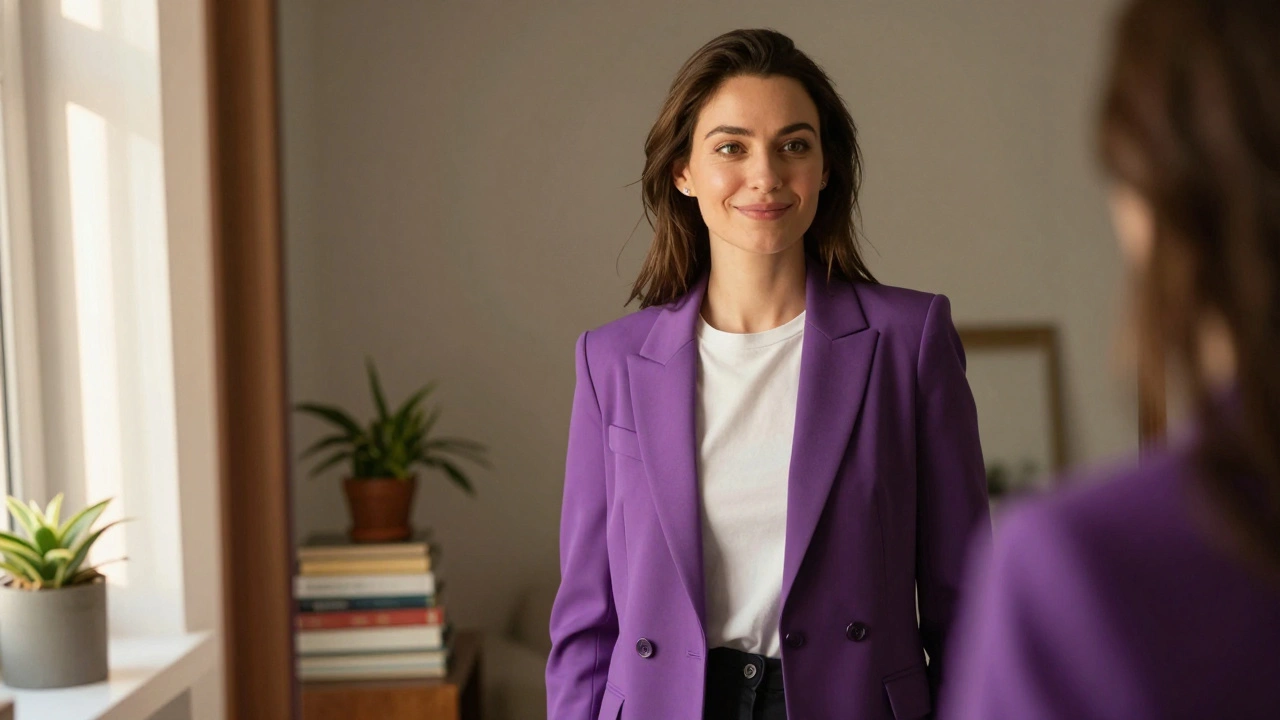
- A teacher wears a bright purple blazer every Monday to start the week with energy.
- A remote worker puts on a tailored shirt and heels just to walk to the kitchen - it shifts her mindset from "home mode" to "productive mode."
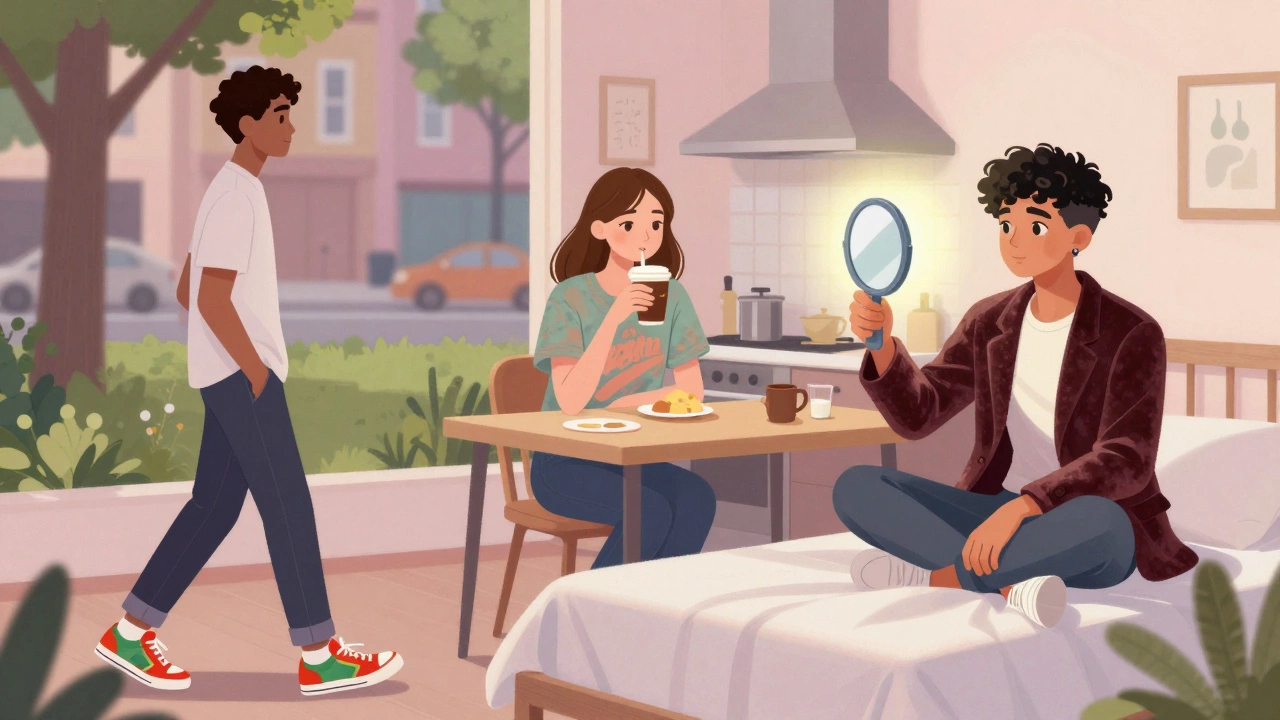
- A college student keeps a velvet blazer in her dorm. She wears it when she’s feeling low. It’s not expensive. It’s just soft, and it makes her feel powerful.
The key is intentionality. You’re not just getting dressed. You’re choosing a mood.
It’s not about being flashy - it’s about being you
Dopamine dressing doesn’t mean you have to wear neon or sequins. It’s not about standing out. It’s about feeling aligned.
Some people feel most like themselves in neutral tones. A well-fitted black turtleneck, crisp white shirt, or deep green coat can be just as powerful as a rainbow sweater. The color isn’t the point. The feeling is.
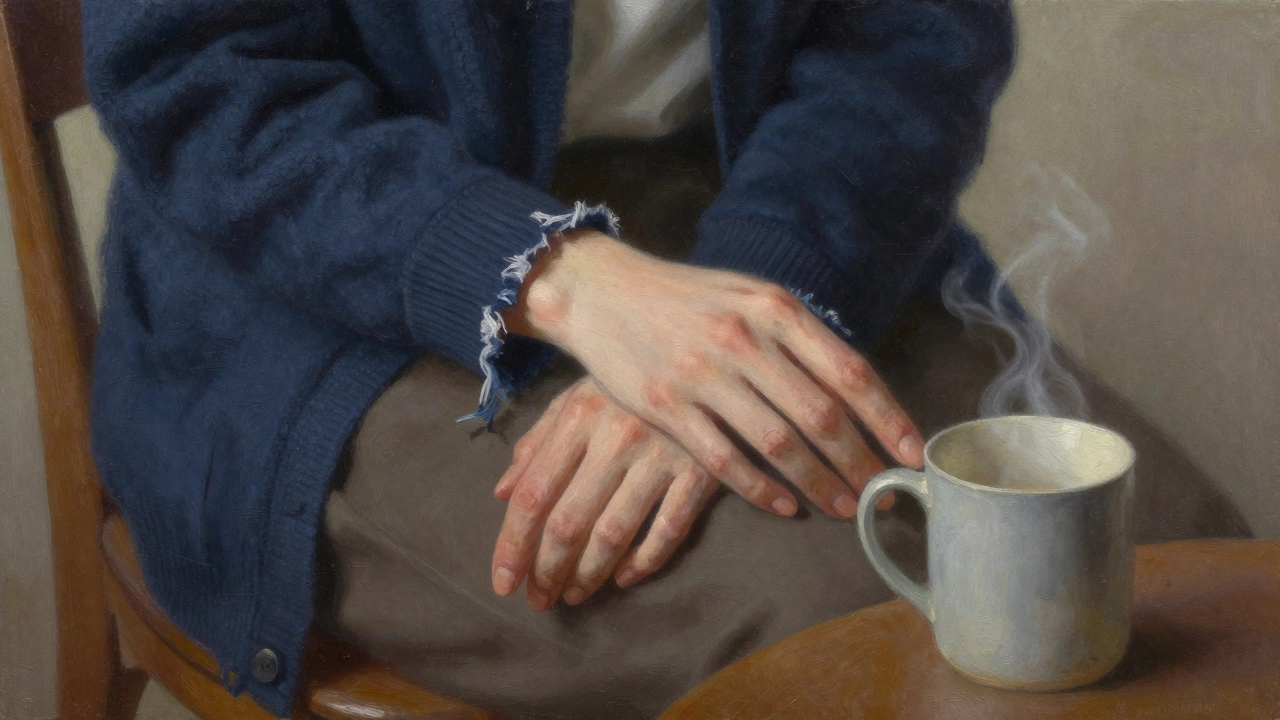
One woman told me she wears the same navy cardigan every day. It’s worn thin at the elbows. She’s had it for ten years. "It feels like safety," she said. That’s dopamine dressing too.
What matters is consistency between your clothing and your inner state. If you feel calm in quiet colors, wear them. If you feel alive in bold prints, go for it. Your wardrobe should reflect your emotional truth - not someone else’s idea of "fashion."
How to start practicing dopamine dressing
You don’t need to buy anything new. Start by looking at what you already own.
- Look through your closet. Pick out three pieces you love wearing - even if they’re "old" or "weird."
- Ask yourself: When do I wear these? How do I feel when I wear them?
- Notice patterns. Do you reach for certain colors when you’re stressed? Do you avoid certain textures because they feel "off"?
- Try wearing one of those favorite pieces on a day you’re feeling low. Don’t overthink it. Just put it on.
- Notice the shift. Did your shoulders relax? Did you smile when you looked in the mirror?
Keep a simple list: "Outfits That Make Me Feel Good." Write down the item and how it made you feel. Over time, you’ll start seeing what works for you.
What dopamine dressing is not
It’s not about keeping up with trends. If you hate ruffles, don’t wear them just because they’re "in."
It’s not about spending more money. A $5 thrift store scarf can give you more joy than a $300 designer item if it fits your vibe.
It’s not about perfection. You can still wear sweatpants on Zoom if that’s what feels right. Dopamine dressing isn’t about looking polished - it’s about feeling whole.
And it’s not a cure for depression or anxiety. If you’re struggling, seek professional help. Dopamine dressing is a tool - not a treatment.
Why this matters now, in 2026
After years of remote work, social isolation, and digital overload, people are craving tangible ways to feel grounded. Clothing is one of the few physical things we control every day.
Unlike scrolling through feeds or checking emails, choosing what to wear is a quiet act of self-care. It’s a moment where you say: "I matter enough to choose something that feels good."
More than ever, we need small rituals that anchor us. Dopamine dressing is one of them.
Final thought: Your clothes are your silent language
You don’t need to explain why you’re wearing a purple hat in January. You don’t need to justify it to anyone. It’s yours. And if it lifts your spirit - even a little - that’s enough.
Dopamine dressing isn’t about fashion. It’s about freedom. The freedom to feel good in your own skin, in your own clothes, on your own terms.
Is dopamine dressing just a trend?
No. While the term "dopamine dressing" became popular in 2021, the behavior behind it - choosing clothes to improve your mood - is as old as clothing itself. People have worn red for courage, white for peace, and favorite sweaters for comfort for centuries. The name is new, but the practice isn’t.
Do I need to buy new clothes to practice dopamine dressing?
Not at all. In fact, starting with what you already own is the best way. Look for pieces you love but rarely wear. Try pairing them differently. Notice how they make you feel. You might be surprised how many mood-boosting items are already in your closet.
Can dopamine dressing help with anxiety?
It can help manage everyday stress, but it’s not a substitute for therapy or medical care. For some, putting on a favorite outfit before a tough meeting or social event reduces physical tension. That’s because clothing acts as a sensory anchor - a familiar texture or color that signals safety. But if anxiety is overwhelming, professional support is essential.
Why do some people feel guilty about wearing "fun" clothes?
Society often tells us to be "practical" or "serious," especially in work or adult life. Wearing bright colors or bold patterns can feel childish or wasteful. But dopamine dressing challenges that. It says: feeling good isn’t frivolous - it’s necessary. Your mood matters as much as your productivity.
Does dopamine dressing work for men too?
Absolutely. Men benefit just as much. A well-fitted shirt, a colorful tie, a pair of bold sneakers, or even a favorite watch can trigger the same emotional response. The myth that "men don’t care about clothing psychology" is outdated. Many men use clothing to signal confidence, calm, or creativity - just like women do.