Self-help books promise transformation. They tell you how to fix your life in 30 days, find inner peace, or earn your first million by reading just one chapter. And for many, they work-briefly. But what happens when the hype fades and the habits don’t stick? The real problem isn’t that self-help books are useless. It’s that they’re often dangerously incomplete.
They sell solutions, not systems
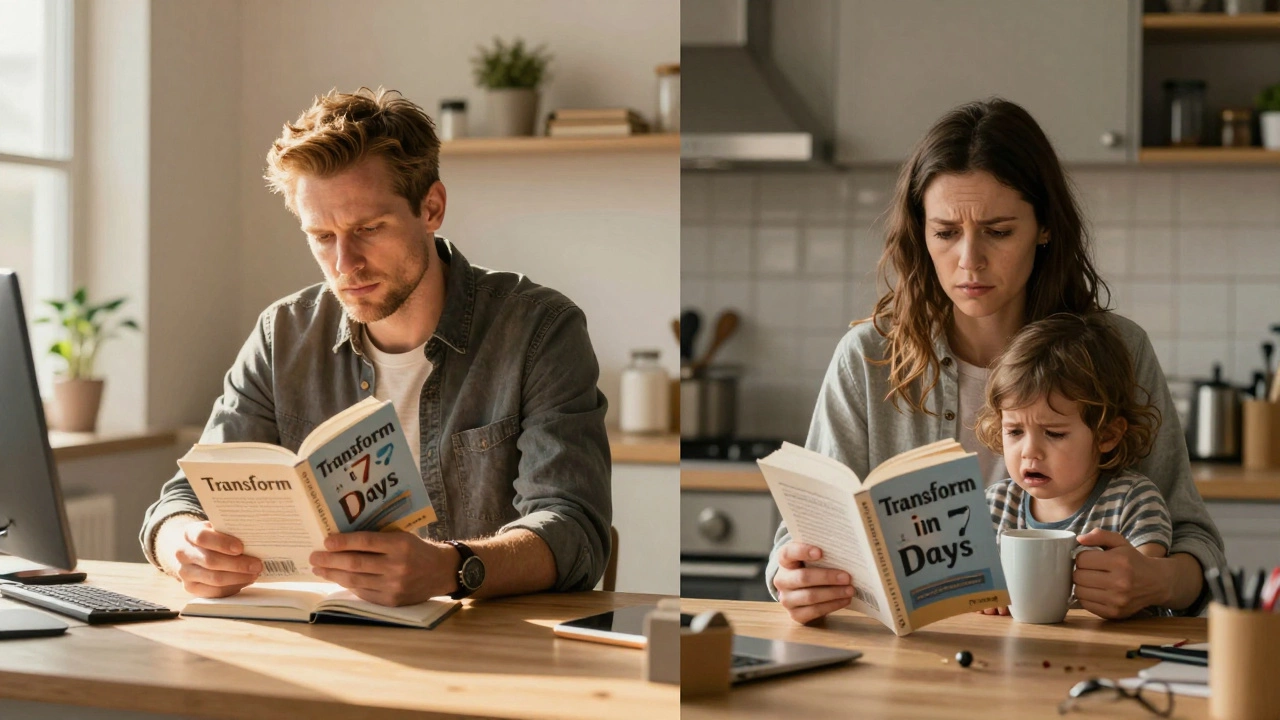
Most self-help books are built like quick-fix ads. They give you a five-step plan to crush anxiety, become a morning person, or stop procrastinating. But real change doesn’t happen in steps. It happens in systems-small, repeatable actions tied to your environment, habits, and psychology. A book can tell you to meditate for 10 minutes a day. But it won’t tell you how to stop your toddler from screaming during your session, or how to sit still when your brain is wired for constant stimulation. Without context, advice becomes noise.
Take self-help books like The 5 AM Club or Atomic Habits. They’re full of powerful ideas. But they assume you have the time, energy, and mental space to follow them. What if you work two jobs? What if you’re caring for an aging parent? What if your brain is exhausted from surviving, not thriving? The books don’t ask. They just tell.
They ignore your unique biology and history
Self-help often treats people like software bugs. Just update your mindset, and you’ll run smoother. But humans aren’t code. Your stress response is shaped by childhood trauma, your sleep cycle is influenced by your genes, and your motivation changes with your hormones. A book written by a wealthy entrepreneur in Silicon Valley doesn’t understand what it’s like to choose between paying rent or buying groceries.
Studies show that people who grew up in unstable environments respond differently to motivational advice. For them, the pressure to "just believe in yourself" can make things worse-adding guilt on top of exhaustion. A book might say, "You’re capable of anything." But if you’ve spent your whole life being told you’re not enough, that line doesn’t inspire. It invalidates.
They create a false sense of progress
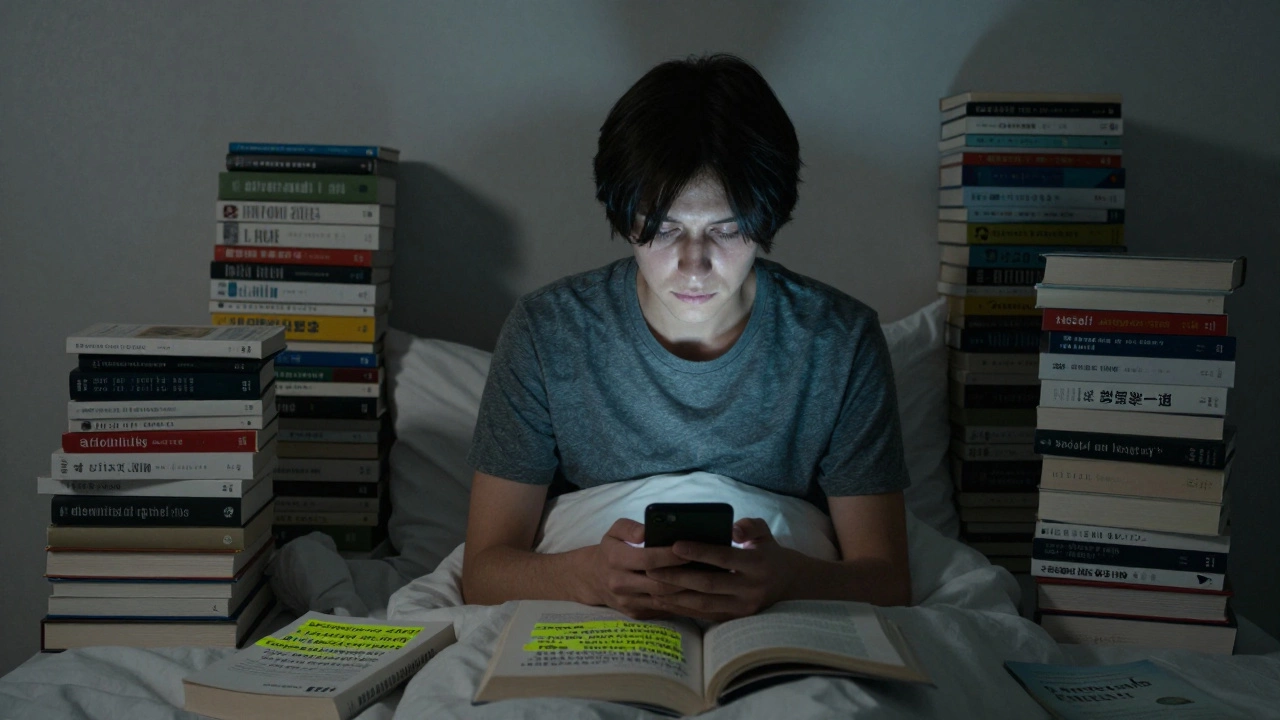
Buying a self-help book feels like doing something. You’ve taken action. You’ve invested. You’ve joined the club of people trying to improve. But reading isn’t doing. Highlighting a quote isn’t changing your behavior. Writing in the margin isn’t building a new habit.
There’s a name for this: the illusion of progress. You feel better after reading about productivity, but you still scroll through your phone for two hours before bed. You read about emotional intelligence, but you still snap at your partner when you’re tired. The book gives you the feeling of growth without the work. And that’s dangerous. It keeps you stuck-not because you’re lazy, but because you’ve confused inspiration with action.
They oversimplify complex problems
Depression isn’t caused by negative thinking. Anxiety isn’t fixed by affirmations. Burnout isn’t solved by drinking more water. But self-help books often reduce deep, systemic issues to simple mindset shifts. They say, "Change your thoughts, change your life." But what if your thoughts are a reaction to an abusive workplace? Or financial insecurity? Or systemic racism?
When you’re told your problems are all in your head, it can make you feel broken-not because you are, but because the solution offered doesn’t match the reality. A 2023 meta-analysis in the Journal of Clinical Psychology found that self-help books alone had little to no effect on clinical depression or anxiety without therapy or support. The books don’t say that. They just sell hope.
They silence the voice of doubt
Self-help books rarely admit when they’re wrong. They don’t say, "This might not work for you." They don’t mention that their method failed for 70% of the people in their case studies. They don’t warn you that their guru had a public breakdown two years after writing the book.
Instead, they make doubt feel like failure. If you try the 30-day challenge and it doesn’t work, you think, "I’m not disciplined enough." Not, "This method doesn’t fit my life." The books don’t teach you how to adapt-they teach you how to conform. And that’s a trap.
They replace real connection with solitary reading
Human beings don’t heal in isolation. We heal through connection-with friends, mentors, therapists, communities. But self-help books are designed to be consumed alone. You read in bed. You highlight in silence. You feel like you’re growing, but you’re not talking to anyone about what you’re going through.
One woman I know read over 40 self-help books in two years. She improved her sleep schedule. She started journaling. She even meditated daily. But she still felt deeply lonely. She never told anyone what she was reading because she thought they’d think she was "trying too hard." She didn’t realize her loneliness wasn’t fixed by a book-it needed a conversation.
They’re written for the already privileged
Most best-selling self-help authors have one thing in common: safety. They had stable housing. They had access to therapy. They had time to experiment with routines. Their advice assumes you have the luxury of choice. "Just quit your job and start a side hustle." But what if you have no savings? What if your visa depends on your employer? What if your community doesn’t allow you to be "too ambitious"?
The self-help industry thrives on aspiration. It sells dreams to people who are struggling to survive. And that’s not helpful. It’s exploitative.
What works better?
Self-help books aren’t evil. But they’re not enough. If you want real change, combine them with:
- Therapy or coaching-someone who sees your full story
- Community-people who hold you accountable without judgment
- Small experiments-not rigid plans
- Permission to fail-without guilt
Read a book. Then ask yourself: "Does this fit my life-or just the life the author wishes I had?" If the answer isn’t clear, pause. Talk to someone. Try something smaller. Progress isn’t found in the next chapter. It’s found in the next honest conversation.
Are self-help books a waste of time?
Not always-but they’re only useful if you use them as a starting point, not an endpoint. If you read a book and then take one small action based on it, it’s valuable. If you read 10 books and do nothing, you’re just collecting ideas. Knowledge without application is entertainment.
Why do self-help books promise quick results?
Because quick promises sell. Publishers and authors know people are tired, overwhelmed, and desperate for relief. Saying "Transform your life in 7 days" is more attractive than "This might take months, and you’ll have setbacks." The industry profits from hope, not results.
Can self-help books make anxiety worse?
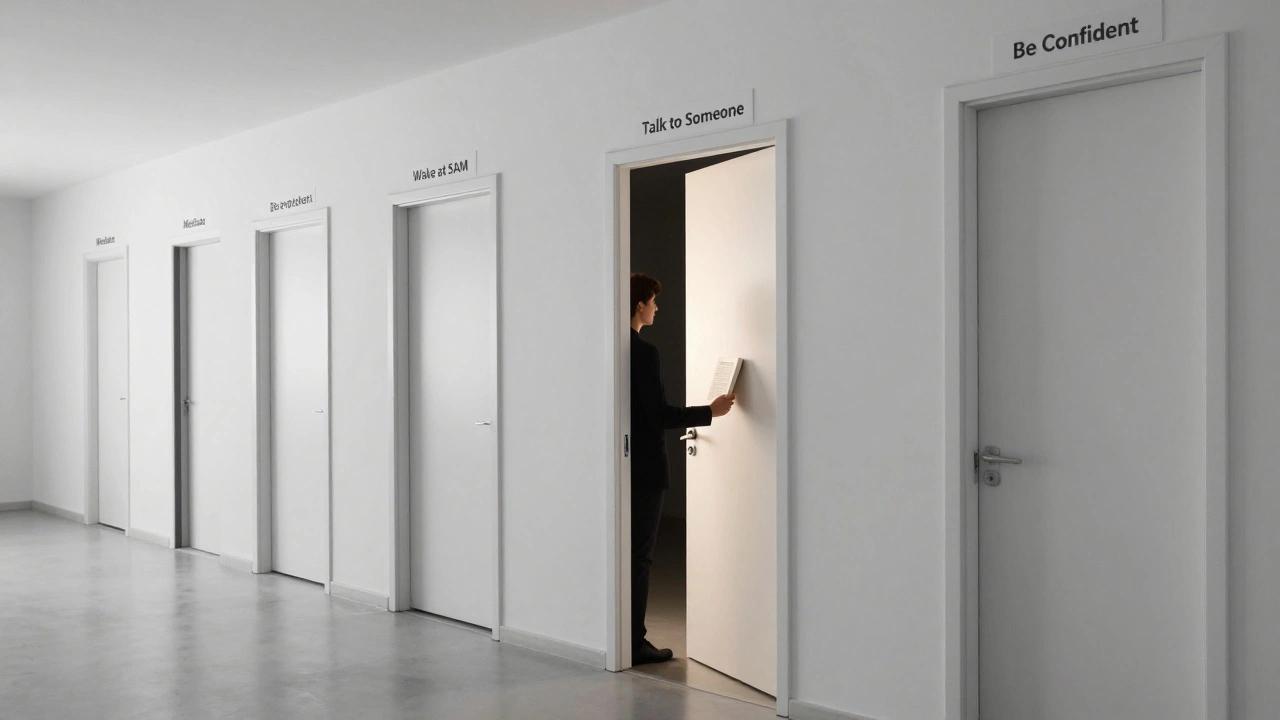
Yes. When someone reads, "Just be more confident," and feels like they’re failing because they can’t magically change their inner voice, it adds shame. Anxiety isn’t fixed by positive thinking-it’s managed through safety, support, and gradual exposure. Books that ignore this can deepen feelings of inadequacy.
Should I stop reading self-help books entirely?
No. But shift how you read them. Treat them like recipe books-not instruction manuals. Take one idea. Test it for two weeks. If it fits, keep it. If it doesn’t, drop it. Don’t chase perfection. Chase what works for you, not what works for someone else’s Instagram bio.
What’s the most important thing to look for in a self-help book?
Look for humility. Books that say, "This worked for me, but your path might be different," are far more trustworthy than those claiming universal truths. The best ones admit their limits, cite research, and encourage you to think for yourself-not just follow.
Final thought: You’re not broken
The biggest disadvantage of self-help books isn’t that they’re wrong. It’s that they make you feel like you need fixing. The truth? You’re not broken. You’re adapting. The world is hard. Systems are unfair. And no book can change that-unless you change the world around you, one conversation, one boundary, one small act at a time.