Meal Prep Time Calculator
Your Meal Prep Details
How many hours do you currently spend meal prepping weekly?
How many days do you currently prep meals for?
What's your target prep schedule?
Why This Matters
The article explains that prepping for 3-4 days instead of 7 is more sustainable. Food quality drops after 4-5 days, and daily prep often leads to food waste and burnout.
"Most nutritionists and busy professionals who stick with meal prep long-term don't prep for seven days. They prep for three to four."
2023 Study Finding: Households doing daily meal prep waste 22% more food than those prepping in 3-4 day batches.
Your Results
You'll save hours per week.
Your food waste could decrease by %.
Your meals will stay fresher for longer (up to 4 days instead of 7).
How many times have you stared at your fridge on Sunday night, full of perfectly portioned meals, only to feel exhausted by Wednesday? You thought meal prepping every day would save you time, but now you’re stuck in a cycle of cooking, storing, and wondering if it’s even worth it. Let’s cut through the noise. Meal prepping every day isn’t just unrealistic-it’s unnecessary. And in some cases, it’s making your life harder.
Why Daily Meal Prep Feels Like a Good Idea
It makes sense on paper. You plan your meals for the week, cook on Sunday, and then eat the same dishes all week. No stress. No decision fatigue. No last-minute takeout. That’s the promise. And for some people, it works. But the truth is, most of us don’t live in a vacuum. Life changes. Plans shift. Your schedule gets interrupted. Your appetite changes. And your taste buds? They get bored.
Meal prepping every single day-meaning cooking seven different meals, seven days in a row-adds up. That’s 7 hours of standing over a stove, chopping veggies, washing pans, and cleaning up. If you’re working 40+ hours a week, parenting, or juggling other responsibilities, that’s not efficiency. That’s burnout.
What Actually Works: The 3-4 Day Rule
Most nutritionists and busy professionals who stick with meal prep long-term don’t prep for seven days. They prep for three to four. Why? Because food quality drops after 4-5 days in the fridge. Vegetables get soggy. Sauces separate. Proteins lose their texture. And the flavor? It fades.
Here’s what a realistic routine looks like:
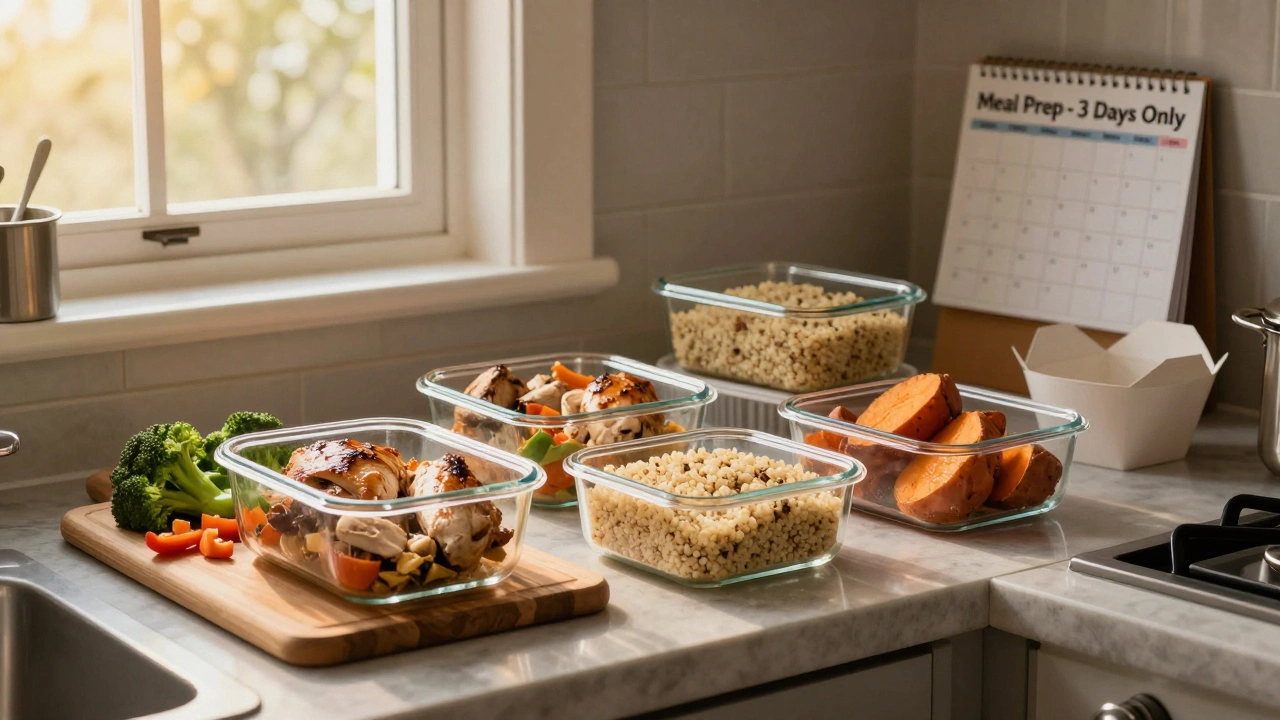
- On Sunday, cook 3-4 main proteins (chicken, tofu, beans, ground turkey).
- Roast a big tray of vegetables-broccoli, sweet potatoes, bell peppers.
- Cook a batch of grains-brown rice, quinoa, farro.
- Store them separately in clear containers.
Then, each day, you mix and match. Monday: chicken + rice + broccoli. Tuesday: tofu + quinoa + roasted peppers. Wednesday: turkey + rice + steamed greens. Thursday: leftovers from Sunday’s meal. Friday: eat out or make a quick stir-fry with what’s left. Saturday: no prep. Just enjoy.
This approach cuts prep time in half, keeps food tasting fresh, and gives you flexibility. You’re not trapped by your own containers.
The Hidden Cost of Daily Meal Prep
People think meal prepping saves money. But if you’re throwing out spoiled food every week because you cooked too much, you’re losing money. A 2023 study from the University of Arizona found that households doing daily meal prep wasted 22% more food than those prepping in 3-4 day batches. That’s not frugal. That’s wasteful.
There’s also mental fatigue. When every meal is planned, every bite is controlled, your brain stops enjoying food. You start eating out of habit, not hunger. And that’s how you lose your connection to what your body actually wants.
One client I worked with prepped every day for six months. She lost 8 pounds-not because she ate better, but because she stopped eating dinner most nights. She was too tired to heat up food. She’d stare at the fridge, sigh, and eat a granola bar instead. That’s not health. That’s exhaustion.
When Daily Meal Prep Makes Sense
There are exceptions. If you’re training for a marathon and need exactly 3,200 calories a day, meal prepping daily might help you hit targets. If you’re recovering from surgery and need precise nutrition, daily prep can be critical. If you have a disability or chronic illness that makes spontaneous cooking difficult, daily prep can be a lifeline.
But for 95% of people? Daily prep isn’t a solution. It’s a trap.
How to Build a Meal Prep System That Lasts
You don’t need to cook every day. You just need a system.
- Prep components, not full meals. Cook proteins, grains, and veggies separately. Combine them on the fly.
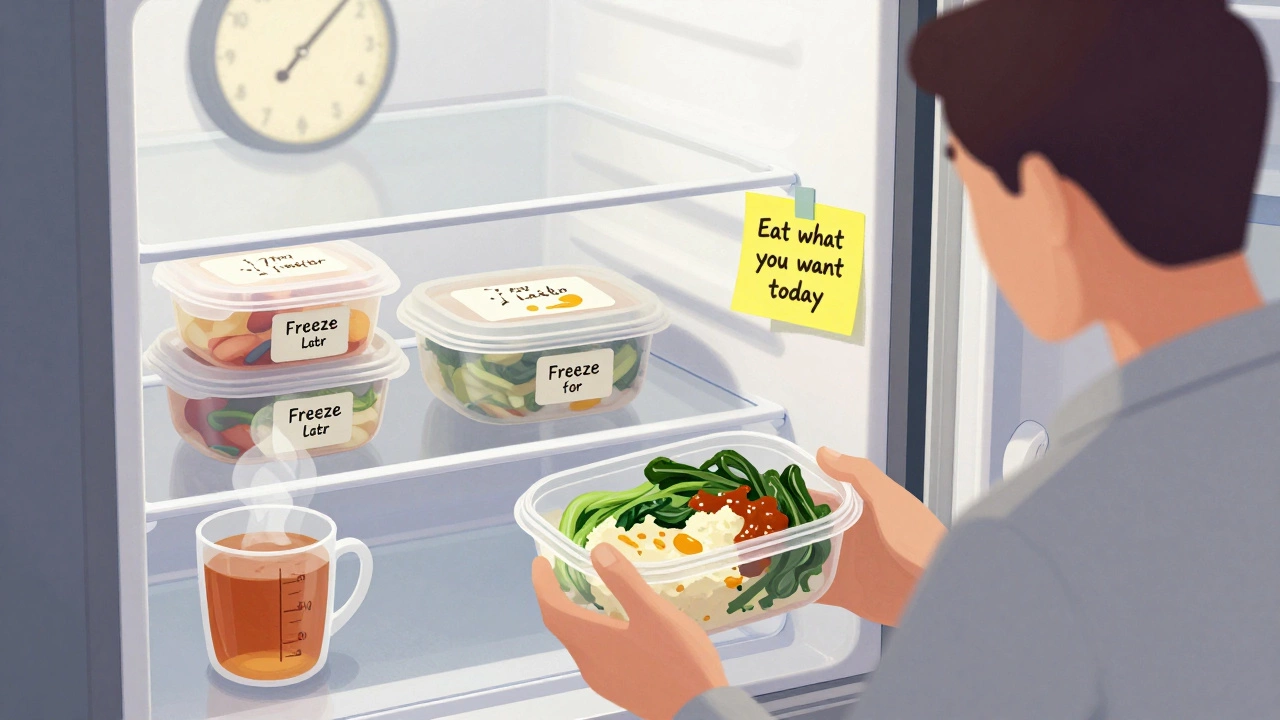
- Use freezer-friendly meals. Make one or two meals you can freeze (like chili, soup, or baked pasta) and pull them out on busy nights.
- Keep 3 quick backup meals. Canned beans, frozen veggies, eggs, whole grain tortillas, and peanut butter can turn into a meal in 10 minutes.
- Let yourself skip a day. If you’re tired, order a salad. If you’re hungry for something different, eat leftovers from last week. No guilt.
Think of meal prep like laundry. You don’t wash clothes every day. You do it in batches. Same with food. You don’t need to cook every day. You need to cook smart.
What Happens When You Stop Prepping Every Day
When people stop daily meal prep, something surprising happens: they eat better.
They start listening to their hunger. They crave different flavors. They try new recipes because they’re not stuck in a loop. They stop feeling guilty when they eat something simple. And they actually enjoy their meals again.
One woman I know switched from daily prep to 3-day prep. She started cooking one extra meal on Thursday-just for fun. She made a Thai curry with coconut milk and lime. She didn’t plan it. She didn’t measure it. She just cooked because she wanted to. That one meal became her favorite of the week.
That’s the point. Food isn’t just fuel. It’s joy. And you can’t meal prep joy.
Final Answer: No, Don’t Meal Prep Every Day
Meal prepping is a tool, not a rule. It’s meant to reduce stress, not create more of it. If you’re spending hours cooking every day and still feeling overwhelmed, you’re doing it wrong.
Try this instead: prep for 3-4 days. Keep simple backups. Eat what you want on the other days. Let your meals breathe. Your body, your wallet, and your sanity will thank you.
Healthy eating isn’t about perfection. It’s about consistency-with room to be human.
Is it bad to eat the same meals every day?
Eating the same meals every day isn’t inherently bad, but it can lead to nutrient gaps and boredom. Your body needs variety to get all the vitamins and minerals it needs. If you’re eating the same chicken and rice combo daily, you’re likely missing out on different phytonutrients from other vegetables, legumes, and whole grains. Rotate your proteins and veggies weekly-even small changes like swapping broccoli for Brussels sprouts or quinoa for barley make a difference.
How long can meal prep last in the fridge?
Most cooked meals stay fresh for 3-4 days in the fridge. After that, textures degrade and bacteria can start to grow, even if the food looks and smells fine. Cooked chicken, rice, and roasted veggies are safest within 4 days. Sauces with dairy or eggs (like creamy pasta or quiches) should be eaten within 3 days. Always check for off smells, sliminess, or mold before eating. When in doubt, toss it.
Can I meal prep for a week if I freeze some meals?
Yes-but only if you plan ahead. Freeze meals like soups, stews, casseroles, and baked dishes. These hold up well for 2-3 months. But don’t freeze meals with raw vegetables, cooked pasta, or yogurt-based sauces-they turn mushy or separate. Freeze meals in single portions so you can thaw just what you need. Label everything with the date. A good rule: keep 2-3 frozen meals as backups, not your entire weekly plan.
What are the best foods to meal prep?
The best foods for meal prep hold their texture and flavor after refrigeration: grilled chicken, roasted sweet potatoes, quinoa, brown rice, lentils, black beans, steamed broccoli, and hard-boiled eggs. Avoid prepping salads with dressing, cooked pasta, avocado, or anything with a creamy sauce unless you’re eating it within 24 hours. These items break down fast and turn soggy or unappetizing.
Do I need special containers for meal prep?
You don’t need fancy containers, but you do need ones that are leak-proof, microwave-safe, and stackable. Glass containers with airtight lids are best for preserving flavor and avoiding plastic chemicals. BPA-free plastic works if you’re on a budget. Avoid containers that are too large-portion control matters. Use small containers for sauces and dressings so you can add them fresh when you eat. Mason jars are great for overnight oats or layered salads.
If you’re feeling overwhelmed, start small. Pick one day a week to prep two proteins and one grain. See how it feels. Adjust. Repeat. You don’t need to do it all at once. Progress, not perfection, is the goal.