
Holistic Wellness Score Calculator
Answer these questions honestly to get your personalized wellness score and actionable recommendations.
😴 Sleep & Circadian Rhythm
🏃 Physical Activity
🥗 Nutrition & Gut Health
🧠 Mental Health Practices
👥 Social Connection & Boundaries
Your Results
Complete the questionnaire to see your personalized wellness score and recommendations.
Quick Tips
- 💡 Start with one small habit change at a time
- 💡 Consistency matters more than perfection
- 💡 Track your progress weekly
- 💡 Be patient—real change takes time
You’ve probably scrolled past another post promising a "total life reset" in 30 days. It’s tempting, isn’t it? The idea that you can just flip a switch and become a healthier, happier version of yourself is seductive. But here’s the hard truth: real change doesn’t happen in a sprint. It happens in the quiet, unglamorous moments of daily repetition. If you want to transform your body and your mind, you have to stop treating them as separate entities. They are wired together. Your gut bacteria talk to your brain. Your posture changes your mood. Your sleep quality dictates your willpower.
Changing yourself physically and mentally isn’t about extreme diets or harsh self-criticism. It’s about building systems that support both your biology and your psychology. You don’t need more motivation; you need better mechanics. Let’s break down how to actually make this shift stick, starting with the foundation.
The Foundation: Sleep and Circadian Rhythms
If you skip this step, nothing else matters. Most people treat sleep as a luxury they can sacrifice for productivity. That’s a mistake. Sleep hygiene is the set of practices that help ensure good night-time sleep. Without seven to nine hours of quality rest, your prefrontal cortex-the part of your brain responsible for decision-making and impulse control-goes offline. You literally lose the ability to regulate your emotions and resist cravings.
Think about it: when was the last time you were well-rested and ate an entire bag of chips while crying over a minor inconvenience? Probably never. When you’re tired, your body craves quick energy (sugar) and your emotional resilience drops. To fix this, you need to protect your circadian rhythm. This means getting sunlight within 30 minutes of waking up. Yes, even if it’s cloudy. That light signal tells your brain to stop producing melatonin and start producing cortisol, which wakes you up naturally. At night, dim the lights two hours before bed. Blue light from screens tricks your brain into thinking it’s still daytime, delaying sleep onset by up to an hour. Start here. Fix the sleep, and the rest gets easier.
Moving Your Body Without Hating It
We’ve been sold a lie that exercise must be painful to be effective. This mindset leads to burnout. If you dread going to the gym, you won’t go. And if you don’t go, you don’t change. The goal isn’t to suffer; it’s to move. Physical activity is any bodily movement produced by skeletal muscles that requires energy expenditure. This includes walking, gardening, dancing, or lifting weights.
Start with what you actually enjoy. Hate running? Don’t run. Try swimming, hiking, or weightlifting. The best workout is the one you’ll do consistently. Aim for 150 minutes of moderate activity per week, as recommended by major health organizations. But forget the number for a moment. Focus on the feeling. Exercise releases endorphins, dopamine, and serotonin. These aren’t just "happy chemicals"; they are neuroprotective. They help grow new brain cells in the hippocampus, the area linked to memory and emotion. So, when you move, you aren’t just burning calories; you are literally remodeling your brain to handle stress better. Make movement non-negotiable, but keep it joyful.
| Activity Type | Primary Mental Benefit | Best For |
|---|---|---|
| Aerobic Exercise (Running, Swimming) | Reduces anxiety, boosts mood via endorphins | Immediate stress relief |
| Strength Training | Improves self-efficacy, reduces depressive symptoms | Building confidence and discipline |
| Mind-Body Practices (Yoga, Tai Chi) | Lowers cortisol, improves mindfulness | Chronic stress management |
| Outdoor Activity (Hiking, Walking) | Restores attention, reduces rumination | Mental fatigue and brain fog |
Fueling Your Brain: Nutrition as Medicine
Your brain is an organ, and like any organ, it needs specific nutrients to function. We often think of food as fuel for our bodies, but it’s also information for our genes. What you eat directly impacts your inflammation levels, which in turn affects your mental clarity and mood. Chronic inflammation is linked to depression and anxiety. So, eating a pro-inflammatory diet (high in sugar, processed foods, and trans fats) is like pouring sand in your gears.
Focus on whole, single-ingredient foods. Vegetables, fruits, lean proteins, healthy fats like avocados and nuts, and complex carbohydrates. Pay special attention to omega-3 fatty acids found in fish like salmon or walnuts. These are critical for brain cell membrane health. Also, consider your gut microbiome. Roughly 90% of your serotonin is produced in your gut. If your gut is unhappy, your brain will be too. Fermented foods like yogurt, kefir, sauerkraut, and kimchi introduce beneficial bacteria that support this connection. You don’t need a perfect diet. You just need to reduce the junk and increase the nutrient density. Small swaps add up. Swap soda for sparkling water with lemon. Swap white bread for whole grain. These tiny shifts create massive long-term results.

Rewiring Your Mind: Cognitive Behavioral Techniques
Physical changes support mental health, but you also need tools to manage your thoughts. Many of us are stuck in negative loops without realizing it. We catastrophize, we personalize, we filter out the positive. This is where Cognitive Behavioral Therapy (CBT) techniques come in. CBT is a form of psychotherapy that focuses on challenging and changing troubling thoughts and behaviors.
You don’t need a therapist to start using these principles. Begin by noticing your automatic thoughts. When something goes wrong, what’s the first thing you say to yourself? "I’m such an idiot"? "Everything always goes wrong"? Challenge those thoughts. Ask yourself: Is this true? Do I have evidence for it? What would I tell a friend in this situation? Often, we are our own harshest critics. By reframing these narratives, you reduce stress and anxiety. Practice gratitude, not as a cliché, but as a neurological hack. Writing down three things you’re grateful for each day forces your brain to scan for positives, gradually rewiring your default mode network to look for opportunity rather than threat.
The Power of Micro-Habits
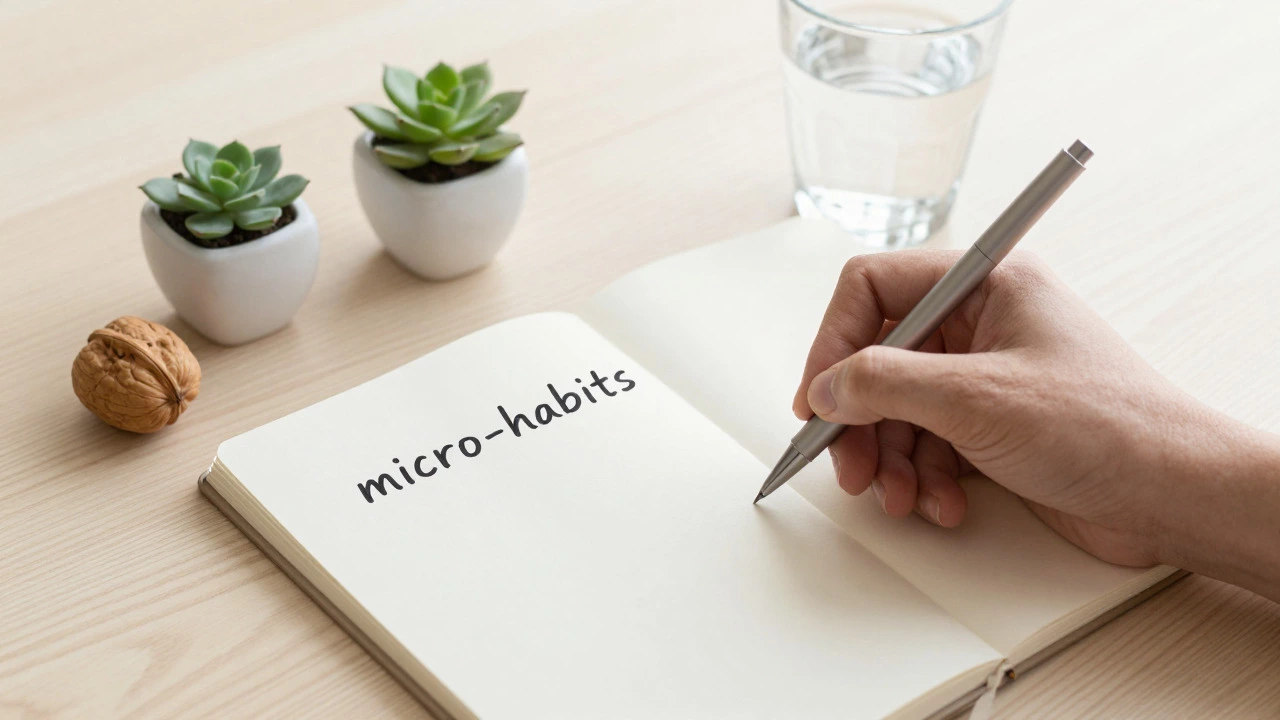
Willpower is a finite resource. If you rely on it, you will fail. Instead, rely on habits. Habits are automatic behaviors triggered by cues. To change yourself, you need to design your environment so that good choices are easy and bad choices are hard. This is the core of atomic habits. Don’t try to meditate for an hour a day. Start with two minutes. Don’t try to read a book a week. Start with one page. Small wins build momentum. Each small success releases dopamine, which reinforces the behavior. Over time, these micro-habits compound into significant physical and mental transformations.
Use implementation intentions. Instead of saying "I will exercise more," say "I will put on my running shoes at 7 AM." Specificity removes decision fatigue. Pair new habits with existing ones (habit stacking). After I brush my teeth, I will floss. After I pour my coffee, I will write in my journal. Make the cue obvious, the craving attractive, the response easy, and the reward satisfying. This framework makes habit formation almost inevitable.
Social Connection and Boundaries
We are social animals. Isolation is as deadly as smoking fifteen cigarettes a day. Yet, many of us spend hours scrolling through social media, comparing our behind-the-scenes to everyone else’s highlight reel. This breeds inadequacy and loneliness. Real connection requires vulnerability and presence. Put the phone away. Call a friend. Join a club. Volunteer. These activities provide a sense of purpose and belonging, which are crucial for mental wellbeing.
Equally important is setting boundaries. You cannot pour from an empty cup. Learn to say no. Protect your time and energy. If someone drains you, limit your exposure. Healthy relationships should energize you, not deplete you. Surround yourself with people who challenge you to grow, support your goals, and respect your limits. Your social circle is one of the biggest predictors of your health and happiness. Choose wisely.
Embracing Imperfection and Patience
Finally, let go of perfectionism. You will miss a workout. You will eat a cookie. You will have a bad day. This is not failure; this is life. Self-compassion is key. Research shows that people who treat themselves kindly after a setback are more likely to get back on track than those who beat themselves up. Shame paralyzes; compassion motivates. Be patient with yourself. Change takes time. Trust the process. Focus on progress, not perfection. Celebrate the small victories. Acknowledge the effort. You are building a new identity, one day at a time.
Remember, you are not broken. You are simply evolving. By integrating physical health, mental resilience, and supportive habits, you create a sustainable path to becoming the best version of yourself. Start today. Start small. Keep going.
How long does it take to see physical and mental changes?
Mental changes, like improved mood from exercise, can happen within weeks. Physical changes, like muscle gain or fat loss, typically take 8-12 weeks to become noticeable. Consistency is more important than speed.
Can I change myself without going to the gym?
Absolutely. Home workouts, walking, yoga, and daily activities count as exercise. The key is consistent movement, not the location.
What is the most important factor for mental health?
Sleep is foundational. Without adequate rest, other efforts like diet and exercise are less effective. Prioritize 7-9 hours of quality sleep nightly.
How do I stay motivated when I feel like quitting?
Focus on identity-based habits. Instead of "I need to run," think "I am a runner." Remind yourself why you started. Use micro-habits to make starting easier. Connect with supportive friends or communities.
Does diet really affect mental health?
Yes. Nutrients impact brain chemistry. Omega-3s, vitamins, and gut health directly influence mood and cognitive function. A balanced diet supports mental resilience.