
Minimalist Decision Helper
Struggling with an object? Answer these questions to find its fate.
Since you're unsure or the item doesn't provide immediate joy, let's check the logic.
If yes, it's safe to let go.
If no to both, it's clutter.
Box it up and date it for 6 months.
Key Takeaways for Your Journey
- Minimalism is a personal tool, not a strict set of rules.
- Focus on the "why" before you start throwing things away.
- Decluttering is a process, not a one-time event.
- Mindful consumption prevents the clutter from returning.
- The goal is freedom, not deprivation.
Finding Your "Why" Before the Purge
Before you grab a trash bag and start tossing things, stop. If you start decluttering without a goal, you'll likely end up frustrated or, worse, throw away something you actually love and regret it a week later. Why do you want this? Maybe you're tired of spending every Saturday cleaning rooms full of things you don't use. Or maybe you're drowning in debt from chasing the latest gadgets. When you define your purpose, the process becomes easier. For example, if your goal is "more time with my kids," then getting rid of a hobby you no longer enjoy-which takes up five hours of your week-is a win. If your goal is "financial peace," then seeing the cost of your unused gym equipment becomes the motivation to sell it. Without a target, you're just moving piles of stuff around your house.
The Art of the Physical Declutter
The most visible part of a minimalism lifestyle is the decluttering phase. But the biggest mistake beginners make is trying to do the whole house in one go. That's a recipe for burnout. Instead, use a targeted approach. Start with the "easy wins"-the junk drawer, the bathroom cabinet, or the sock drawer. These are low-emotion areas where decisions are fast.
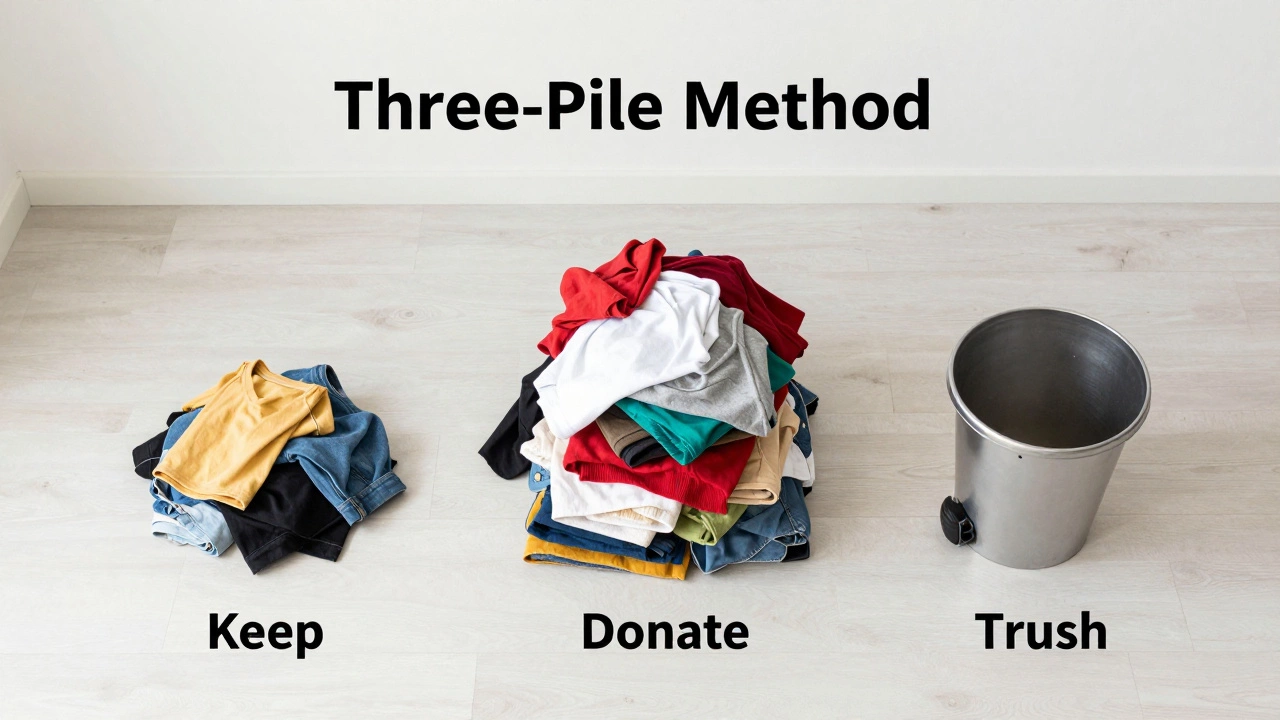
Once you've built some momentum, move into the heavier areas. Use the "Three-Pile Method": Keep, Donate/Sell, and Trash. If you're struggling to let go, try the "20/20 Rule." If you can replace an item for less than $20 in less than 20 minutes, it's usually safe to let it go. Most of us hold onto "just in case" items-like a spare cable for a phone we haven't owned since 2014-that we will never actually need.
| Method | Best For... | Pros | Cons |
|---|---|---|---|
| The KonMari Method | Emotional connection | High satisfaction, long-term | Takes a lot of time |
| The 90/90 Rule | Logical thinkers | Fast, objective decisions | Can feel cold/clinical |
| The Packing Party | Extreme cases/Move-ins | Rapidly identifies essentials | Physically exhausting |
| Minimalism Challenges | Beginners/Gamifiers | Low pressure, consistent | Slower overall progress |
Breaking the Cycle of Consumption
Decluttering is like mowing the lawn; if you don't stop the weeds from growing, you'll be doing the same work every month. This is where Mindful Consumption is the practice of being aware of why and how you buy new things, ensuring every purchase adds genuine value to your life comes in. We live in a world designed to make us feel incomplete without the latest upgrade. To break this, implement a "cooling-off period." Whenever you feel the urge to buy something that isn't a necessity (like food or medicine), wait 30 days. Put it on a list. Often, the dopamine hit of "wanting" the item fades, and you'll realize you don't actually need it. If you still want it after a month, then you can consider it. This simple habit separates impulsive urges from actual needs.
Expanding Minimalism Beyond Stuff
Physical clutter is just the tip of the iceberg. Once your closets are breathable, you'll likely notice that your calendar is still overflowing. This is Digital Minimalism, a concept popularized by Cal Newport, which involves reducing the noise of the digital world to reclaim your attention. Think about your phone. How many apps do you actually use daily? Most of us have dozens of notifications pinging us, stealing our focus and inducing stress. A digital declutter looks like unfollowing accounts that make you feel inadequate, turning off non-human notifications, and setting specific times for checking email. When you clear your digital space, you find that your brain stops feeling like it has fifty tabs open at once.
Then there's the mental aspect. We often hoard obligations. We say "yes" to social events we dread or take on projects we don't have time for because we're afraid of missing out. Minimalist living applies here too. It's about saying "no" to the mediocre so you can say a resounding "yes" to the extraordinary. It's the shift from "How can I do it all?" to "What is the most important thing to do right now?"
Common Pitfalls and How to Avoid Them
It's easy to fall into the "minimalism trap," where you spend more time obsessing over the *aesthetic* of minimalism than the *purpose* of it. You've seen those Instagram feeds with one single vase on a concrete table. That's not minimalism; that's interior design. If you force yourself to get rid of things you genuinely love just to fit a certain look, you're not finding freedom-you're creating a new set of restrictions.
Another mistake is the "buying to declutter" paradox. This happens when people buy expensive organizers, clear acrylic bins, and fancy labeling machines to "organize" their clutter. Newsflash: you can't organize your way out of having too much stuff. The solution is to have less stuff, not more boxes to put the stuff in. Focus on the removal first, then the organization.
The Long-Term Maintenance Phase
Living as a minimalist isn't a destination; it's a practice. You will have seasons where you accumulate more-maybe you start a new hobby, have a child, or move to a new city. The key is to maintain a regular "audit" of your life. Every few months, scan your environment. Ask yourself: "Is this item still serving me?" or "Does this commitment still align with my values?" One great rule of thumb is the "One-In, One-Out" rule. For every new item that enters your home, one old item must leave. This keeps your inventory stable and forces you to decide if the new item is truly better than what you already own. It turns shopping from a mindless habit into a conscious decision.
Does minimalism mean I have to throw away everything I love?
Absolutely not. Minimalism is about removing the things that *don't* add value so that the things you *do* love have more space and attention. If a collection of vintage cameras brings you genuine joy and doesn't overwhelm your space, keep them. The goal is to keep what sparks joy or provides utility, not to live in a vacuum.
How do I handle family members who aren't minimalists?
This is a common struggle. The best approach is to lead by example rather than by lecture. Focus on your own space first. When people see you feeling calmer and less stressed because you have less to manage, they often become curious. Avoid criticizing their "clutter," as that usually makes people defensive. Instead, share how your new habits have improved your life.
What if I'm afraid of needing something later that I threw away?
This fear is what keeps most people stuck. Try the "quarantine box" method. Put the items you're unsure about in a box, seal it, and date it for six months from now. If the date passes and you haven't opened the box once, you can safely donate the contents without having looked through them again, which avoids the emotional temptation to keep them.
Is minimalism expensive to start?
Actually, it's free. In fact, it's the opposite of expensive. Minimalism starts with getting rid of things you already own. While some people suggest "buying higher quality items that last longer" (which is a great long-term strategy), the initial phase of minimalism is entirely about subtraction, not addition.
How do I start if I'm completely overwhelmed by the amount of stuff I have?
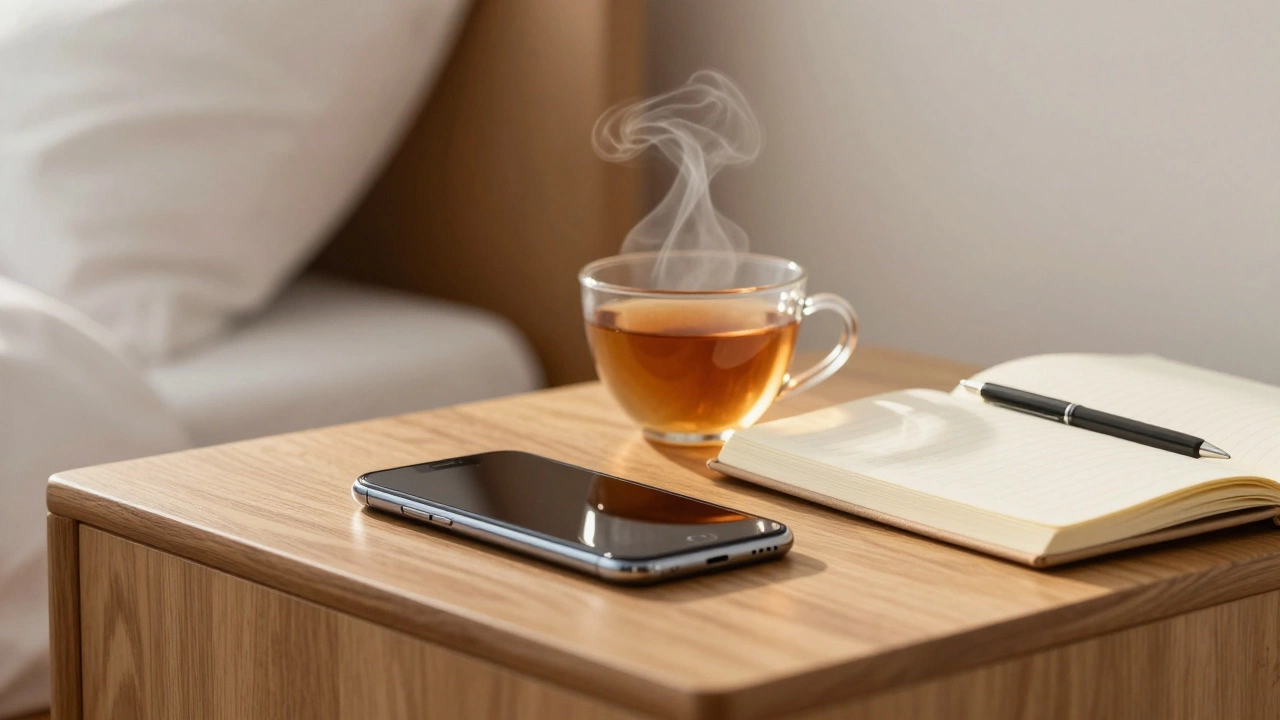
Start ridiculously small. Don't look at the whole house. Pick one single surface-like a coffee table or a nightstand. Clear it completely, then only put back what is absolutely necessary. Completing one small area gives you a "win" and proves to your brain that you can handle the process. The momentum from one clear table often leads to a clear room.
Next Steps for Your New Lifestyle
If you're feeling ready to start today, don't go overboard. Pick one of these three paths based on your current energy level:
- The Low-Energy Start: Spend 15 minutes today finding 10 items to donate. Just 10. Once you're done, stop and enjoy the feeling.
- The Medium-Energy Start: Pick one drawer or one shelf in your kitchen. Empty it completely, clean it, and only put back what you use every single week.
- The High-Energy Start: Set a timer for two hours and tackle your wardrobe using the "keep, donate, trash" system. Put the donations in your car immediately so they leave the house today.
Regardless of where you start, remember that the physical stuff is just a gateway. The real prize is the mental freedom and the time you get back. Be patient with yourself-you didn't accumulate a lifetime of stuff in a day, and you won't necessarily find your way to a minimalist life in one.