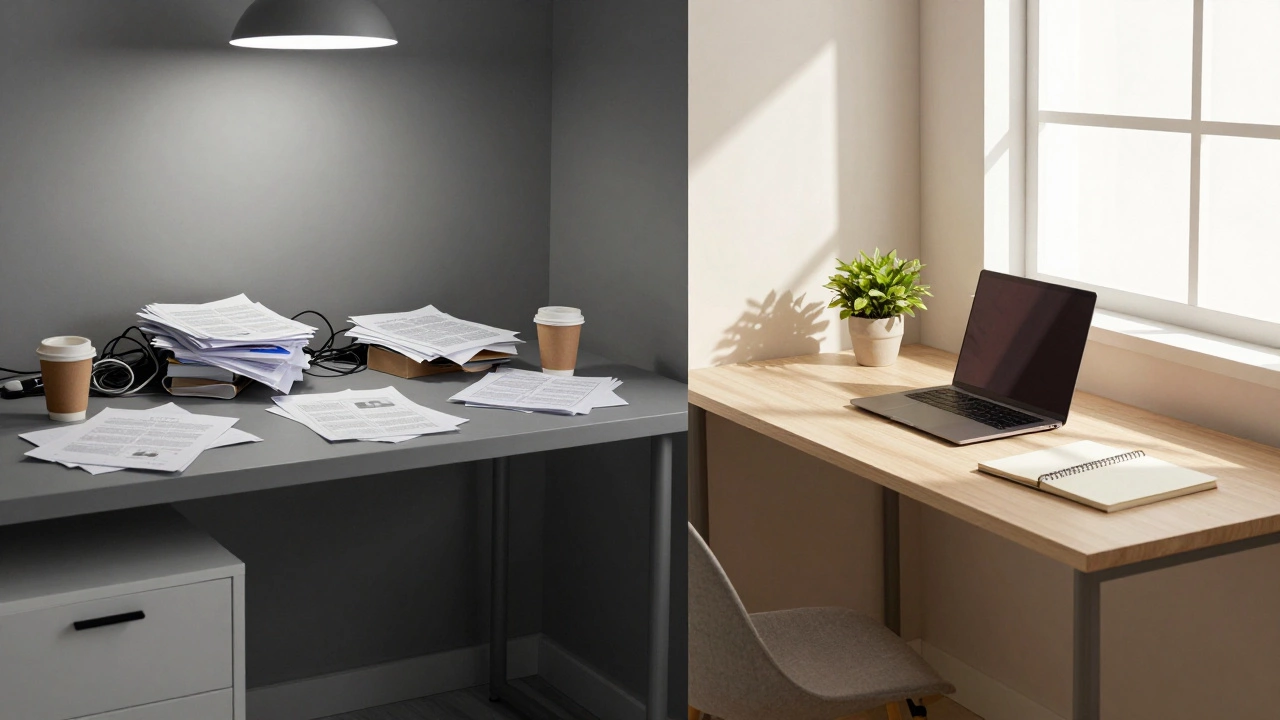
ADHD Cognitive Load Simulator
Your Visual Environment
Click items to remove them from your space:
Brain Processing Load
You know that feeling when your brain feels like a browser with forty-seven tabs open, and half of them are frozen? For people with ADHD is a neurodevelopmental disorder characterized by persistent patterns of inattention, hyperactivity, and impulsivity, visual clutter isn't just messy-it’s loud. It screams for attention, draining the mental energy you need to get things done.
This brings us to a big question: Minimalism is a lifestyle choice focused on living with less stuff to prioritize what truly matters. Is it actually good for ADHD? The short answer is yes, but not because it makes you "organized" in the traditional sense. It works because it reduces cognitive load. When you remove the noise, your brain stops fighting for control over every object in the room and can finally focus on the task at hand.
Why Clutter Hurts the ADHD Brain
To understand why minimalism helps, we have to look at how the ADHD brain processes information. Unlike neurotypical brains, which can often filter out background stimuli, the ADHD brain struggles with Sensory Overload is a state where the nervous system becomes overwhelmed by excessive sensory input.
Imagine sitting at a desk covered in papers, pens, coffee cups, and random trinkets. To someone without ADHD, this might be a "creative mess." To you, every single item is sending a signal: "Look at me! Pick me up! Sort me out!" This constant barrage creates Cognitive Load is the total amount of mental effort being used in the working memory. Your brain is burning energy just trying to ignore the clutter so you can read one email.
When you practice minimalism, you aren't just cleaning; you are lowering the volume. By reducing the number of objects in your environment, you reduce the number of decisions your brain has to make. You stop wasting willpower on hiding keys under cushions or sorting through piles of mail. That saved energy goes toward your actual goals.
The Myth of "Just Clean Up"
If you’ve tried to clean your house before, you know the struggle. Standard advice usually sounds like: "Just spend ten minutes tidying up." But for ADHD, this advice misses the mark entirely. The problem isn't laziness; it's Executive Dysfunction is difficulty with planning, initiating, and completing tasks due to impaired executive functions.
Minimalism offers a different approach. Instead of adding more rules ("You must put everything back immediately"), minimalism subtracts obligations. If you only own five shirts, you don't need a complex system to decide what to wear. If you only have one place for your keys, you don't need a reminder app to find them.
This shift from "managing stuff" to "owning less" is crucial. Traditional organization systems often fail for ADHDers because they rely on consistent behavior. Minimalism relies on simplicity. A simple system breaks less often than a complex one.
Practical Steps to Start Minimally
Starting a minimalist journey with ADHD requires a specific strategy. You cannot do a massive purge in one day-that leads to burnout and rebound clutter. Here is a step-by-step guide to decluttering without overwhelming your brain.
- Start with One Surface: Don't tackle the whole house. Pick one table, one drawer, or one shelf. Clear it completely. Wipe it down. Leave it empty for an hour. Notice how calm it feels. Then, put back only the three items you absolutely need there.
- The "Out of Sight" Rule: Visual clutter triggers anxiety. If you can't hide something, consider if you really need it. Use closed storage bins instead of open shelves. Out of sight doesn't mean out of mind; it means out of your immediate sensory field.
- Limit Categories: Identify categories where you hoard duplicates. Socks? T-shirts? Notebooks? Set a hard limit. Once you hit the limit, you must donate or discard one before buying another. This prevents accumulation without requiring daily maintenance.
- Create "Landing Zones": Designate specific spots for high-use items like keys, wallet, and phone. These zones should be obvious and frictionless. No drawers, no boxes-just a clear surface. This reduces the chance of misplacing essentials.
Remember, progress is non-linear. Some days you'll feel inspired; other days, the pile will grow again. That's okay. Minimalism is a practice, not a destination.

Digital Minimalism for Focus
Your physical space isn't the only place clutter lives. Digital Clutter is excessive files, apps, notifications, and bookmarks that create mental distraction is just as damaging to focus as a messy desk.
For ADHD brains, the smartphone is a slot machine. Every notification is a dopamine hit that pulls your attention away from deep work. Digital minimalism involves curating your digital environment to protect your focus.
- Turn Off Non-Essential Notifications: Keep calls and texts. Turn off social media, news, and promotional alerts. Let your brain choose when to check these apps, not the other way around.
- Clear Your Desktop: A cluttered computer desktop mirrors a cluttered mind. Delete old screenshots, organize files into broad folders, and keep only active projects visible.
- Unsubscribe Ruthlessly: Check your email inbox. Unsubscribe from newsletters you never read. Each unread email is a tiny demand on your attention span.
By simplifying your digital life, you reclaim hours of lost time and reduce the mental fatigue caused by constant context switching.
| Feature | Traditional Organization | ADHD-Friendly Minimalism |
|---|---|---|
| Focus | Managing existing stuff | Reducing total stuff |
| Maintenance | High (daily routines) | Low (simple systems) |
| Error Tolerance | Low (complex systems break easily) | High (simplicity is forgiving) |
| Cognitive Load | Increases (more decisions) | Decreases (fewer choices) |
| Goal | Aesthetic perfection | Mental clarity and function |
Pitfalls to Avoid
Even with the best intentions, minimalist journeys can go wrong. Here are common traps to watch out for.
Perfectionism Paralysis: Many people with ADHD swing between chaos and extreme order. Don't aim for a Pinterest-perfect home. Aim for a functional one. If leaving a dish in the sink for an hour keeps you from stressing, that's fine. Minimalism is about removing pressure, not adding new standards.
Emotional Dumping: Sometimes, clutter is emotional safety. Throwing away everything can feel unsafe. Be gentle with yourself. Keep sentimental items if they bring joy, but store them respectfully. You don't have to display everything to keep it.
Buying "Organizers": Resist the urge to buy cute bins and labels. Often, these purchases add more clutter before they solve anything. Use what you have first. If you still need containers after clearing out excess, then consider buying.

Building Sustainable Habits
Sustainability is key. To make minimalism stick, tie it to existing habits. This technique, called Habit Stacking is pairing a new habit with an existing routine to increase consistency, works well for ADHD.
For example, while your coffee brews, clear one surface. While waiting for the shower to warm up, unload the dishwasher. These micro-moments prevent clutter from building up in the first place. Small, consistent actions beat grand, sporadic efforts every time.
Also, involve others if possible. If you live with partners or family, explain how clutter affects your mental health. Ask for their support in keeping shared spaces clear. You don't have to do it alone.
Final Thoughts on Simplicity
Minimalism isn't about having an empty apartment. It's about having enough space-physical and mental-to breathe. For those with ADHD, it’s a tool for regulation. It reduces the noise, lowers the stress, and frees up brainpower for the things that truly matter.
Start small. Be kind to yourself. And remember, the goal isn't a perfect home; it's a peaceful mind.
Does minimalism cure ADHD symptoms?
No, minimalism does not cure ADHD. However, it can significantly reduce environmental triggers that worsen symptoms like inattention and overwhelm. It acts as a supportive strategy alongside therapy, medication, or other coping mechanisms.
How do I start decluttering if I'm overwhelmed?
Start with one small area, like a single drawer or countertop. Set a timer for 10 minutes and clear only that space. Do not try to organize the whole room. Celebrate the small win to build momentum.
Is it okay to keep sentimental items with ADHD?
Yes. If an item brings genuine joy or comfort, keep it. The goal of minimalism is to remove distractions, not memories. Store sentimental items in a designated box or shelf to keep them out of daily visual clutter.
What is the difference between minimalism and hoarding?
Hoarding involves difficulty discarding items due to emotional distress, leading to clutter that interferes with daily life. Minimalism is a conscious choice to own fewer items to improve quality of life. They are opposite approaches to managing possessions.
Can digital minimalism help with ADHD focus?
Absolutely. Reducing digital notifications and organizing digital files decreases sensory overload and context switching. This allows the ADHD brain to sustain attention on tasks for longer periods without interruption.