
Most people start a new workout routine with big goals-lose weight, get stronger, feel better-but by day three, they’re already skipping sessions. Why? Because the plan was too vague, too intense, or just didn’t fit their life. A good 7-day workout routine isn’t about pushing yourself to exhaustion. It’s about consistency, recovery, and moving your body in ways that actually stick.
Why a 7-Day Plan Works Better Than 3 or 4
Working out three times a week sounds manageable, but it often turns into a cycle of "I’ll start Monday" and then Monday never comes. A 7-day plan builds rhythm. It turns exercise into a habit, not a chore. You don’t need to lift heavy every day. You don’t need to run marathons. You just need to move.
Studies show that people who exercise daily-even lightly-are 50% more likely to stick with it long-term than those who do intense sessions sporadically. The key is variety and balance. Your body isn’t designed to grind hard every day. It needs movement, rest, and recovery woven together.
What a Realistic 7-Day Routine Looks Like
This plan is built for someone with a busy life-maybe a parent, a desk worker, someone who doesn’t have an hour to spare. Each day takes 20 to 45 minutes. No equipment needed. You can do it at home, in a park, or even in your hotel room while traveling.
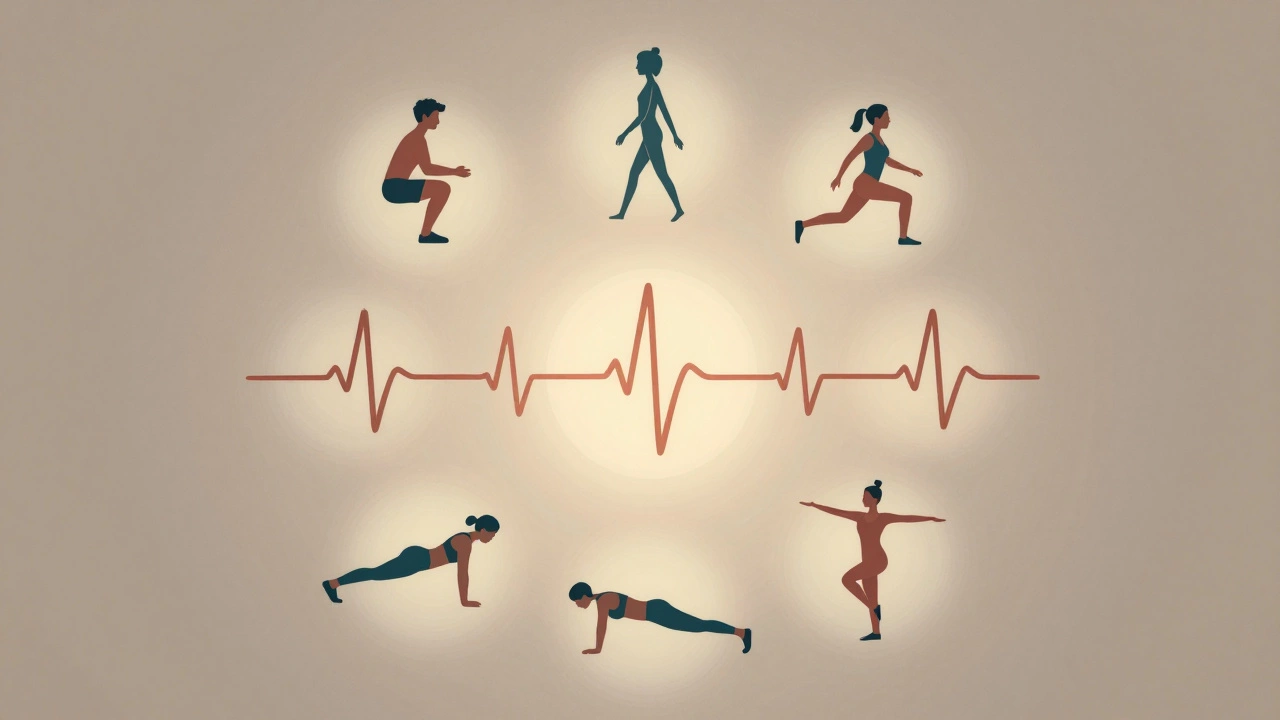
- Day 1: Full-Body Strength (Bodyweight) - Squats, push-ups (on knees if needed), glute bridges, planks. Do 3 rounds of 10 reps each. Focus on control, not speed.
- Day 2: Mobility & Walking - 30 minutes of brisk walking. Add 5 minutes of shoulder rolls, hip circles, and cat-cow stretches. This isn’t cardio-it’s maintenance.
- Day 3: Lower Body Focus - Lunges, step-ups (use stairs or a sturdy chair), calf raises, side leg lifts. 3 sets of 12 per side. Keep your core tight.
- Day 4: Active Recovery - Foam roll your legs and back for 10 minutes. Then do 20 minutes of gentle yoga or stretching. Breathe deep. This day is for healing.
- Day 5: Upper Body & Core - Push-ups, inverted rows (under a sturdy table), bird-dogs, dead bugs. 3 rounds. If you can’t do push-ups yet, do them against a wall.
- Day 6: Cardio Intervals - 20 minutes of high-low effort. 30 seconds of jumping jacks or fast marching in place, then 60 seconds of slow walking. Repeat 8 times. No need to sprint-just raise your heart rate.
- Day 7: Free Movement - Dance, play with your kids, walk the dog, garden, swim. Do anything that makes you smile and gets you moving for 30+ minutes. No rules.
This isn’t a program for bodybuilders. It’s for people who want to feel stronger, sleep better, and have more energy by the end of the week-not burned out.
Why Recovery Days Are Non-Negotiable
Many think more sweat equals more gain. That’s false. Muscles grow when you rest, not when you lift. Overtraining leads to fatigue, injury, and quitting. Day 4 and Day 7 aren’t "light" days-they’re essential. Your joints need lubrication. Your nervous system needs downtime. Your motivation needs space to recharge.
On recovery days, you’re not doing nothing. You’re repairing. Think of it like charging your phone. You don’t leave it plugged in 24/7, but you also don’t let it die completely. Same with your body.
What to Eat Around Your Workouts
Food isn’t magic, but it matters. You don’t need protein shakes or fancy supplements. Just eat real food that fills you up.
- Before a workout (if you’re hungry): A banana, a handful of nuts, or a slice of whole grain toast with peanut butter.
- After a workout: Protein + carb combo. Eggs and toast, yogurt with fruit, chicken and rice. Helps your muscles rebuild.
- Stay hydrated. Drink water all day. Thirst is often mistaken for hunger.
If you’re not hungry after a workout, don’t force it. Listen to your body. Consistency in eating matters more than timing.
Common Mistakes People Make
Here’s what usually goes wrong-and how to fix it:
- Mistake: Skipping warm-ups because "I don’t have time." Fix: 3 minutes of arm circles, leg swings, and marching in place is enough. It prevents injury.
- Mistake: Doing the same workout every day. Fix: Your body adapts fast. Change the movement pattern every few days to keep progress going.
- Mistake: Comparing yourself to Instagram fitness models. Fix: Progress isn’t about six-pack abs. It’s about climbing stairs without getting winded, carrying groceries without back pain, or sleeping through the night.
- Mistake: Waiting for "perfect" conditions. Fix: Do 10 minutes now. Not 60 tomorrow. Movement beats perfection every time.

How to Track Progress Without a Scale
The scale doesn’t tell the whole story. Muscle weighs more than fat. You might not lose pounds-but you’ll notice other changes:
- You can hold a plank 10 seconds longer.
- Your clothes fit better.
- You’re not out of breath walking up the stairs.
- You sleep deeper and wake up less tired.
- You feel calmer, less anxious.
Take a photo on Day 1 and Day 7. Don’t judge it. Just observe. Then check again in 3 weeks. You’ll see it.
What Comes After 7 Days?
Don’t stop. This isn’t a challenge. It’s a launchpad. After 7 days, ask yourself: What did you enjoy? What felt too hard? Adjust.
Maybe you want to add light dumbbells. Maybe you want to try swimming on weekends. Maybe you want to walk more during lunch breaks. That’s fine. The goal isn’t to follow a rigid plan forever. It’s to build a lifestyle where movement feels natural-not forced.
Most people quit because they treat fitness like a test they have to pass. It’s not. It’s a conversation with your body. Listen. Adapt. Keep going.
Final Thought: It’s Not About Perfection
You don’t need to do all seven days perfectly. Miss one? Skip a workout? That’s okay. What matters is that you showed up most days. That’s how habits form-not in flawless execution, but in gentle persistence.
Seven days isn’t enough to transform your body. But it’s more than enough to transform how you feel about movement. And that’s where real change begins.