Secondhand Clothing: Why It’s More Than Just a Trend
When you buy secondhand clothing, pre-owned garments that are reused instead of discarded. Also known as thrifted fashion, it’s not just about saving money—it’s a quiet rebellion against fast fashion’s waste. Every year, over 92 million tons of textile waste end up in landfills. Most of it? Clothes worn once or twice. Choosing secondhand means you’re not just buying a shirt—you’re stopping a landfill from growing.
It’s not magic. It’s logic. sustainable fashion, a system that reduces environmental harm by extending garment life isn’t a buzzword—it’s a necessity. Brands push new collections every six weeks, but your jeans don’t need to be replaced that fast. thrifting, the act of buying used clothes from charity shops, vintage stores, or online resellers cuts down on water use, chemical dyes, and carbon emissions. One cotton t-shirt takes 2,700 liters of water to make. That’s enough for one person to drink for 2.5 years. Buying it secondhand? Zero new water used.
And it’s not just good for the planet. circular fashion, a model where clothes are reused, repaired, and recycled instead of thrown away is quietly becoming the new normal. People aren’t just buying secondhand because they have to—they’re doing it because they like the finds. Unique vintage denim, designer coats at a fraction of the price, hand-knit sweaters with character. You’re not shopping for trends—you’re collecting stories.
What you’ll find in these articles isn’t just how to thrift better. It’s why it matters. You’ll see real data on who’s buying used clothes, how to spot quality in a pile of donations, and how to build a wardrobe that lasts without buying new. No fluff. No guilt trips. Just clear, practical truth about what happens when you choose a used jacket over a new one—and why that choice adds up faster than you think.
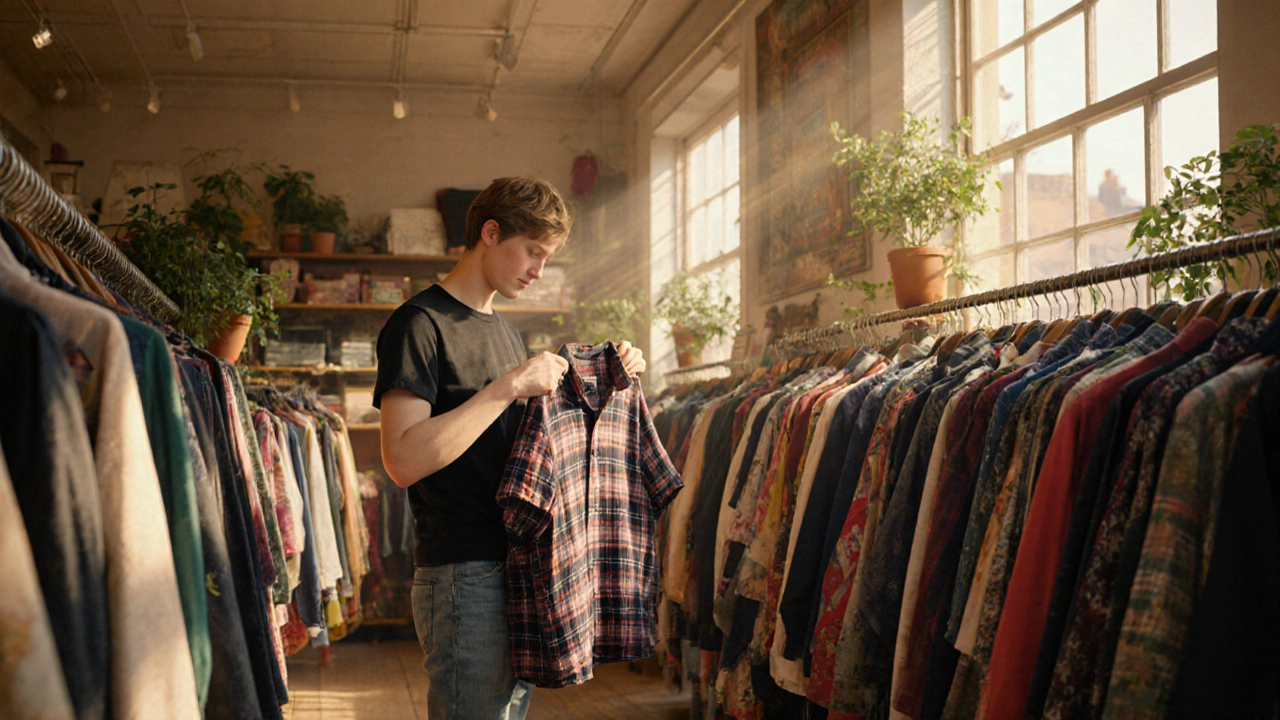
Thrifting and Sustainable Fashion: Is Buying Secondhand Really Eco‑Friendly?
Explore whether thrifting truly counts as sustainable fashion, learn the environmental pros and cons, and get practical tips to make secondhand shopping eco‑friendly.