Belly Fat Fighter Meal Tracker
Track Your Daily Protein & Vegetables
Follow the science-backed rules from the article: 25-30g protein per meal + 5+ vegetable servings daily
Example: 100g chicken = 25g protein
Example: 1 cup broccoli = 1 serving
Your Progress
Track your meals to see how close you are to the 4 rules
There’s no magic food that melts belly fat overnight. But there is a proven way to shrink it - and it starts with what you eat every day. Belly fat isn’t just about looks. It’s the kind of fat that wraps around your organs and raises your risk for diabetes, heart disease, and high blood pressure. The good news? You don’t need to starve yourself, count calories forever, or buy expensive supplements. You just need a clear, simple plan that works with your body, not against it.
Stop chasing quick fixes - focus on real changes
Most meal plans that promise fast belly fat loss are built on lies. Detox teas, cabbage soup diets, and 7-day cleanses don’t work long-term. They might drop the scale, but you’re losing water and muscle, not fat. And when you go back to normal eating, the fat comes right back - often with extra pounds.
Real belly fat loss happens when you create a steady calorie deficit over time. That means eating slightly fewer calories than your body burns. But here’s the key: you can’t out-exercise a bad diet. You can’t run five miles a day and still eat pizza and soda every night. Food is 80% of the battle. The rest is sleep, stress, and movement - but food comes first.
What actually works: The 4 rules of a belly-fat-fighting meal plan
You don’t need a complicated plan. Just stick to these four rules, and your body will start changing.
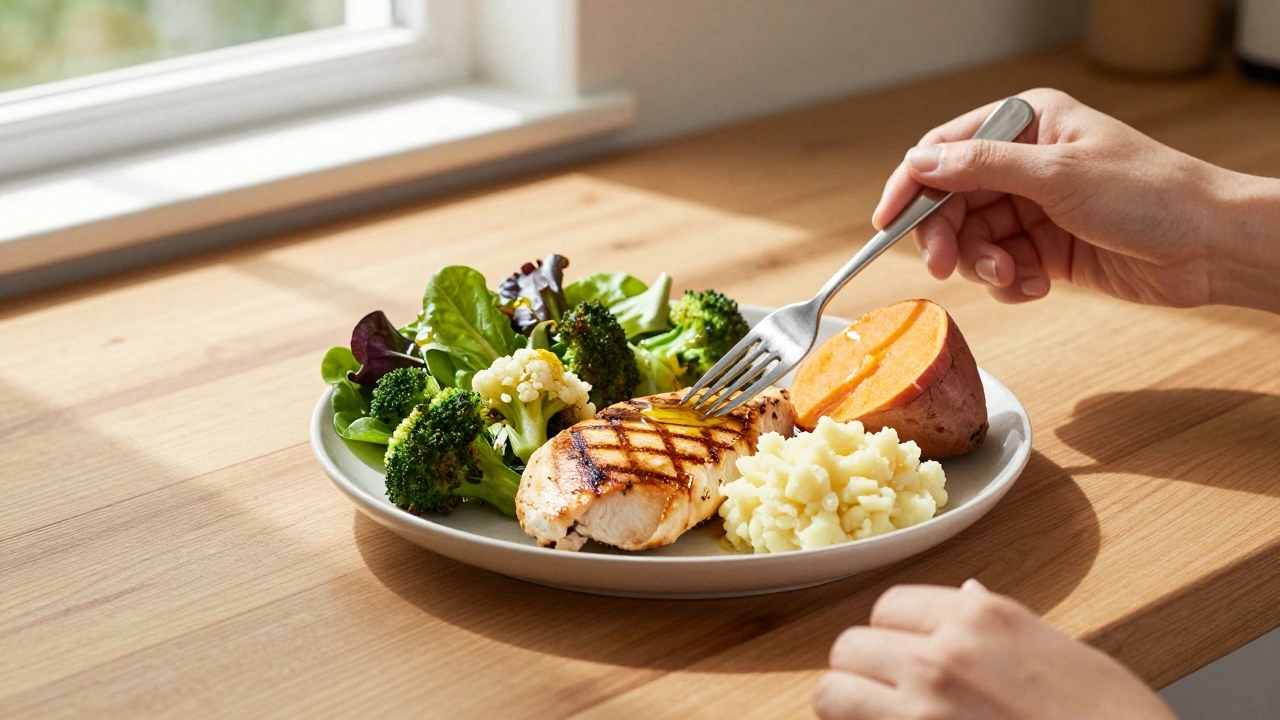
- Eat more protein at every meal. Protein keeps you full longer, helps preserve muscle as you lose fat, and boosts your metabolism slightly after eating. Aim for 25-30 grams of protein per meal. That’s about one palm-sized portion of chicken, fish, tofu, eggs, or lentils. Start your day with eggs or Greek yogurt. Have grilled chicken or beans at lunch. Snack on cottage cheese or a handful of almonds.
- Cut out added sugar and ultra-processed carbs. Sugar - especially in drinks like soda, sweet tea, and flavored coffee - is the #1 driver of belly fat. Processed carbs like white bread, pastries, and chips spike your blood sugar, which tells your body to store fat around your middle. Swap them for whole foods: oats instead of sugary cereal, sweet potatoes instead of fries, quinoa instead of white rice.
- Fill half your plate with non-starchy vegetables. Broccoli, spinach, peppers, zucchini, cauliflower, kale - these are low in calories but high in fiber and nutrients. They fill you up without adding bulk. Eat them raw, steamed, roasted, or sautéed in olive oil. If you’re not eating at least five servings a day, you’re missing the biggest tool in your fat-loss toolbox.
- Drink water, not calories. Sugary drinks are liquid calories you don’t feel full from. A single 500ml bottle of soda has 50 grams of sugar - that’s 12 teaspoons. Water, unsweetened tea, or black coffee won’t add fat. If you’re thirsty, drink water. If you’re hungry, wait 10 minutes. Often, what feels like hunger is just dehydration.
A sample day: Real food, real results
Here’s what a day on this plan looks like - no fancy ingredients, no strict rules, just real food you can find at any grocery store.
- Breakfast: 2 scrambled eggs with spinach and tomatoes, 1 slice of whole grain toast, 1 small apple.
- Snack: A cup of plain Greek yogurt with a sprinkle of chia seeds and a few blueberries.
- Lunch: Grilled chicken breast, 1 cup cooked quinoa, large mixed salad with olive oil and vinegar dressing.
- Snack: A handful of almonds (about 15) or a hard-boiled egg.
- Dinner: Baked salmon, roasted broccoli and cauliflower, ½ cup mashed sweet potato.
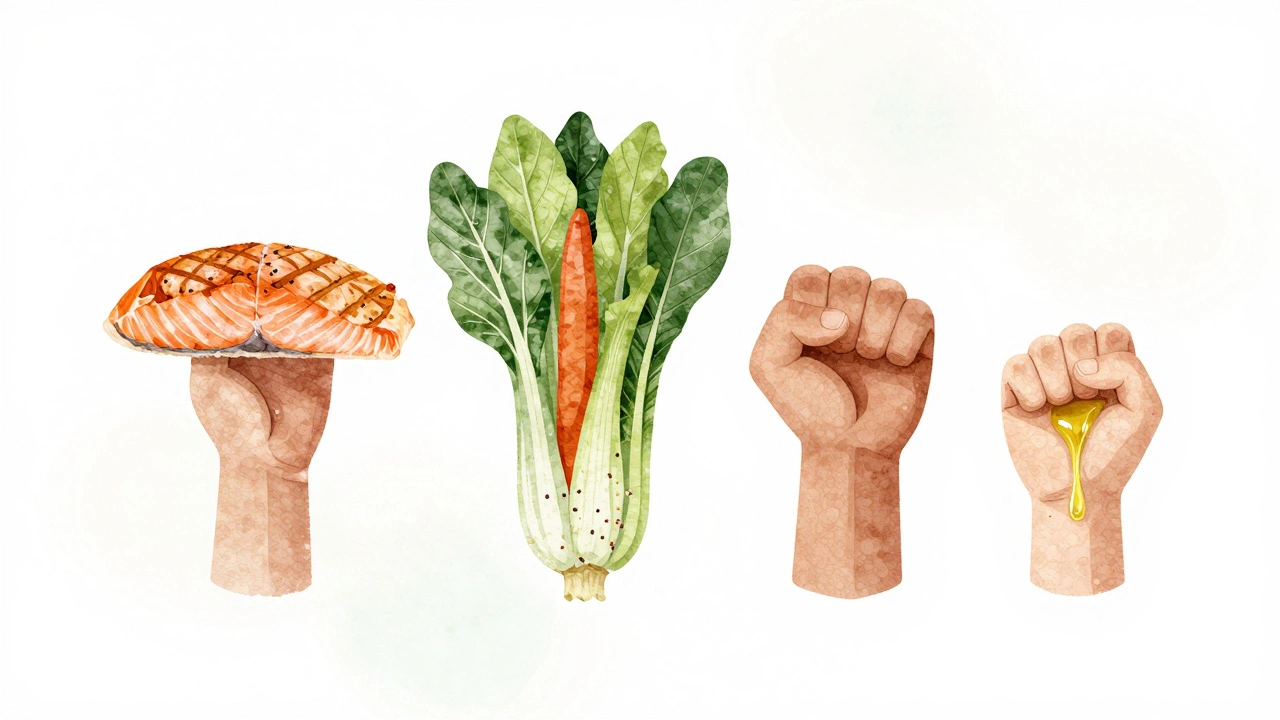
That’s about 1,500-1,700 calories for most people - enough to lose fat slowly and steadily. You don’t need to weigh your food. Just use your hand as a guide: protein = palm, carbs = fist, veggies = two fists, fats = thumb.
What to avoid like the plague
Some foods sneak into meals and sabotage fat loss without you even noticing.
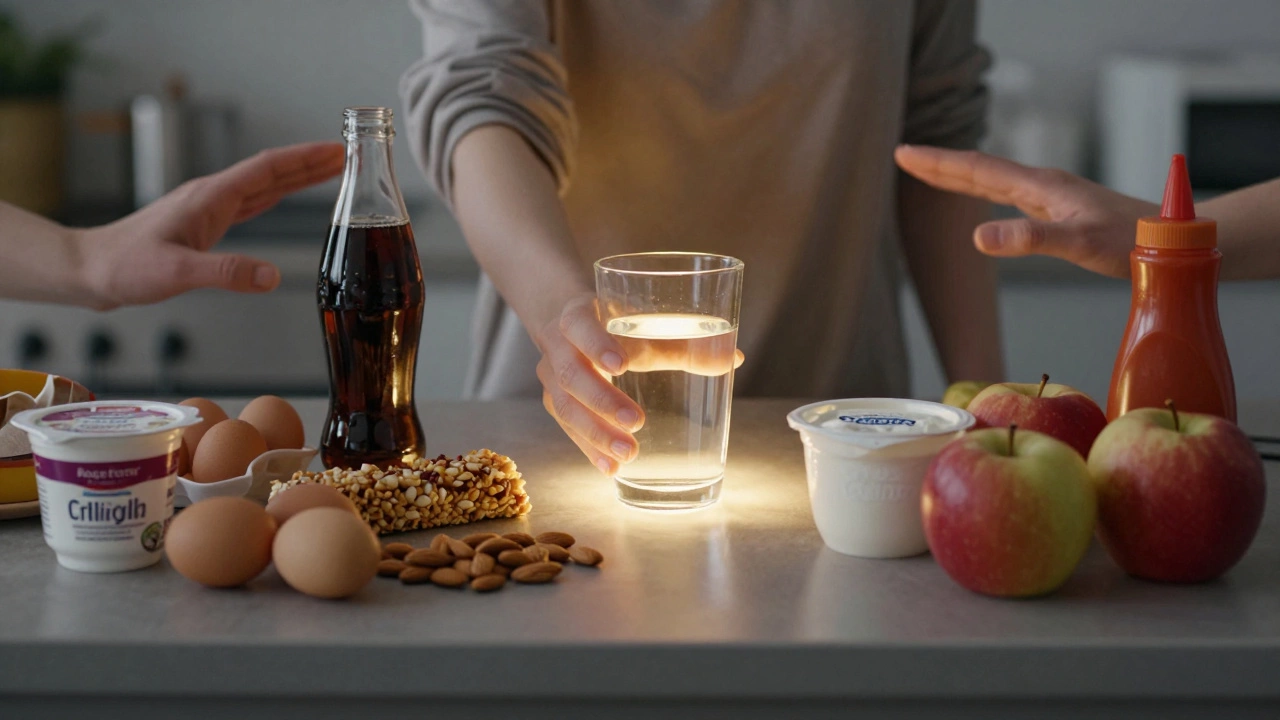
- Flavored yogurts: They’re loaded with sugar. Buy plain and add fruit yourself.
- Granola bars: Often more sugar than a candy bar. Look for ones with under 5g sugar, or skip them.
- “Light” salad dressings: They replace fat with sugar and thickeners. Use olive oil and vinegar instead.
- Alcohol: Beer, wine, and cocktails slow fat burning. Your liver prioritizes breaking down alcohol over fat. One drink a week is fine. Daily? That’s a belly fat accelerator.
- Hidden sauces: Ketchup, BBQ sauce, teriyaki - all sugar bombs. Make your own or skip them.
Why timing doesn’t matter as much as you think
You’ve heard: “Don’t eat after 7 p.m.” or “Skip breakfast to burn fat.” Neither is true for most people. What matters is your total daily intake and food quality. If you eat a healthy dinner at 9 p.m. and stay under your calorie goal, you’ll lose fat. If you eat a sugary breakfast at 6 a.m. and binge later, you won’t.
Some people do better skipping breakfast (intermittent fasting). Others need a morning meal to avoid overeating later. Try both. See what works for your energy, hunger, and schedule. The best meal plan is the one you can stick to for months, not days.
What to expect - and when
Real fat loss is slow. You won’t see your abs in two weeks. But you might notice your pants feel looser after 3-4 weeks. Your energy might improve. Your cravings for sweets might drop. These are early wins - and they matter more than the scale.
Most people lose 0.5 to 1 kg (1-2 lbs) of fat per week on a consistent plan. That’s about 2-4 kg (4-8 lbs) a month. It’s not fast. But it’s permanent. Losing weight too fast usually means losing muscle and water - and gaining it back faster.
What to do if you hit a plateau
After a few weeks, your weight might stop dropping. That’s normal. Your body adapts. Here’s what to check:
- Are you still eating the same portions? Portion creep is real. You might be eating 10% more than you think.
- Are you sleeping 7+ hours? Poor sleep raises cortisol, which increases belly fat storage.
- Are you stressed? Chronic stress = more fat around your middle. Walk outside. Breathe. Take breaks.
- Are you drinking enough water? Dehydration can mimic hunger and slow metabolism.
- Have you added more movement? Walk 10,000 steps a day. Take the stairs. Stand up every hour.
Don’t cut calories further. You’ll lose muscle. Instead, focus on sleep, stress, and activity. The scale will move again.
Final thought: This isn’t a diet. It’s a lifestyle.
You don’t need to be perfect. Miss a meal? Eat a slice of pizza? That’s okay. One bad day doesn’t ruin progress. What ruins progress is giving up because you weren’t perfect.
This plan isn’t about restriction. It’s about eating more of what makes you feel good - energized, satisfied, and in control. It’s about choosing real food over fake food, every single day. And over time, that’s how you lose belly fat - not with willpower, but with habits.
Can I lose belly fat without exercise?
Yes, you can lose belly fat with diet alone - but it will take longer. Exercise helps preserve muscle, boosts metabolism, and reduces stress, which all support fat loss. Walking daily, doing bodyweight exercises 2-3 times a week, or lifting light weights makes a big difference. But if you can’t exercise right now, fixing your diet is still the most powerful step.
Are low-carb diets better for belly fat?
Low-carb diets can help some people lose belly fat faster, especially if they’re eating a lot of sugar and refined carbs. But you don’t need to cut carbs entirely. The key is swapping out processed carbs (bread, pasta, pastries) for whole ones (oats, sweet potatoes, quinoa). Many people do better with moderate carbs because they feel less hungry and have more energy. Try reducing sugar and refined carbs first before going fully low-carb.
What about intermittent fasting for belly fat?
Intermittent fasting - like eating within an 8-hour window - can help reduce overall calorie intake, which leads to fat loss. But it’s not magic. If you overeat during your eating window, you won’t lose weight. It works best for people who naturally skip meals or aren’t hungry in the morning. If you feel weak, dizzy, or obsessed with food, it’s not right for you. Try it for 2 weeks. If you feel better, keep going. If not, eat regular meals.
Why am I losing weight but not belly fat?
Your body loses fat in its own order - and belly fat is often the last to go, especially for women. You might lose fat from your face, arms, or thighs first. That doesn’t mean the plan isn’t working. Keep going. Belly fat responds to consistent calorie control and lower stress levels. Measuring your waist with a tape measure every 2 weeks gives a clearer picture than the scale.
How long does it take to see results?
Most people start noticing changes in 3-4 weeks - clothes fitting better, less bloating, more energy. Visible belly fat reduction usually takes 6-12 weeks of consistent eating. It’s not instant, but it’s real. The key is patience and consistency. Don’t compare your progress to someone else’s. Focus on your own habits.