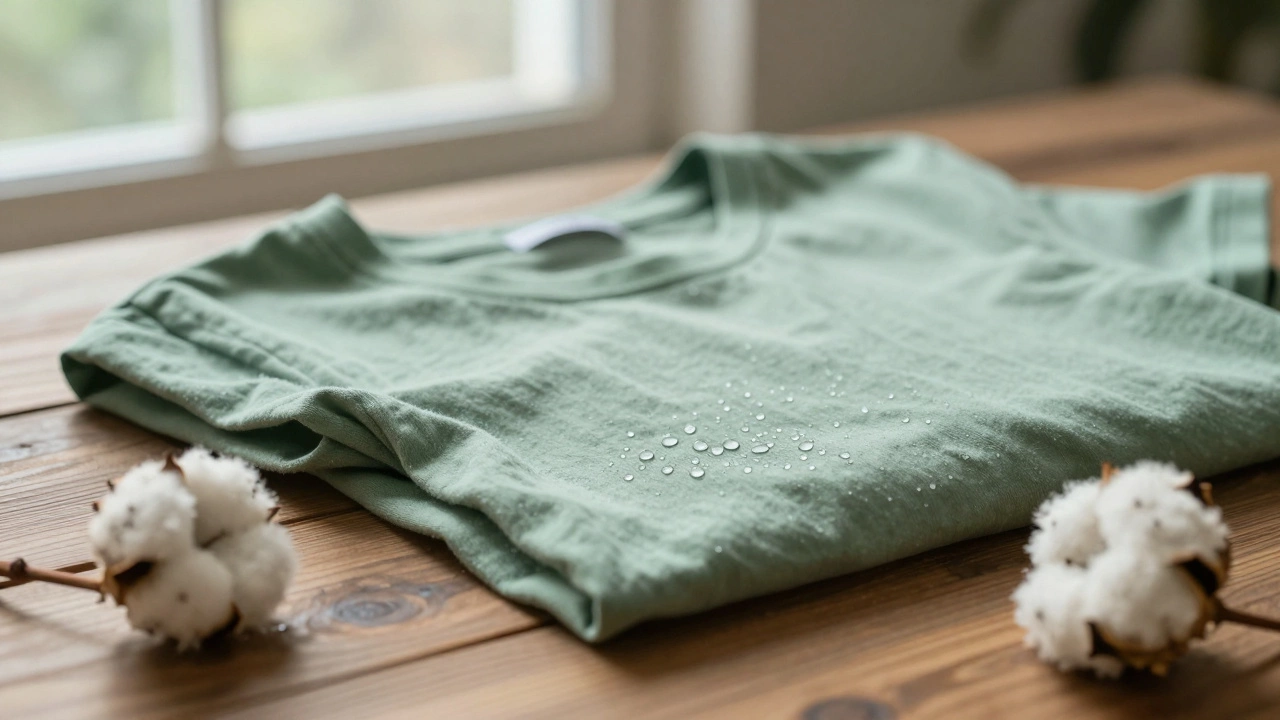
Every time you put on a shirt, pair of jeans, or a dress, you’re not just wearing fabric-you’re wearing chemicals. Most conventional clothing is drenched in pesticides, synthetic dyes, formaldehyde, and plastic-based fibers that don’t just sit on your skin-they get absorbed. If you’ve ever felt itchy after wearing a new shirt, or noticed your skin reacting after laundry day, it might not be allergies. It could be the fabric itself.
Why Toxic Fabrics Matter More Than You Think
The fashion industry is the second-largest polluter on Earth, right after oil. But most people don’t realize how much of that pollution starts with the fabric you wear every day. Synthetic fibers like polyester, nylon, and acrylic are made from petroleum. They don’t break down. They shed microplastics every time you wash them-up to 700,000 fibers per load, according to a 2017 study by the International Union for Conservation of Nature. These fibers end up in oceans, rivers, and even your tap water.
Even natural fibers aren’t safe if they’re grown with chemicals. Conventional cotton, for example, uses 16% of the world’s insecticides and 7% of its pesticides-more than any other crop. That cotton might look soft, but it’s soaked in glyphosate, endocrine disruptors, and neurotoxins. When you wear it, your skin absorbs what’s left on the fabric. Your sweat, your body heat, your moisture-all of it pulls those chemicals into your bloodstream.
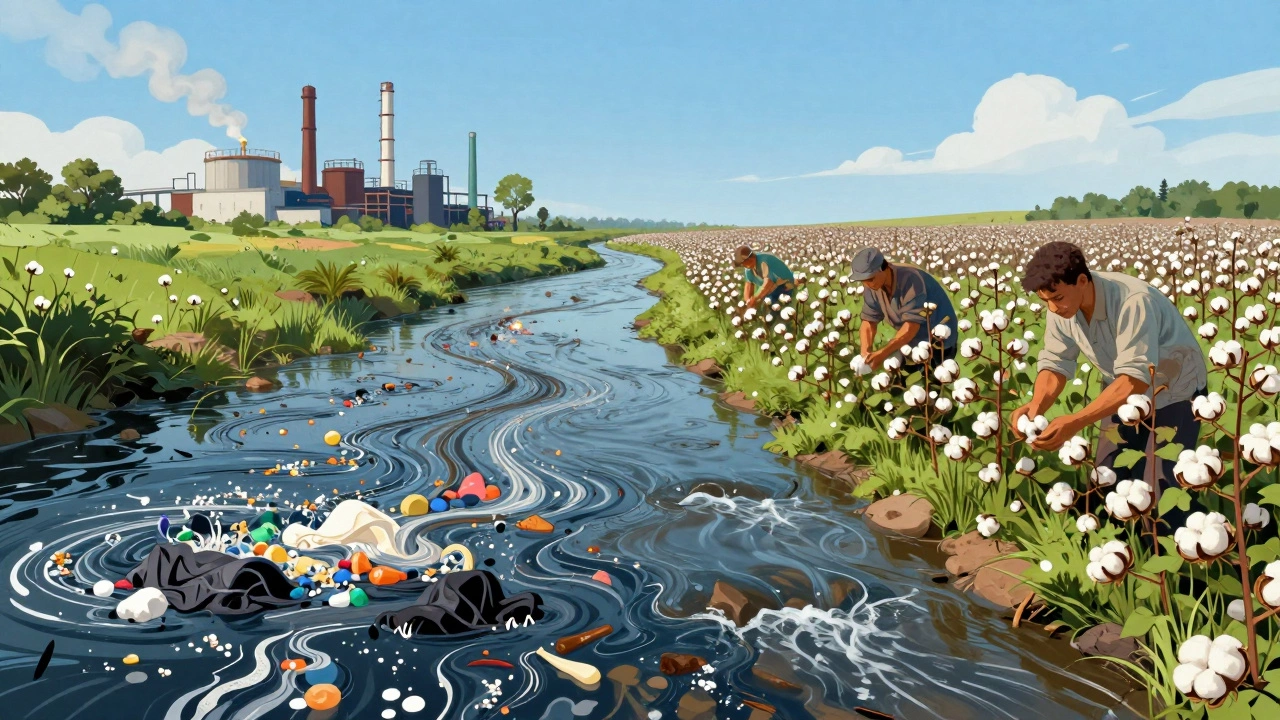
And then there’s the dyeing process. Textile dyeing is the second-largest polluter of clean water globally. Heavy metals like lead, cadmium, and chromium are dumped into rivers in countries where regulation is weak. These toxins don’t just harm ecosystems-they end up in the clothes you buy, especially fast fashion.
The Least Toxic Fabric: Organic Cotton
If you want the least toxic fabric to wear, organic cotton is your best bet. Unlike conventional cotton, organic cotton is grown without synthetic pesticides, herbicides, or genetically modified seeds. It uses 91% less water because it relies on rain instead of irrigation. The soil is kept healthy with crop rotation and compost, not chemicals.
Organic cotton is certified by standards like GOTS (Global Organic Textile Standard), which also bans toxic dyes and formaldehyde in processing. That means the fabric you’re wearing has no residual pesticides, no chlorine bleaching, no AZO dyes. It’s as close to nature as fabric can get.
Real-world impact? A 2020 study from the Textile Exchange found that organic cotton reduces global warming potential by 46% compared to conventional cotton. It also cuts water use dramatically and supports healthier farms. Farmers in India and Mali who switched to organic cotton reported fewer cases of pesticide poisoning and higher incomes.
And here’s the best part: organic cotton feels better. It’s softer, more breathable, and less likely to irritate sensitive skin. Parents of babies with eczema, people with chemical sensitivities, and those who just want to avoid daily exposure to toxins swear by it.
Other Low-Toxicity Fabrics to Consider
Organic cotton isn’t the only clean option. Here are three more fabrics that rank high for safety and sustainability:
- Hemp-Grows fast, needs no pesticides, improves soil, and uses almost no water. Hemp fabric is naturally antibacterial and gets softer with every wash. It’s durable, too-lasts years longer than cotton.
- Linseed (Flax) Linen-Made from the flax plant, linen requires no synthetic inputs. It’s naturally cool, absorbent, and biodegradable. Traditional European linen makers still use water-based dyes and mechanical processing, avoiding harsh chemicals.
- Organic Wool-If you need warmth, choose wool certified by GOTS or the Responsible Wool Standard (RWS). It means the sheep weren’t treated with synthetic hormones, and the shearing and processing avoided toxic scouring agents. Avoid conventional wool-it’s often treated with pesticides to kill lice and dyed with heavy-metal-based colorants.
These fabrics share one thing: they’re grown or harvested without synthetic chemicals, and processed with minimal environmental harm. They’re not perfect, but they’re miles ahead of polyester, rayon, or conventional cotton.
Fabrics to Avoid at All Costs
Some fabrics are so toxic they should be banned from your wardrobe. Here’s what to skip:
- Polyester-Made from oil. Releases microplastics. Often treated with formaldehyde to prevent wrinkles. Doesn’t breathe. Traps sweat and bacteria.
- Rayon/Viscose-Made from wood pulp, but the process uses carbon disulfide, a neurotoxin that harms factory workers and pollutes waterways. Even if it’s labeled "natural," the chemical bath makes it toxic.
- Acrylic-A synthetic fiber that mimics wool. Contains acrylonitrile, a known carcinogen. Used in cheap sweaters and fleece jackets. Releases toxic fumes when burned.
- Spandex/Lycra-Usually blended into stretchy clothes. Made from polyurethane. Contains isocyanates, which can trigger asthma and skin allergies.
These fabrics are everywhere in fast fashion because they’re cheap. But cheap comes with a hidden cost-to your health, to workers, and to the planet.
How to Spot Truly Non-Toxic Clothing
Labels can be misleading. "Natural" doesn’t mean safe. "Eco-friendly" is often greenwashing. Here’s how to cut through the noise:
- Look for GOTS certification-this is the gold standard. It covers both organic fibers and non-toxic processing.
- Check for OEKO-TEX Standard 100-this tests for harmful substances in finished products. Not as strict as GOTS, but still reliable.
- Read the label. If it says "100% cotton" without "organic," it’s likely conventional. Look for "100% organic cotton" or "certified organic."
- Avoid garments with a strong chemical smell. That’s a red flag for formaldehyde or dye residues.
- Buy from transparent brands. If a company won’t tell you where their fabric comes from or how it’s made, walk away.
Brands like Pact, People Tree, and Thought Clothing are good starting points. Smaller brands like Indigenous, Eileen Fisher, and Thought also prioritize non-toxic materials. You don’t need to buy everything new-thrift stores often carry older, higher-quality pieces made before the toxic textile boom.
What About Washing New Clothes?
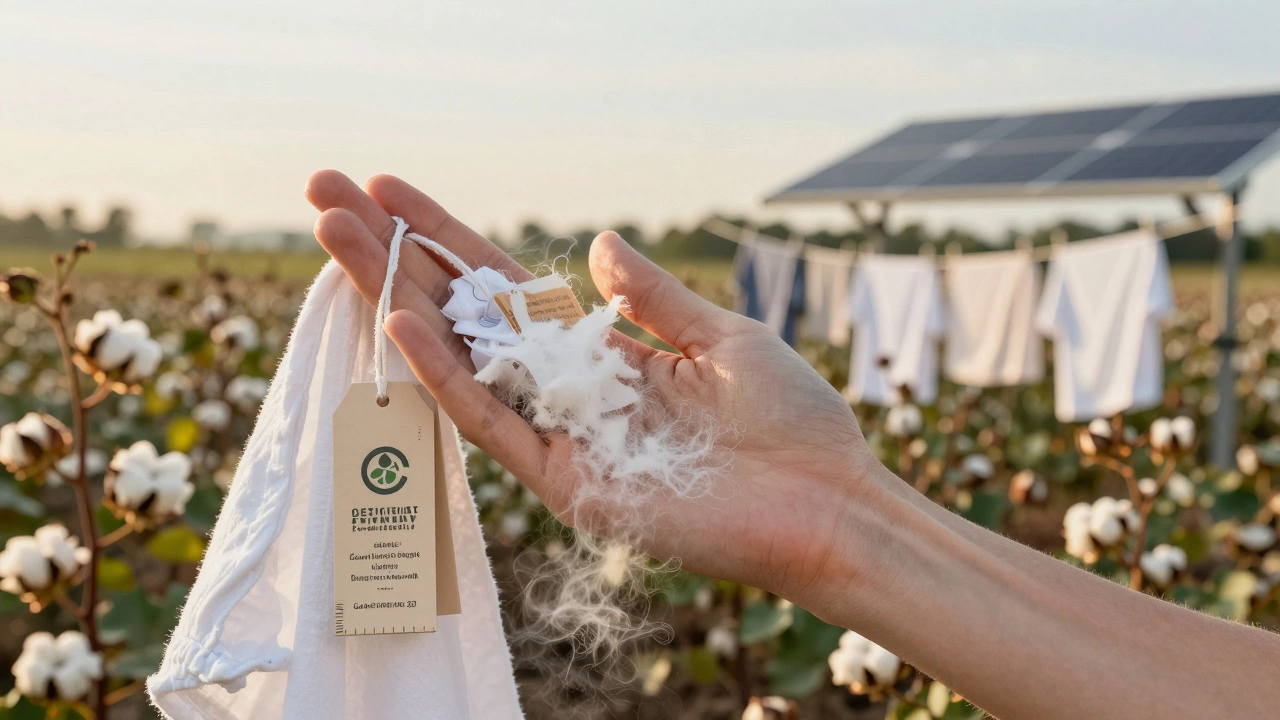
Even if you buy organic cotton, wash it before wearing. New clothes-yes, even organic ones-can have residual dyes or finishes from shipping and storage. Use a gentle, fragrance-free detergent. Avoid fabric softeners-they coat fibers with synthetic chemicals. Line dry when you can. Heat from dryers can release trapped toxins into the air.
Washing in cold water also helps reduce microfiber shedding. Use a Guppyfriend bag or a Cora Ball to catch fibers before they enter the drain.
Why This Isn’t Just About Health-It’s About Power
Choosing less toxic fabrics isn’t just a personal wellness move. It’s a political act. Every time you buy organic cotton instead of polyester, you’re telling brands: "I won’t support poison." You’re supporting farmers who don’t use pesticides. You’re protecting waterways in Bangladesh, India, and Pakistan where textile factories dump waste. You’re giving power back to the people who make your clothes.
Fast fashion thrives on invisibility. It hides the cost of toxins, the exploitation of workers, the destruction of land. When you choose clean fabrics, you make that cost visible-and you make it unsustainable for brands to keep pretending.
Start Small. Change Your Closet, One Piece at a Time
You don’t need to throw out your whole wardrobe tomorrow. Start with what you wear most: underwear, t-shirts, pajamas. These are in direct contact with your skin for hours. Swap out one conventional item for an organic cotton version each month. Look for sales, shop secondhand, or join a clothing swap. The goal isn’t perfection-it’s progress.
Over time, your closet becomes a quiet rebellion against toxic consumption. And your skin? It will thank you.
Is organic cotton really less toxic than regular cotton?
Yes. Organic cotton is grown without synthetic pesticides, herbicides, or GMOs. It’s also processed without chlorine bleach, formaldehyde, or toxic dyes. Conventional cotton is one of the most chemically intensive crops on Earth, and those chemicals stay in the fabric. Organic cotton removes that exposure at every stage-from field to finished garment.
Are all natural fabrics safe to wear?
No. Natural doesn’t always mean non-toxic. Conventional wool can be treated with pesticides. Rayon is made from wood pulp but uses toxic chemicals to turn it into fiber. Linen is safe if it’s untreated, but some brands bleach it with chlorine or add synthetic finishes. Always look for certifications like GOTS or OEKO-TEX to confirm safety.
What’s the best fabric for sensitive skin?
Organic cotton and organic linen are the top choices. They’re breathable, hypoallergenic, and free from chemical residues. Hemp is also excellent-it’s naturally antimicrobial and gets softer over time. Avoid synthetics like polyester and spandex, which trap moisture and can trigger rashes or irritation.
Can I trust labels that say "eco-friendly" or "green"?
Not unless they back it up with certifications. Terms like "eco-friendly," "green," or "natural" aren’t regulated. A brand can call anything eco-friendly and get away with it. Look for GOTS, OEKO-TEX, or Fair Trade labels instead. These are third-party verified and mean something.
Is bamboo fabric really sustainable?
It depends. Bamboo plants grow fast and need no pesticides, but most bamboo fabric is made using a chemical-heavy process that turns it into rayon. Unless it’s labeled as "mechanically processed bamboo" or certified by GOTS, it’s likely just viscose with a green label. Stick to organic cotton or linen if you want truly safe, sustainable fabric.
If you’re ready to make a change, start with one item this week. A t-shirt. A pair of socks. A nightgown. Choose organic. Choose clean. Your skin, your body, and the planet will feel the difference.