
There’s a reason people who wake up early and move first thing feel different all day. It’s not magic. It’s biology. Your body isn’t meant to sit still after eight hours of rest. When you jump out of bed and head straight for your phone or coffee, you’re telling your nervous system to stay in low gear. But if you move-just a little, just right-you reset your whole day.
Why Morning Movement Matters More Than You Think
Your core temperature is lowest in the morning. Your muscles are stiff. Your joints haven’t lubricated yet. That’s not a problem-it’s a signal. Your body is asking for gentle motion to wake up, not intense strain. A 2023 study from the University of Cape Town found that people who did 10 minutes of light movement within 30 minutes of waking reported 37% higher energy levels and better focus throughout the morning compared to those who waited until after breakfast.
But here’s the catch: most people pick the wrong exercise. They do burpees. Or 50 squats. Or try to run before their body is ready. That doesn’t energize you. It exhausts you. And then you’re stuck reaching for sugar to recover.
The best morning exercise isn’t about burning calories. It’s about signaling to your brain: It’s time to be awake.
The Winner: Dynamic Stretching with Controlled Breathing
Forget static stretches where you hold a toe touch for 30 seconds. That’s for post-workout cool-downs, not morning wake-ups. What works better is dynamic stretching-movement that takes your joints through full ranges of motion while syncing with your breath.
Here’s what to do, in order, no equipment needed:
- Neck Rolls - Slow circles, 5 each way. Don’t snap your head. Let gravity do the work.
- Shoulder Circles - Forward 5 times, backward 5 times. Feel your shoulder blades unlock.
- Arm Swings - Swing arms forward and back like you’re trying to wipe a giant window. Do 10 reps. Let your torso twist slightly.
- Standing Torso Twists - Feet hip-width apart. Twist your upper body left, then right. Let your arms swing naturally. 10 reps.
- Leg Swings - Hold onto a wall or chair. Swing one leg forward and back like a pendulum. 10 per leg. Then side to side, 10 per leg.
- Heel-to-Toe Rock - Stand tall. Rise onto your toes, then slowly roll back onto your heels. Feel your calves and arches wake up. Do 10.
- Deep Diaphragmatic Breaths - Inhale through your nose for 4 counts, hold for 2, exhale through your mouth for 6. Repeat 5 times. This activates your parasympathetic nervous system and tells your body it’s safe to be alert.
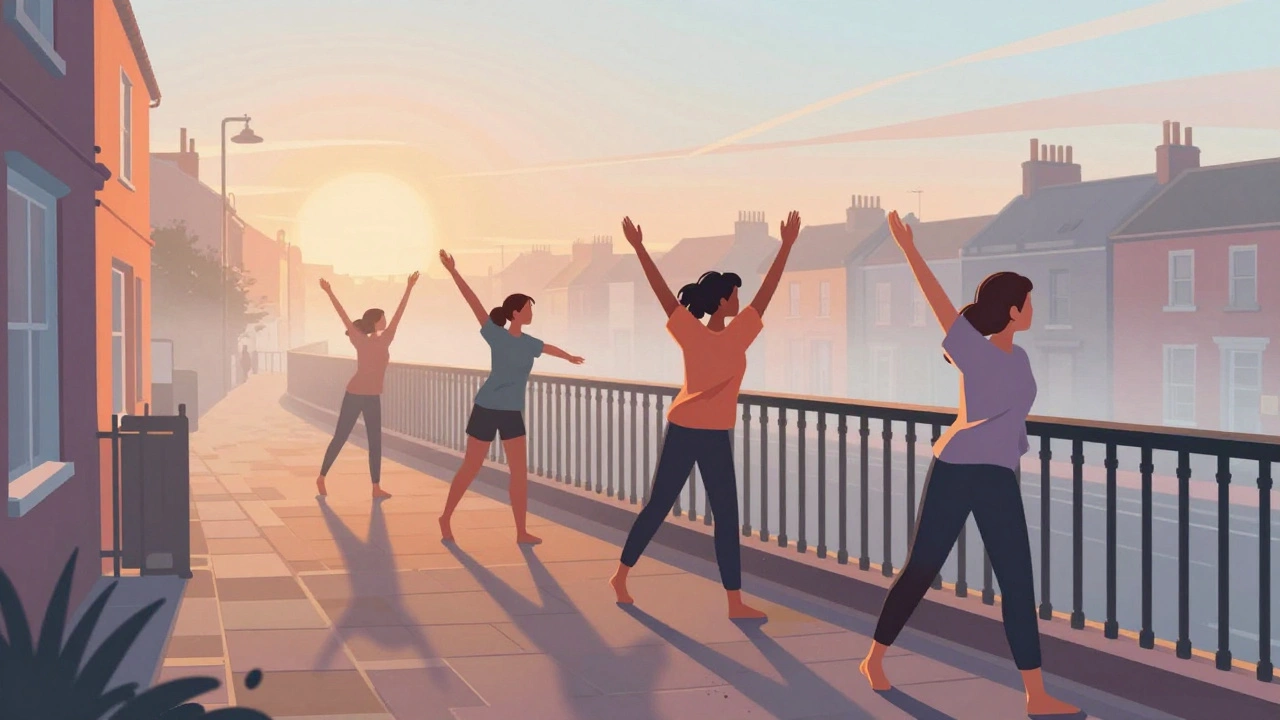
This routine takes 8 to 12 minutes. You can do it barefoot on your kitchen floor, in your living room, or even on your balcony if the weather’s nice. No mat. No dumbbells. No fancy gear. Just your body and your breath.
Why This Beats Other Popular Morning Workouts
People swear by yoga, HIIT, or jumping jacks. Let’s break it down.
| Exercise | Energy Boost | Joint Safety | Time Needed | Equipment Required |
|---|---|---|---|---|
| Dynamic Stretching | High | Excellent | 8-12 min | None |
| Yoga (Vinyasa) | Moderate | Good | 15-25 min | Mat |
| Jumping Jacks | High | Poor | 5-10 min | None |
| HIIT (Burpees, Mountain Climbers) | Very High | Low | 10-20 min | None |
| Walking | Moderate | Excellent | 15-30 min | Shoes |
Jumping jacks and HIIT spike your heart rate too fast. You’re asking your body to go from zero to sprinting before your blood is even flowing properly. That’s why you feel shaky or nauseous afterward. Walking is great, but it doesn’t wake up your spine or shoulders. Yoga is fantastic-but if you’re groggy and your hamstrings are tight, you might just end up frustrated.
Dynamic stretching? It’s the Goldilocks zone. Not too easy. Not too hard. Just right.
How to Make It Stick (Even If You Hate Mornings)
If you’ve tried morning workouts before and quit, it’s probably not because you’re lazy. It’s because the routine felt like a chore.
Here’s how to make this stick:
- Place your shoes by the bed. Not your phone. Not your coffee mug. Your shoes. When you sit up, they’re the first thing you see. It’s a visual cue.
- Set a 10-minute timer. No need to force yourself to do more. Ten minutes is enough to start. You can always do more later.
- Do it before you drink anything. Water is great, but wait until after you move. Your body needs motion before hydration to kickstart circulation.
- Pair it with something pleasant. Play one song you love. Open the curtains. Let sunlight hit your face. Make it feel like a gift, not a task.
One person I know in Durban started this routine after her back pain got worse. She didn’t lift weights. She didn’t run. She just did the leg swings and heel-to-toe rocks. Three weeks later, she stopped taking painkillers. She said, “I didn’t fix my back. I just stopped putting it to sleep every morning.”
What to Avoid
Even good habits can go wrong if you push too hard.
- Don’t stretch cold muscles. That’s how you pull something. Move slowly. Start small.
- Don’t hold your breath. Breathing is the most important part. If you’re holding your breath, you’re stressing your body, not waking it up.
- Don’t compare yourself to others. Someone on Instagram doing 100 squats at 6 a.m. isn’t necessarily healthier than you. They’re just louder.
- Don’t skip it because you’re tired. That’s when you need it most. Movement creates energy. It doesn’t steal it.

What Happens After You Do This for 30 Days
By day 10, you’ll notice your shoulders don’t feel so tight. Your neck won’t ache from staring at screens before breakfast.
By day 20, you’ll catch yourself standing up straighter at your desk. You’ll feel less sluggish after lunch.
By day 30, you won’t need to force yourself anymore. You’ll look forward to those 10 minutes. It becomes your quiet, personal ritual-the first thing you do to say hello to your body before the world starts asking for more.
This isn’t about getting fit. It’s about becoming more present. It’s about starting your day with intention, not reaction.
Can I do this if I have joint pain?
Yes, but modify the movements. Skip high-impact swings if your knees hurt. Do smaller ranges of motion. Focus on slow, controlled motion. If a movement causes sharp pain, stop. Gentle movement often reduces stiffness over time, but never push through pain. Consult a physiotherapist if you’re unsure.
Do I need a yoga mat or other home workout equipment?
No. This routine works perfectly barefoot on hardwood, tile, or even carpet. A mat is optional for comfort, but not required. You don’t need resistance bands, dumbbells, or a treadmill. The goal is simplicity.
What if I only have 5 minutes?
Do the neck rolls, shoulder circles, arm swings, and 3 deep breaths. That’s five minutes. It’s still better than nothing. Consistency matters more than duration. Even 5 minutes a day builds momentum.
Should I eat before or after this routine?
Do the routine before eating. Your body uses stored energy to move when you’re fasting. This helps stabilize blood sugar. Eat a light, balanced meal after-like eggs with avocado or oatmeal with berries-to refuel properly.
Is walking a good alternative?
Walking is excellent, especially if you’re just starting out. But it doesn’t activate your upper body or spine the same way dynamic stretching does. For full-body wake-up, combine walking with 5 minutes of arm swings and torso twists. That’s the ideal combo.
Next Steps
Start tomorrow. Set your alarm 10 minutes earlier. Put your shoes by the bed. When you wake up, don’t reach for your phone. Stand up. Roll your neck. Swing your arms. Breathe deep. That’s it.
You don’t need more time. You don’t need more gear. You just need to begin.