Cold Meal Prep Safety Checker
Is Your Meal Prep Safe to Eat Cold?
You spent hours chopping, cooking, and portioning your meals for the week. Now it’s Monday morning, and you’re rushing out the door. You grab your container from the fridge and wonder: can I eat my meal prep cold? The answer isn’t just yes or no-it’s about how you cooked it, what’s in it, and how you stored it.
It’s Usually Safe-If You Did It Right
Most meal preps are perfectly safe to eat cold, as long as they were cooked to the right temperature and stored properly. The key is time and temperature control. Bacteria like Salmonella and E. coli grow fast between 4°C and 60°C. That’s why refrigeration matters.If you cooked chicken to 74°C, beef to 63°C, or eggs until the yolks were firm, then cooled it down within two hours and kept it at or below 4°C in the fridge, you’re fine. Cold doesn’t mean unsafe-it just means unheated. Many cultures eat cooked meats, grains, and veggies cold all the time. Think of Greek salad with grilled chicken, Japanese chilled soba noodles, or even leftover rice from last night’s stir-fry.
What Foods Are Best Eaten Cold?
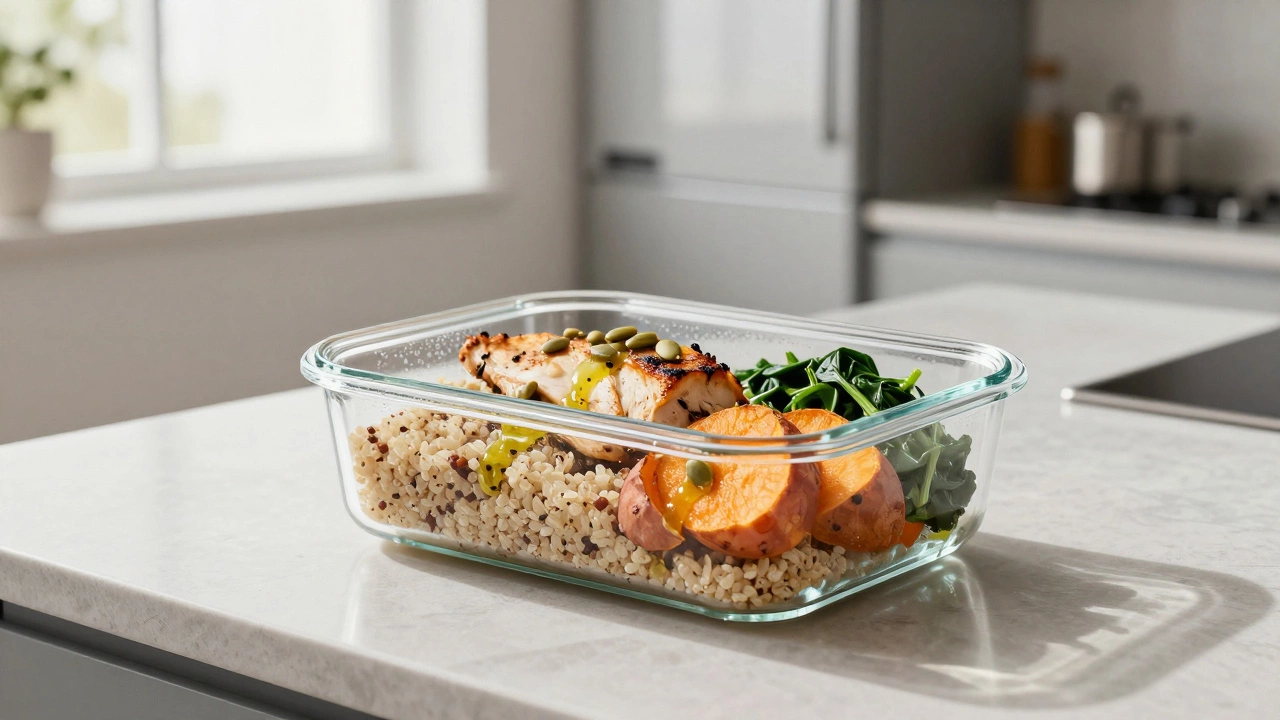
Some meals actually taste better cold. Others? Not so much.- Great cold: Grain bowls with quinoa or brown rice, roasted vegetables, hard-boiled eggs, beans, lentils, salads with protein (chickpeas, tofu, grilled shrimp), yogurt parfaits, and fruit-based desserts.
- Okay cold: Pasta dishes (especially with olive oil or pesto), stir-fries with lots of sauce, and casseroles with cheese. They’re safe, but texture can be gummy or oily when chilled.
- Best reheated: Thick stews, creamy sauces, fried foods, and anything with raw garlic or onions that gets stronger when cold. Reheating brings back flavor and texture.
For example, a bowl of lentils with roasted sweet potatoes and spinach tastes just as good cold as it does warm. But a creamy mushroom risotto? It turns gluey. You’ll notice the difference in your mouth before you even think about it.
Why Cold Meal Prep Works for Busy People
Eating cold meals saves time. No microwave? No problem. No kitchen? Still fine. If you’re working from a desk, commuting, or hiking, cold meal prep gives you flexibility. A 2023 study from the University of Cape Town found that people who ate cold meal preps were 32% more likely to stick to their weekly nutrition plan because they didn’t have to wait for reheating.It also helps control portion sizes. When you heat food, steam rises and makes it look bigger. Cold, you see the real amount. That’s useful if you’re watching calories or managing blood sugar.
What to Avoid Eating Cold
Not everything is safe-or pleasant-cold. Here’s what to skip:- Raw or undercooked meats: Even if you think it’s “just a little pink,” if it wasn’t cooked to safe internal temps, don’t risk it.
- Leftover seafood: Fish and shellfish degrade quickly. If it’s been in the fridge longer than 2 days, toss it-even if it looks fine.
- Dishes with raw dairy: Creamy sauces made with unpasteurized cheese or raw eggs (like Caesar dressing) shouldn’t be stored cold for more than 24 hours.
- Starchy foods left at room temperature: Cooked rice, pasta, or potatoes left out for more than 2 hours before refrigeration can grow Bacillus cereus, a bacteria that causes food poisoning even after reheating.
That’s why timing matters more than temperature. If you cooked chicken at 7 p.m., let it cool on the counter for 45 minutes, then put it in the fridge by 8 p.m., you’re good. If you left it out until midnight? Don’t eat it cold-or hot.
How to Make Cold Meal Prep Taste Better
Cold food can taste bland. That’s not the food’s fault-it’s the seasoning. Heat brings out flavors. Without it, you need to compensate.- Use acid: Lemon juice, vinegar, or lime zest brightens up dull flavors. A splash of apple cider vinegar on roasted veggies makes them pop.
- Go crunchy: Add toasted seeds, nuts, or crispy chickpeas. Texture breaks up the softness of cold food.
- Layer herbs: Fresh cilantro, parsley, or dill add life. Add them right before eating-don’t mix them in days ahead.
- Spice it up: Hot sauce, chili flakes, or smoked paprika work better cold than salt alone.
- Don’t drown it: Too much dressing soaks into grains and makes them soggy. Keep sauces separate and add them when you’re ready to eat.
Try this: Last night’s grilled chicken, quinoa, and roasted bell peppers? Toss with a dressing of olive oil, lemon juice, garlic powder, and a pinch of cumin. Sprinkle with pumpkin seeds. It’s not just safe-it’s better than when it was hot.
Storage Rules You Can’t Ignore
Your fridge isn’t magic. It just slows things down. Here’s what actually works:- Use shallow containers: Thick layers take too long to cool. Use 5cm or less depth.
- Label everything: Write the date you cooked it. Most meals last 3-4 days in the fridge. Sauces with dairy? 2 days max.
- Don’t overfill the fridge: Air needs to circulate. If your meals are buried under milk and yogurt, they won’t cool fast enough.
- Freeze if needed: If you won’t eat it in 4 days, freeze it. Thaw overnight in the fridge before eating cold.
Pro tip: Keep a small thermometer in your fridge. If it’s above 4°C, you’re in the danger zone. Most fridges run warmer than they should-especially if the door opens a lot.
When You Should Reheat
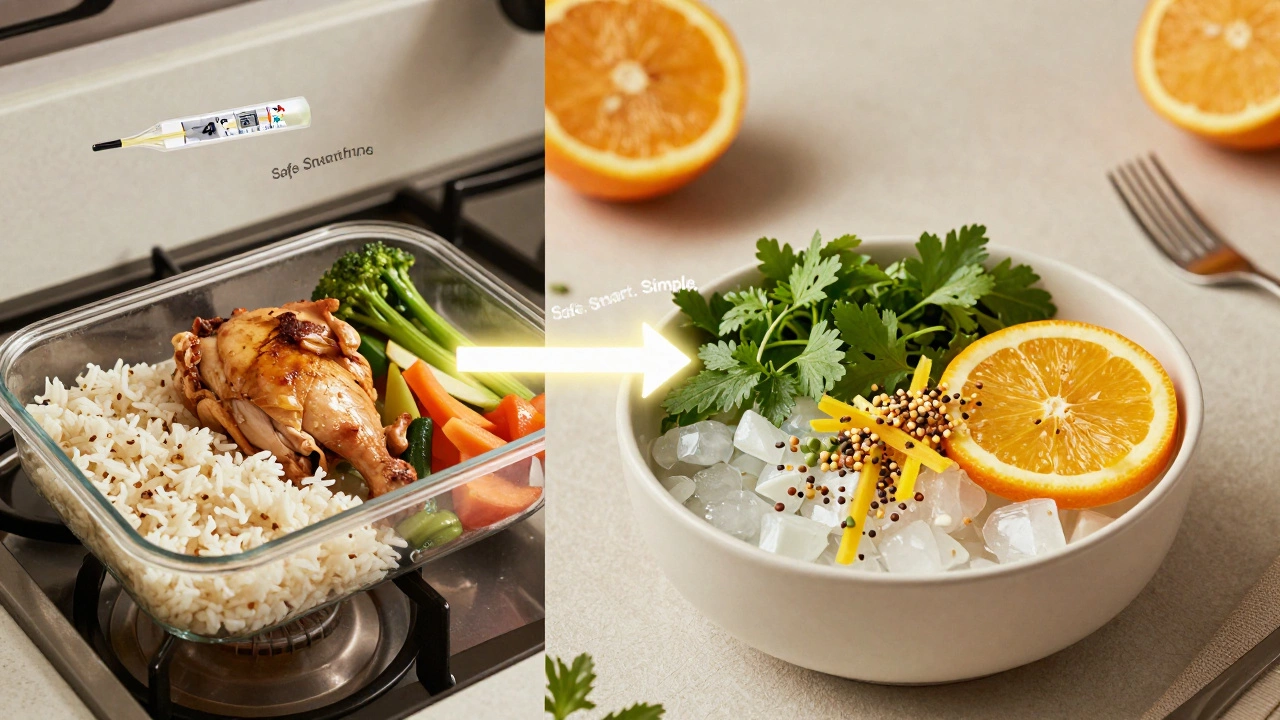
You don’t have to eat cold. If you have 5 minutes, reheating is better for some meals. Here’s when to heat:- Your meal has gravy, sauce, or broth.
- You’re eating with others and want it to feel like a proper meal.
- You have digestive sensitivity to cold food (some people do).
- You just plain prefer warm food.
Reheat only once. Reheating multiple times increases bacterial risk. Microwave until steaming hot throughout-100°C in the center. Stir halfway. Let it sit for a minute before eating.
Real-Life Example: A Durban Kitchen
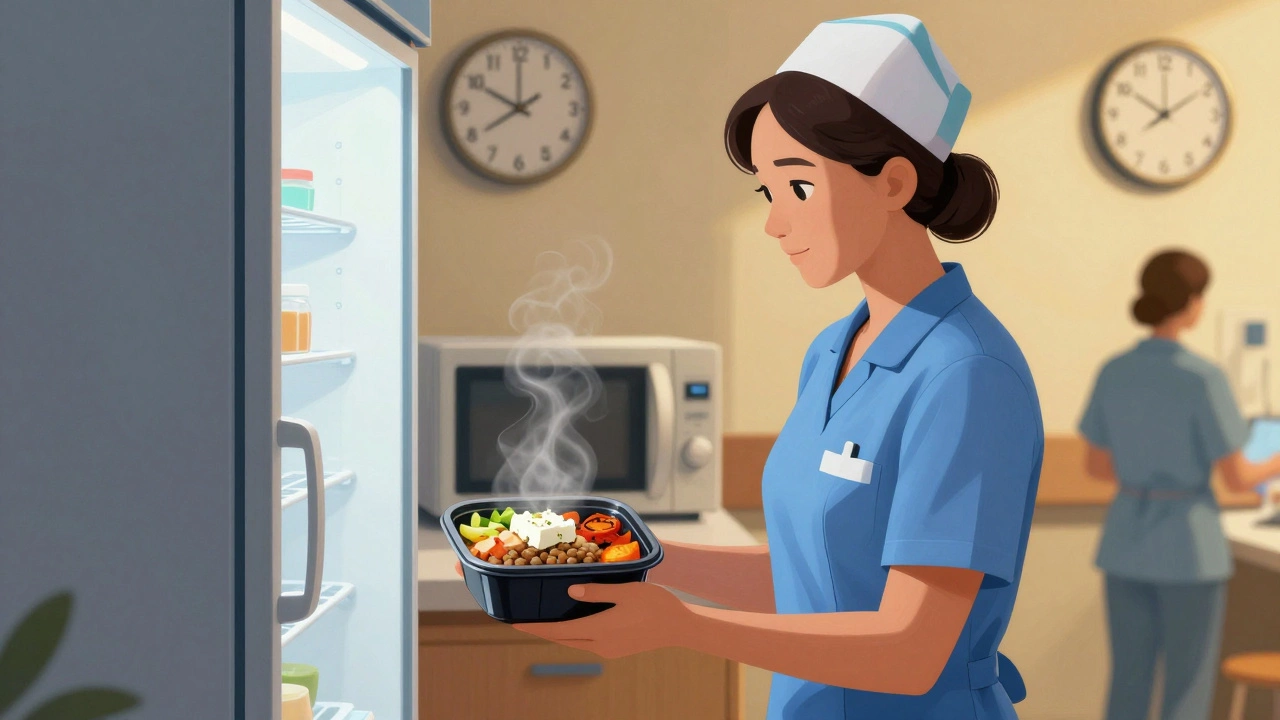
In Durban, where the weather stays warm year-round, many people skip reheating. A local nutritionist shared that her clients who ate cold meal preps reported fewer afternoon crashes and better digestion. One client, a nurse working 12-hour shifts, said: “I used to skip lunch because I didn’t have time to heat food. Now I grab a cold bowl of lentils, veggies, and feta. I eat it at my desk. I’m not hungry by 3 p.m. anymore.”She didn’t change her diet. She just stopped waiting for the microwave.
Final Rule: Trust Your Senses
If it smells off, looks slimy, or tastes strange-don’t eat it. No matter how fresh the date says. Your nose and tongue know more than any label.Meal prep isn’t about perfection. It’s about making healthy eating easier. Eating cold isn’t a compromise-it’s a tool. Use it wisely, store it right, and you’ll save time, money, and stress.
Is it safe to eat cold chicken from meal prep?
Yes, if the chicken was cooked to at least 74°C and cooled quickly before refrigeration. It should be eaten within 3-4 days. If it smells sour, feels slimy, or looks gray, throw it out.
Can I eat cold rice from meal prep?
Only if it was cooled within 1 hour after cooking and kept refrigerated. Cooked rice can grow Bacillus cereus if left at room temperature too long. This bacteria survives reheating and causes food poisoning. Always refrigerate rice immediately after cooking.
Does eating cold food affect digestion?
For most people, no. Cold food doesn’t harm digestion. But if you have IBS or sensitive digestion, some find warm meals easier to tolerate. There’s no scientific proof that cold food slows digestion-it’s more about personal comfort.
How long can I keep meal prep in the fridge?
Most meals last 3-4 days in the fridge. Meals with seafood, dairy, or raw garlic should be eaten within 2 days. Always label containers with the cooking date. When in doubt, throw it out.
Can I freeze meal prep and eat it cold later?
Yes, but thaw it first. Frozen food eaten straight from the freezer is too hard and can damage your teeth. Thaw overnight in the fridge, then eat cold. Freezing preserves nutrients and flavor better than refrigeration for longer storage.