Closet Declutter Decision Assistant
Answer the questions below about a specific clothing item to get a recommended action based on expert organizing principles.
Recommendation:
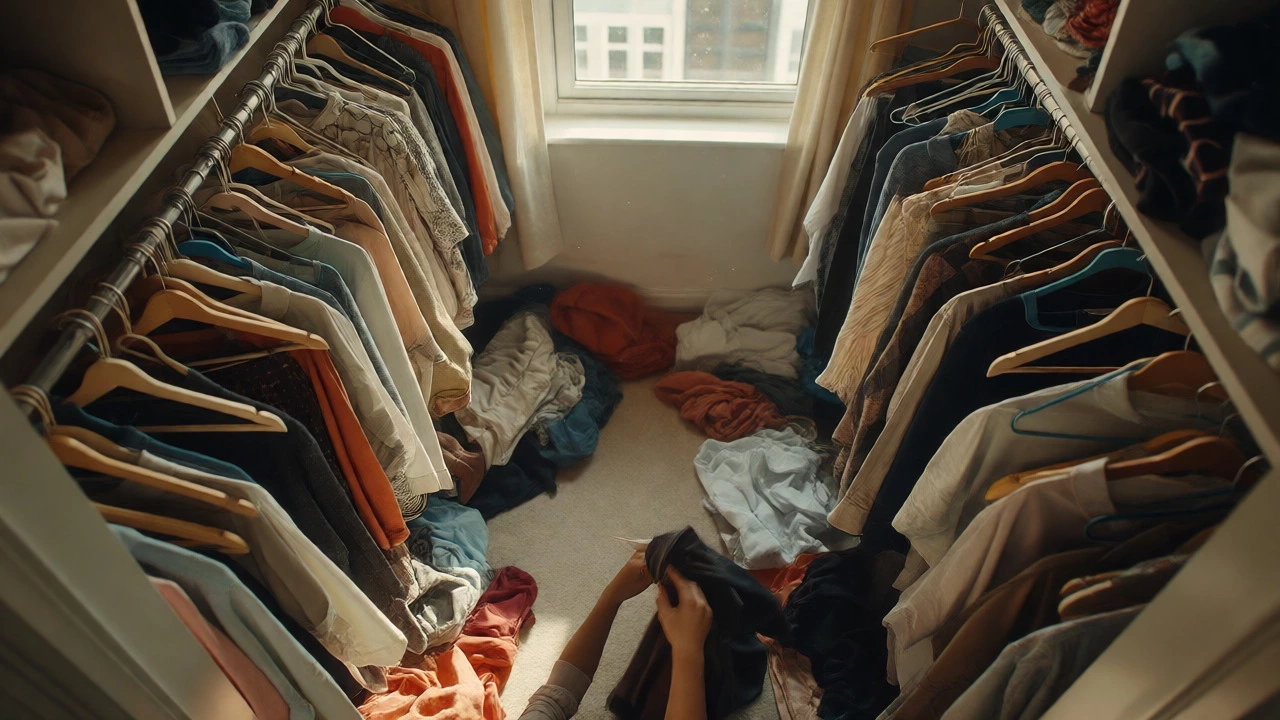
Standing in front of a chaotic closet, wondering why you have "nothing to wear" despite the overflowing shelves, is a universal frustration. It’s not just about tidiness; it’s about reclaiming your morning routine and reducing decision fatigue. A well-organized closet is a dedicated storage space for clothing and accessories that facilitates easy access and maintenance can save you time, money, and mental energy. Whether you live in a compact Durban apartment or a sprawling house, the principles of effective organization remain the same: reduce, categorize, and maintain.
The Great Edit: Ruthless Decluttering
You cannot organize clutter. Before buying any fancy bins or hangers, you must confront the sheer volume of what you own. This step is often the hardest because it involves emotional attachment to clothes we *might* wear again or items that no longer fit our current lifestyle. Start by pulling everything out. Yes, everything. If you leave items on the shelves, you’re cheating yourself out of seeing the full picture.
As you sort through each piece, ask yourself three hard questions: Have I worn this in the last year? Does it fit me right now? Do I actually like how it looks on me? If the answer to any of these is no, it’s gone. In South Africa, where seasons are mild but distinct, holding onto heavy winter coats you haven’t touched in two years is common. Be honest. Create four piles: Keep, Donate, Sell, and Trash. For the "Keep" pile, be strict. If you have five identical white t-shirts, keep two. The goal is to curate a wardrobe that works for your actual life, not your fantasy self.
| Criterion | Action | Rationale |
|---|---|---|
| Worn in last 12 months | Keep | Proven utility and relevance |
| Fits perfectly now | Keep | No alteration needed |
| Damaged beyond repair | Recycle/Trash | Not salvageable |
| Sentimental value only | Memory Box | Store elsewhere, not in active rotation |
| Wrong size (too big/small) | Donate/Sell | Prevents "someday" clutter |
Optimize Vertical Space with Uniform Hangers
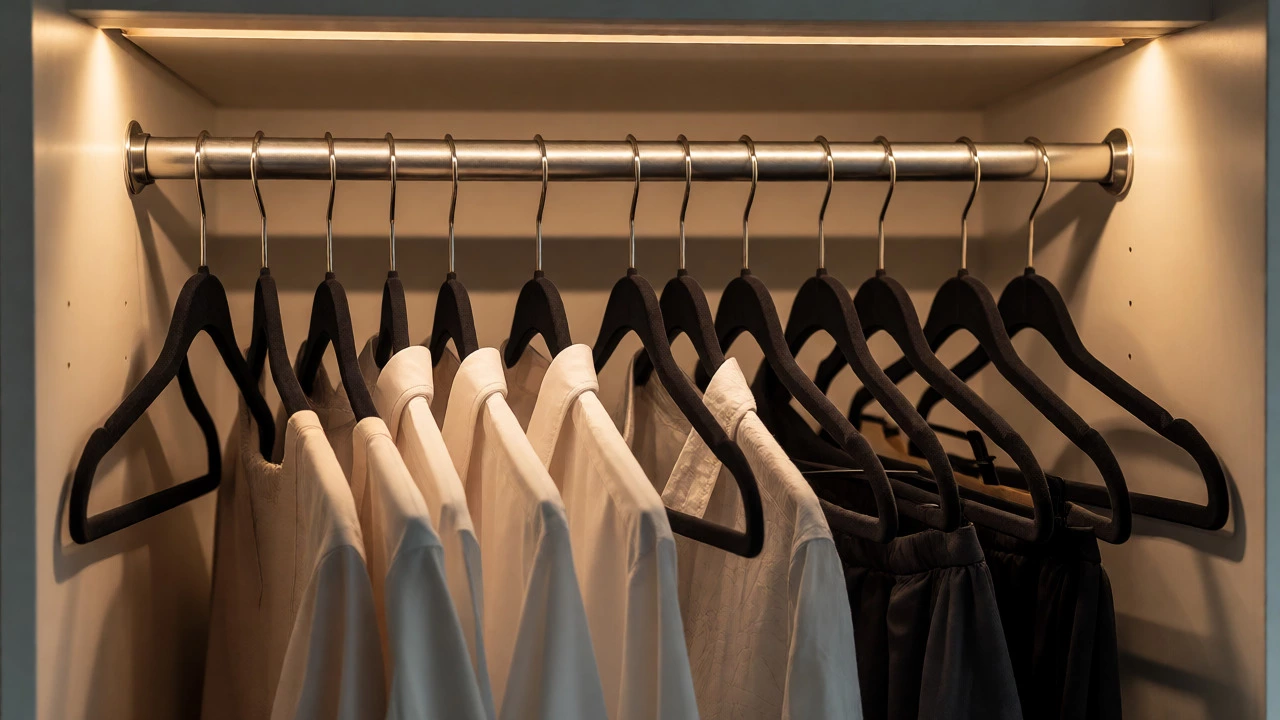
Once the clutter is gone, the next major upgrade is visual consistency. Mismatched hangers-wire, plastic, wood, velvet-create visual noise that makes even a tidy closet look messy. Switching to uniform hangers are support devices used to hang clothes from a rod, typically made of plastic, wood, or metal instantly creates a sense of order and calm. Velvet non-slip hangers are excellent for keeping delicate fabrics in place, while wooden hangers provide structure for jackets and coats.
But don’t just stop at hangers. Look up. Most closets have wasted vertical space above the hanging rod. Install a second rod lower down for shorter items like shirts and skirts, or use shelf risers to double your hanging capacity. If you have high ceilings, consider installing a pull-down rod system. This allows you to utilize the top section of your closet for seasonal items without needing a ladder every time you want to retrieve them. In smaller spaces, every centimeter counts, and vertical optimization is the key to doubling your storage potential without expanding your footprint.
Categorize by Type and Frequency
A disorganized closet is often just a poorly categorized one. Instead of grouping clothes by color (which looks pretty but is impractical), group them by category: tops, bottoms, dresses, activewear, and outerwear. Within those categories, arrange items by frequency of use. Place your most-worn items at eye level and within arm's reach. This reduces friction in your morning routine. You shouldn't have to dig through a pile of rarely worn party dresses to find your favorite jeans.
Consider the flow of getting dressed. Group outfits together if possible. For example, keep all your work blazers near your work trousers. This small adjustment helps you assemble outfits faster. Additionally, separate casual wear from formal wear. Mixing gym shorts with silk blouses creates confusion. By creating distinct zones, you turn your closet into a functional system rather than a storage bin. This approach aligns with the concept of wardrobe management the systematic planning and organization of clothing to maximize utility and minimize waste, ensuring every item has a designated home.
Utilize Hidden Storage Solutions
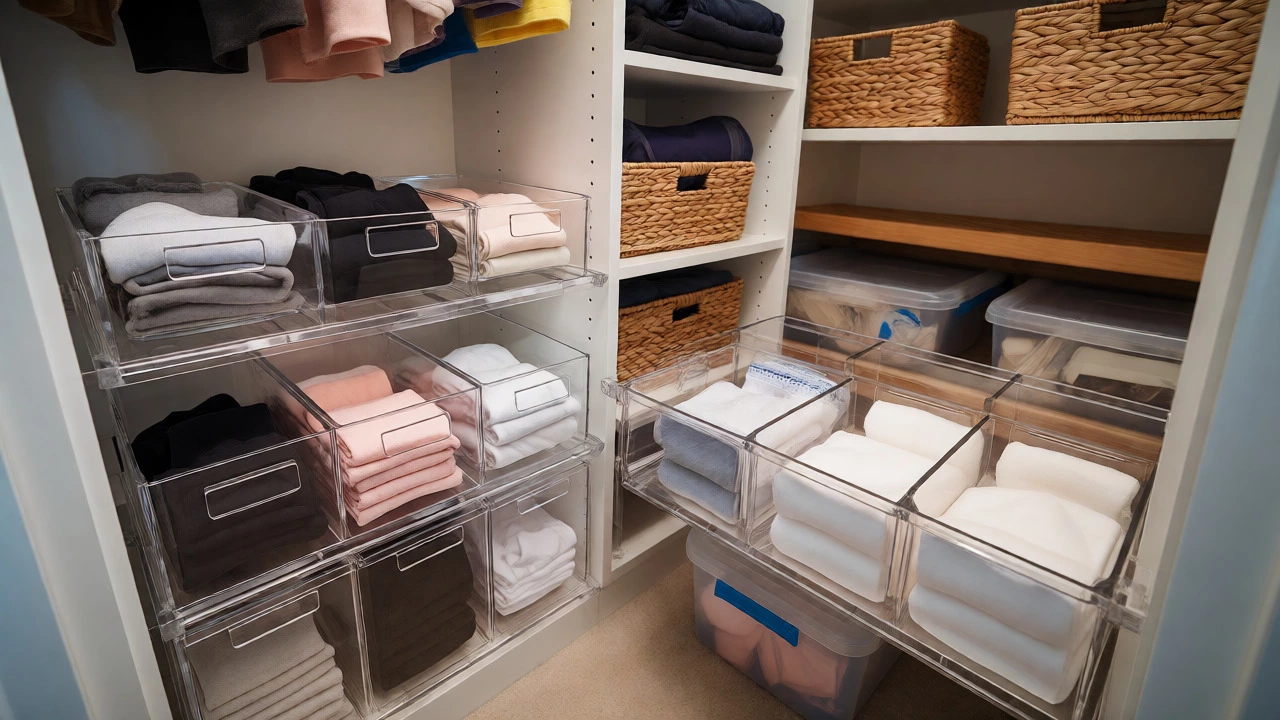
What about the items that don't hang well? Socks, underwear, belts, and scarves often become a tangled mess in drawers. Invest in drawer dividers or modular storage boxes. These tools compartmentalize small items, preventing them from migrating to other parts of the room. Clear acrylic organizers allow you to see exactly what you have without opening every box, which saves time and keeps dust off your belongings.
Don't forget the floor. Under-bed storage containers are perfect for off-season items like heavy blankets or winter boots. Use vacuum-seal bags for bulky comforters to shrink their volume significantly. For shoes, over-the-door shoe racks or stackable clear boxes free up valuable floor space. If you have an open shelving unit, use matching baskets to hide unsightly items like workout gear or pajamas. The goal is to conceal chaos while keeping essentials accessible. This strategy is particularly effective in rental properties where built-in shelving may be limited or non-existent.
Maintain with the One-In-One-Out Rule
Organization isn't a one-time event; it's a habit. The best way to prevent your newly organized closet from becoming a disaster zone again is to adopt the one-in-one-out rule. For every new item you bring into your wardrobe, one existing item must leave. This forces you to evaluate purchases critically. Do you really need another black hoodie if you already have three? This rule maintains equilibrium and prevents gradual creep of clutter.
Set aside ten minutes once a week to reset your closet. Hang up stray items, fold folded things back neatly, and put away laundry immediately. This micro-maintenance prevents the accumulation of mess that leads to another overwhelming overhaul. Also, conduct a mini-edit every six months. Remove anything that didn't get worn during the previous season. This continuous cycle ensures your closet remains a reflection of your current needs and style, rather than a museum of past selves.
Frequently Asked Questions
How do I organize a very small closet?
Focus on vertical space and slim profiles. Use slimline hangers to increase rod capacity by up to 50%. Install hooks on the inside of the door for bags and belts. Use under-bed storage for off-season items to free up hanging space. Consider a tension rod for additional short-hang areas.
Should I organize my closet by color or category?
For functionality, category is superior. Grouping by type (e.g., all shirts together) makes finding specific items easier. Color-coding can be added within categories for aesthetic appeal, but it should not be the primary organizational method as it complicates outfit building.
What is the best way to store off-season clothes?
Use vacuum-seal bags for bulky items like coats and bedding to reduce volume. Store these in under-bed containers or on high shelves. Label boxes clearly with the contents and season. Ensure items are clean and dry before storing to prevent mold or pests.
How often should I reorganize my closet?
Perform a deep edit twice a year, typically when changing seasons. However, implement weekly micro-maintenance habits, such as putting away laundry immediately and resetting misplaced items, to maintain order between deep cleans.
Do expensive hangers make a difference?
Yes, but not necessarily due to price alone. Uniformity matters more than cost. Matching hangers create a visually cohesive look that makes the space feel larger and calmer. Velvet hangers protect clothes from slipping, while sturdy wooden hangers preserve the shape of structured garments.