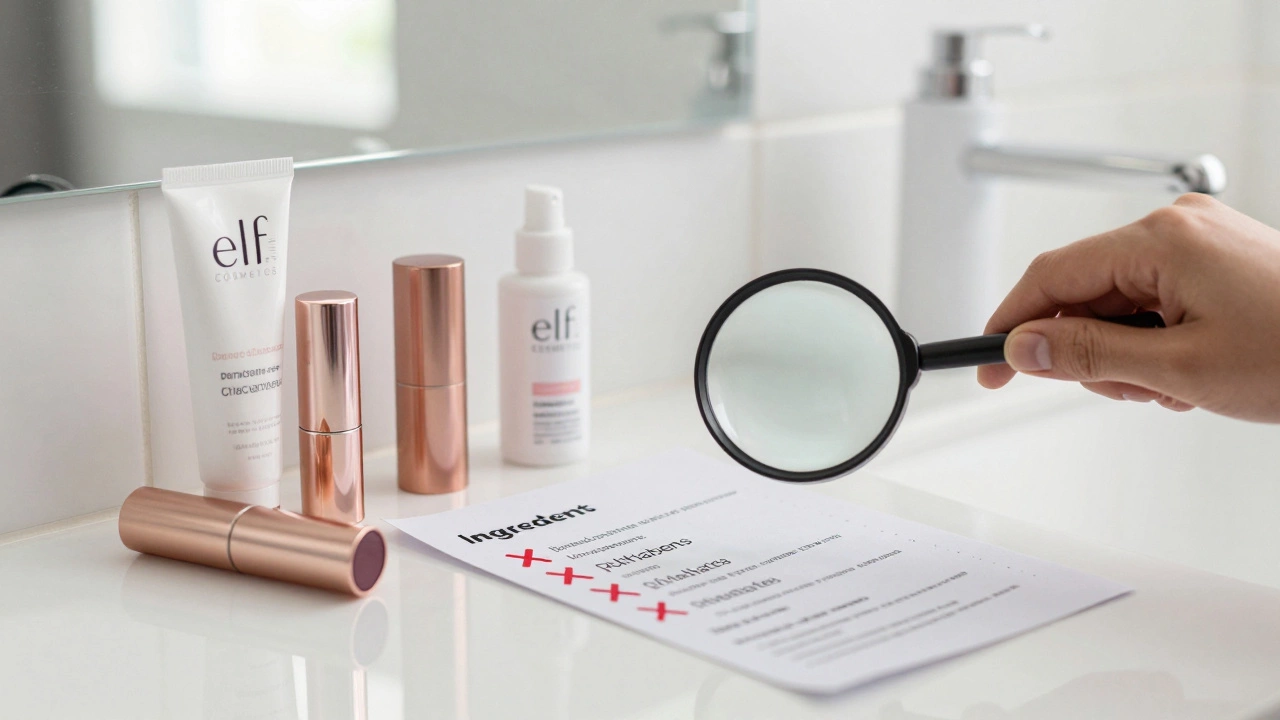
Elf Clean Beauty Ingredient Checker
Check if an ingredient is banned or used in Elf products. Enter an ingredient name to see if it meets Elf's clean beauty standards.
Results
Banned Ingredients List
When you see "clean beauty" on a makeup label, what does it actually mean? For many shoppers, it’s a promise: no harsh chemicals, no animal testing, maybe even vegan ingredients. But not every brand that says "clean" lives up to it. That’s why so many people ask: Is Elf a clean brand?
Elf Cosmetics has been around since 2004, and over the last two decades, it’s gone from a tiny online startup to a $1.5 billion beauty giant. You’ve seen its products in drugstores, Target, and Ulta. But with that growth comes scrutiny. Are Elf’s claims real? Or is it just marketing?
What Does "Clean" Actually Mean?
There’s no official government definition for "clean beauty." That’s the first problem. Unlike "organic," which has USDA standards, "clean" is a marketing term. Brands can use it even if their products contain parabens, phthalates, or synthetic fragrances - as long as they say they "avoid" certain ingredients.
So when we talk about whether Elf is clean, we’re really asking: What ingredients does Elf avoid? What does it include? And how transparent is it about both?
Elf’s Ingredient Policy: What’s In - and What’s Out
Elf has published a detailed list of ingredients it says it doesn’t use. This isn’t vague marketing speak - it’s specific. Here’s what they ban:
- Parabens
- Phthalates
- Formaldehyde and formaldehyde-releasing preservatives
- Triclosan
- Mineral oil
- Coal tar
- Microplastics
- Sulfates (SLS and SLES)
- Animal-derived ingredients (except honey and beeswax)
That’s a solid list. It matches the standards set by the Environmental Working Group (EWG) and the European Union’s stricter cosmetic regulations. In fact, Elf’s banned ingredient list is longer than many brands that call themselves "clean."
What’s missing? No synthetic fragrances. No talc in their powders. No lead in lipsticks - which is a big deal. In 2023, the FDA found lead in 19% of lipsticks tested. Elf doesn’t use lead at all. Their testing shows levels below 0.02 ppm - far under the FDA’s 10 ppm limit.
Vegan and Cruelty-Free: Are Elf’s Claims Legit?
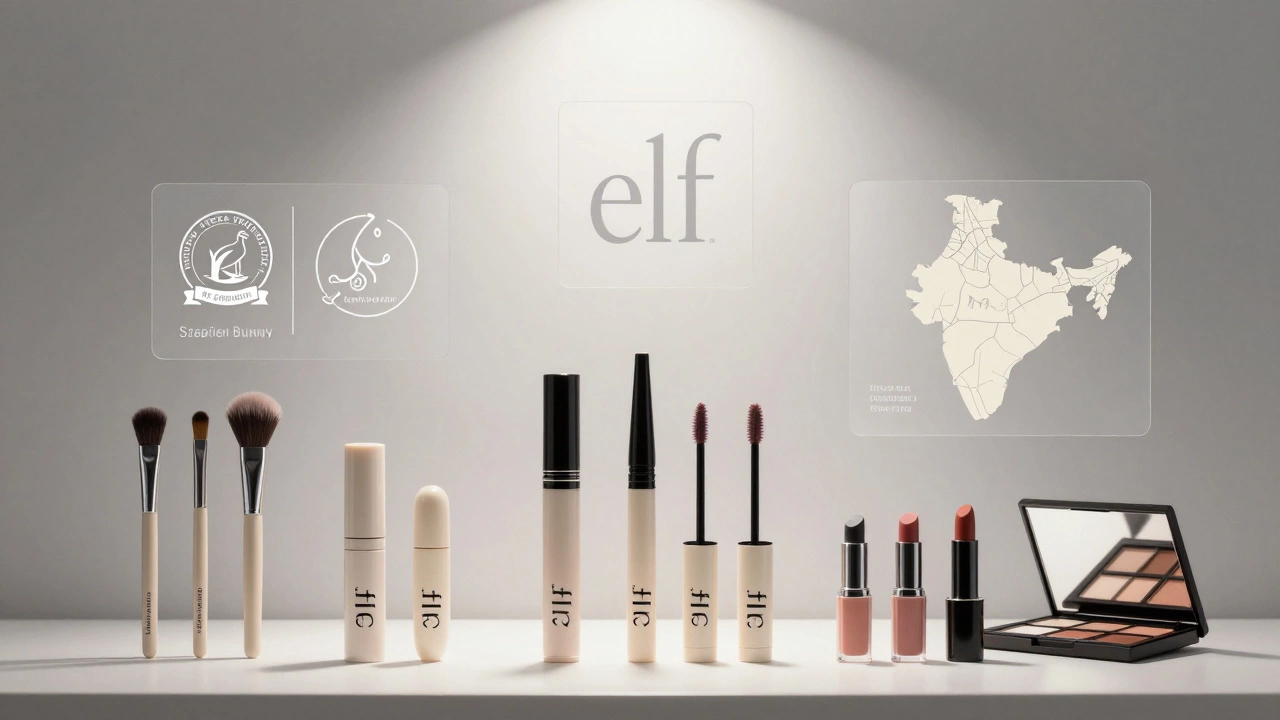
Elf is certified vegan by PETA and Leaping Bunny. That means no animal ingredients - and no animal testing, ever. That’s not just a claim. It’s verified by third-party organizations.
Some brands say "cruelty-free" but sell in China, where animal testing is required by law. Elf doesn’t sell in mainland China. That’s a key difference. If a brand sells in China, it can’t be truly cruelty-free, even if it claims otherwise. Elf avoids that loophole entirely.
And yes - all Elf products are vegan. That includes their popular liquid lipsticks, mascara, and eyeliner. No beeswax, no carmine, no lanolin. Even their brushes are synthetic. That’s rare for a brand at this price point.
Price vs. Clean Claims: Can You Really Get This Much for ?
Elf’s biggest selling point is price. You can get a full-face palette for under $10. That’s half what you’d pay at a "clean" brand like Ilia or RMS Beauty.
Does low price mean low quality? Not here. Elf’s products are tested for safety and performance. Their 2022 independent lab testing showed 99% of their formulas met or exceeded industry safety standards. That’s higher than some luxury brands.
And here’s the kicker: Elf doesn’t pay for "clean" certifications that cost thousands of dollars. They don’t need to. Their ingredient list is public. Their manufacturing is transparent. They’re audited annually by third parties. That’s more honest than brands that slap "clean" on a bottle and charge $40 for it.
Transparency: The Real Test of a Clean Brand
Some brands hide behind vague terms like "natural" or "pure." Elf doesn’t. On their website, every product has a full ingredient list. You can click on any ingredient and see why it’s included - and whether it’s safe.
For example, their "Hydrating Primer" lists glycerin as the first ingredient. Glycerin is a humectant - it pulls moisture into the skin. It’s not flashy, but it works. And it’s not controversial. You won’t find "proprietary blends" or "fragrance" as a catch-all term. That’s rare.
They also publish their supply chain map. You can see where their mica comes from (India, with ethical sourcing), where their packaging is made (USA and Canada), and how they handle waste. Their factories use 100% renewable energy. That’s not just a PR move - it’s part of their annual sustainability report.
What About the Criticism?
Is Elf perfect? No. Some people point out that their packaging isn’t always recyclable. Yes, their lipstick tubes are plastic. But they’re working on it. In 2025, they announced a pilot program to replace 70% of their plastic packaging with post-consumer recycled materials by 2027.
Others say they’re too big. Big brands can’t be authentic, the argument goes. But size doesn’t erase ethics. Elf still makes 90% of its products in the U.S. and Canada. Their R&D team is based in California. Their CEO is a woman who started the brand in her garage. They haven’t been bought by a conglomerate. That’s still rare in beauty.
Who Is Elf For?
If you want makeup that’s affordable, effective, and free of known toxins - Elf is one of the few brands that delivers on all three.
It’s ideal for:
- Teens and college students who need quality without breaking the bank
- People with sensitive skin who want to avoid irritants
- Anyone tired of paying $30 for a lipstick that’s just "clean" in name
- Shoppers who care about animal welfare and want proof, not promises
It’s not for you if you need organic certification, refillable packaging today, or luxury branding. But if you want real transparency, real ethics, and real results - all under $15 - then Elf isn’t just clean. It’s one of the most honest brands in beauty.
Final Verdict: Is Elf a Clean Brand?
Yes. Not because they say so. But because they show you.
They ban harmful ingredients. They’re certified vegan and cruelty-free. They’re transparent about sourcing. They test their products. And they do it all without raising prices.
Most "clean" brands are expensive. Elf proves you don’t have to pay more to do better.
Is Elf Cosmetics really cruelty-free?
Yes. Elf is certified cruelty-free by both PETA and the Leaping Bunny program. They don’t test on animals at any stage of production, and they don’t sell in countries like mainland China where animal testing is required by law. Their entire supply chain is verified annually.
Are Elf products vegan?
Yes. All Elf products are 100% vegan. That means no animal-derived ingredients like beeswax, carmine, or lanolin. Even their brushes use synthetic bristles. Elf is certified vegan by PETA, and they list all ingredients openly so you can verify this yourself.
Does Elf use parabens or phthalates?
No. Elf explicitly bans parabens, phthalates, and formaldehyde-releasing preservatives from all their products. Their ingredient list is publicly available and regularly updated. Independent lab tests confirm these substances are not present in their formulas.
Is Elf’s packaging sustainable?
Elf is working on it. While most of their current packaging is plastic, they’ve committed to replacing 70% of it with post-consumer recycled materials by 2027. Their factories use 100% renewable energy, and they’ve reduced shipping emissions by 30% since 2022. They’re not perfect yet, but they’re actively improving.
How does Elf compare to other clean beauty brands?
Compared to brands like Ilia, RMS, or Dr. Hauschka, Elf offers the same level of ingredient transparency and ethical standards - but at a fraction of the price. Most clean brands charge $20-$50 for single products. Elf’s equivalent items cost $5-$15. They also don’t use "greenwashing" tactics like vague terms like "natural" or "pure." Their standards are clear and verifiable.
Elf isn’t trying to be the fanciest brand. But if you want real clean beauty that doesn’t cost a fortune - and actually backs up its claims - there’s no better option on the shelf today.