Therapist Book Recommender
Therapists look for these key features when recommending self-help books:
-
1
Research-backed Based on peer-reviewed studies
-
2
Practical exercises Includes worksheets or actionable steps
-
3
Credible author Licensed clinician or researcher
-
4
Contextualized Acknowledges individual differences
-
5
No harmful claims Avoids quick fixes or blame
Enter book details and select features to see if therapists would likely recommend it.
Many people turn to self-help books when they’re feeling stuck-whether it’s anxiety, low self-esteem, or just a sense that something’s off but they can’t quite name it. These books promise clarity, tools, and even transformation with just a few hours of reading. But here’s the real question: do therapists actually recommend them? Or are they just marketing tools wrapped in nice covers?
Yes, but not all of them
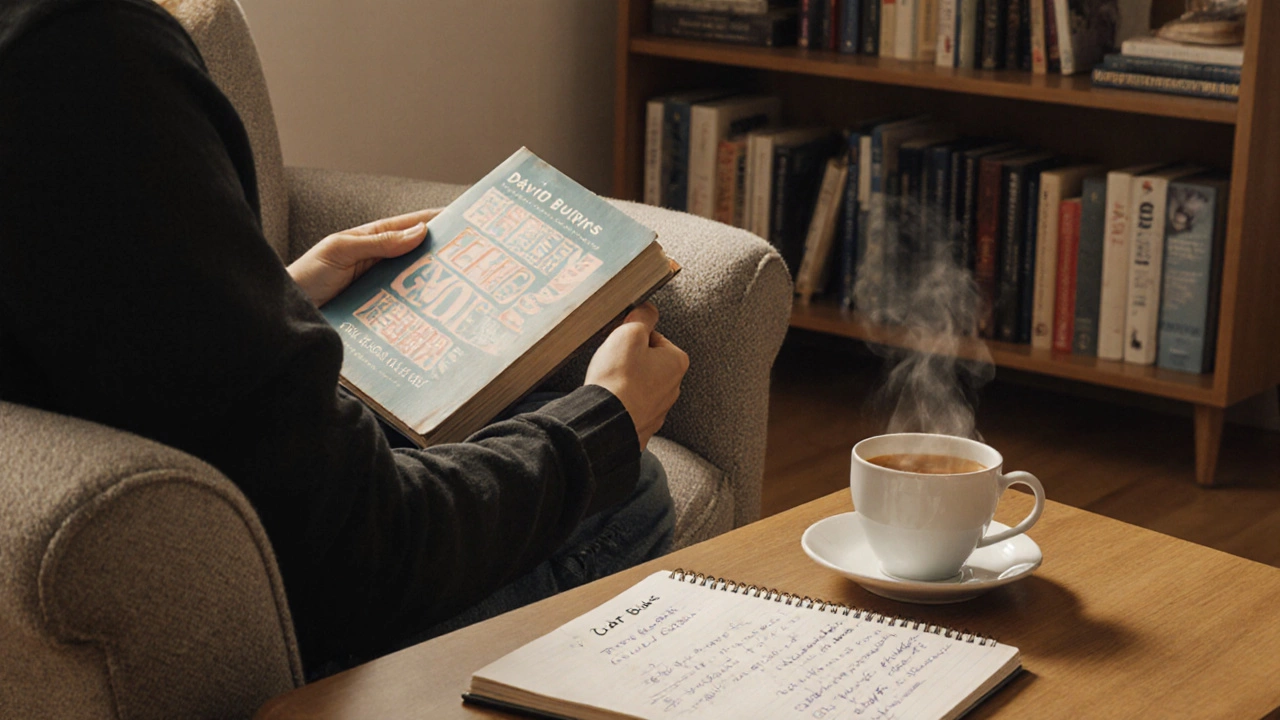
Therapists don’t hand out self-help books like candy. They’re selective. A 2023 survey of 212 licensed clinical psychologists in the U.S. and South Africa found that 78% regularly recommend self-help books to clients-but only if the book is evidence-based, well-researched, and aligned with the client’s specific issue. The most commonly recommended titles? Books rooted in cognitive behavioral therapy (CBT), dialectical behavior therapy (DBT), or acceptance and commitment therapy (ACT). Titles like "The Happiness Trap" by Russ Harris or "Feeling Good" by David Burns come up again and again.Why these? Because they don’t just offer inspiration-they give exercises. You don’t just read about thought patterns; you write them down, challenge them, track them. That’s what makes them therapeutic tools, not motivational posters.
What therapists avoid
Not every self-help book gets the nod. Therapists often steer clear of books that promise quick fixes, rely on vague spiritual language without structure, or encourage blame-shifting. Books that say things like "Manifest your dream life in 7 days" or "Your trauma is just a mindset" get flagged immediately. These aren’t just unhelpful-they can make people feel worse when the magic doesn’t work.One therapist in Cape Town told me about a client who read a popular book claiming that "all depression is caused by negative thinking." The client started blaming herself for being "too negative," which deepened her shame. That’s the danger: when books oversimplify complex mental health issues, they can unintentionally harm.
Therapists look for three things before recommending a book:
- Research backing-is it based on peer-reviewed studies?
- Practical exercises-can you do something with the information, not just understand it?
- Author credentials-is the writer a licensed clinician, researcher, or someone with real clinical experience?
Books by authors like Jon Kabat-Zinn, Marsha Linehan, or Aaron Beck are trusted because their work is built into clinical training programs. Books by influencers with no clinical background? Rarely.
When self-help books work best
Self-help books aren’t replacements for therapy-they’re supplements. They work best when used alongside professional support. Think of them like a workout plan you follow with a personal trainer. The trainer gives you form corrections, motivation, and accountability. The plan gives you structure.For example, someone struggling with social anxiety might read "The Shyness and Social Anxiety Workbook" by Martin Antony. They do the exposure exercises weekly, then bring their notes to therapy. The therapist helps them adjust the exercises, process setbacks, and connect the dots between their thoughts and behaviors. That’s where real change happens.
Therapists also use these books to help clients who can’t afford regular sessions, live in remote areas, or are waiting for an appointment. In places like Durban or rural KwaZulu-Natal, where access to mental health care is limited, a well-chosen book can be the only tool someone has for months.

Red flags therapists watch for
There are signs a self-help book might be doing more harm than good:- It claims to "cure" depression, PTSD, or bipolar disorder without medication or professional help.
- It uses absolute language: "Everyone should do this," "You’re broken if you don’t..."
- It ignores biology, trauma, or systemic factors (poverty, discrimination, grief).
- The author has no credentials and no references to clinical research.
- It pushes one-size-fits-all solutions-no mention of individual differences.
One therapist in Johannesburg shared a story about a client who followed a book that said journaling would "erase" childhood trauma. After months of writing, the client felt worse-not because journaling was bad, but because the book never taught them how to process painful memories safely. Without guidance, revisiting trauma can retrigger it.
What to look for instead
If you’re looking for a book your therapist might actually recommend, here’s what to check:- Look for authors with PhDs, LCSWs, or other clinical licenses listed on the cover or bio.
- Check the references-do they cite studies from journals like Journal of Consulting and Clinical Psychology or Behaviour Research and Therapy?
- Does the book include worksheets, reflection prompts, or step-by-step practices?
- Is it published by a university press (like Oxford, Guilford, or Harvard) or a reputable mental health publisher?
- Has it been used in therapy training programs? (You can often find this in academic syllabi online.)
Some trusted titles that consistently appear in therapist recommendations:
- "The Dialectical Behavior Therapy Skills Workbook" by Matthew McKay, Jeffrey Wood, and Jeffrey Brantley
- "Mind Over Mood" by Dennis Greenberger and Christine Padesky
- "The Gifts of Imperfection" by Brené Brown (yes, she’s a researcher, not just a speaker)
- "Radical Acceptance" by Tara Brach
- "Lost Connections" by Johann Hari (for depression linked to social isolation and meaning)
These aren’t just books-they’re structured programs. Each one has been tested in clinical settings. They’re not about feeling better today; they’re about changing how you think, feel, and act over time.

Can you use them alone?
You can. But it’s risky. Many people try to self-treat with books and end up feeling frustrated when progress stalls. That’s not because the book failed-it’s because therapy isn’t just about tools. It’s about relationship, timing, and feedback.Therapists often say: "A book gives you a map. But therapy gives you a compass, a guide, and someone to check if you’re going the right way."
If you’re in crisis, overwhelmed, or having thoughts of self-harm, a book won’t help. It’s not a substitute for urgent care. But if you’re looking to build resilience, understand your patterns, or practice skills between sessions? A good book can be one of the most powerful tools you own.
How to talk to your therapist about books
If you’ve read a self-help book and want to know if your therapist would recommend it, bring it up. Say something like:"I read this book and found some parts helpful. Do you think it’s aligned with what we’re working on?"
Most therapists welcome this. It shows you’re engaged. They’ll tell you if it’s useful, misleading, or needs context. Some will even give you a reading list tailored to your goals.
Don’t be afraid to ask: "What books do you recommend for people dealing with [my issue]?" It’s a normal part of the process.