
Belly Fat Walking Estimator
Estimate the time required to see visible changes in your midsection by combining daily steps with dietary consistency.
Enter your details and click Calculate to see your potential timeline for reducing belly fat.
Effective Daily Deficit: 0 kcal
Time to Lose 5kg of Visceral Fat
--
Weeks
You step on the scale. The number hasn't budged in weeks. You look down at your midsection and feel that familiar frustration. It’s stubborn, it’s persistent, and it seems to ignore every salad you’ve eaten since January. We’ve all been there, staring at our bellies and wondering if we need to start running marathons or buying a $2,000 gym membership to see any change.
Here is the good news: you probably don’t. In fact, one of the most effective tools against belly fat is already attached to your legs. I’m talking about walking. But before you lace up your sneakers, let’s clear up the confusion. Does walking actually melt away the gut, or is it just a myth sold by fitness influencers? The answer is nuanced, but it leans heavily in favor of putting one foot in front of the other.
The Difference Between Subcutaneous and Visceral Fat
To understand how walking helps, you first need to know what you’re fighting. Not all fat is created equal. There are two main types stored in your abdomen, and they behave very differently.
Subcutaneous fat is the soft, jiggly layer you can pinch with your fingers. It sits right under your skin. While it might be annoying when you try on jeans, it’s not the primary health risk. Then there’s visceral fat. This is the dangerous stuff. It wraps around your internal organs-your liver, pancreas, and intestines. You can’t pinch it because it’s deep inside your abdominal cavity.
Why does this matter for walking? Research consistently shows that aerobic exercise, like brisk walking, is particularly effective at targeting visceral fat. A study published in the *Journal of Applied Physiology* found that moderate-intensity aerobic exercise reduced visceral fat significantly more than resistance training alone. When you walk, your body taps into these deep energy reserves to fuel the movement. So, while you might not see the subcutaneous fat vanish overnight, the invisible visceral fat-the kind linked to heart disease and type 2 diabetes-is often the first to go.
Why Walking Beats High-Intensity Workouts for Some
You might think, "If walking is so great, why do people do HIIT (High-Intensity Interval Training)?" It’s a fair question. HIIT burns calories faster per minute. But here is the catch: intensity creates stress. Specifically, it spikes your cortisol levels. Cortisol is your stress hormone. Chronically high cortisol encourages your body to store fat directly in the abdominal area.
If you are already stressed from work, family, or lack of sleep, adding high-intensity sprinting might backfire. Your body perceives the sprint as a threat, keeps cortisol elevated, and holds onto that belly fat. Walking, on the other hand, lowers cortisol. It regulates blood sugar without spiking hunger hormones like ghrelin. Many people find that after a hard run, they are ravenous and eat 500 extra calories within an hour. After a brisk walk, appetite stays stable. For long-term belly fat reduction, consistency beats intensity every single time.
The Math: How Much Do You Need to Walk?
Let’s get specific. You can’t just stroll slowly past the fridge and expect results. To trigger fat oxidation, you need to keep your heart rate in a specific zone. This is often called the "fat-burning zone," though the science is simpler than marketing makes it sound.
Aim for a pace where you can still talk, but you’d rather not sing. That’s roughly 60-70% of your maximum heart rate. For most adults, this translates to a speed of about 4 to 5 kilometers per hour (2.5 to 3 miles per hour). At this pace, your body prefers using fat stores for fuel rather than glycogen (sugar).
How long should you walk? The general consensus among metabolic health experts is that duration matters more than speed once you hit that moderate intensity threshold. You need to sustain the activity for at least 30 to 45 minutes. Why? Because the first 15-20 minutes primarily use available glucose in your blood and muscles. Only after that window does fat oxidation ramp up significantly.
| Activity Level | Pace (km/h) | Calories Burned (70kg person / 30 mins) | Primary Fuel Source |
|---|---|---|---|
| Leisure Stroll | 3.0 - 4.0 | ~90 kcal | Mixed (Low Efficiency) |
| Brisk Walk | 4.8 - 5.5 | ~150 - 180 kcal | Fat & Glycogen |
| Power Walking | 6.0+ | ~200+ kcal | Glycogen Dominant |
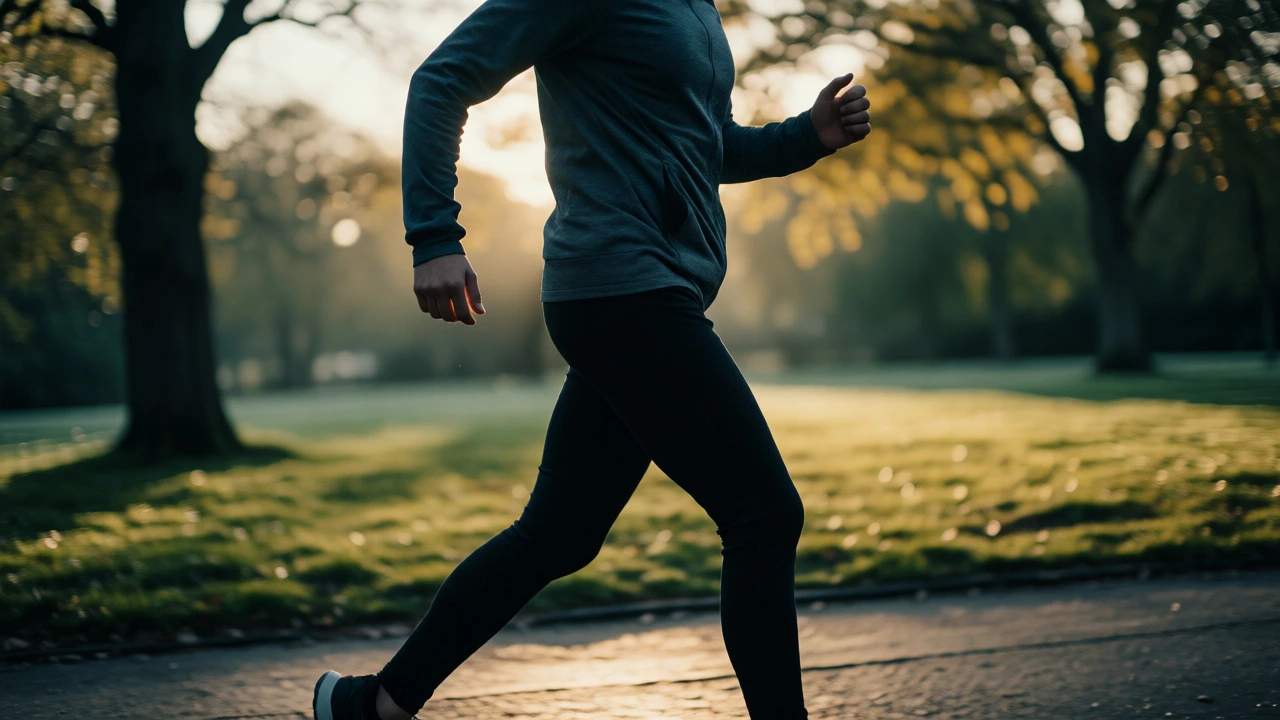
Note the jump in efficiency between a leisure stroll and a brisk walk. If you are aiming for belly fat loss, treat your walk like a workout, not a commute. Swing your arms. Engage your core slightly. Keep a steady rhythm.
The Role of NEAT and Daily Movement
Belly fat isn’t just about the 45-minute walk you do in the morning. It’s about your total daily energy expenditure, specifically a component called NEAT (Non-Exercise Activity Thermogenesis). NEAT includes all the movement you do that isn’t sleeping, eating, or dedicated sports-like exercise. Fidgeting, standing while cooking, taking the stairs, pacing while on the phone.
People who naturally stay lean tend to have high NEAT levels. They move constantly throughout the day. If you sit at a desk for eight hours, your metabolism slows down, and insulin sensitivity drops. This makes it easier for your body to store incoming calories as fat, particularly around the waist.
Walking increases NEAT dramatically. By integrating short walks into your day-say, five minutes every hour-you keep your metabolism active. A simple strategy is the "10-minute rule." Every time you finish a task or a meeting, walk for ten minutes. Over a week, this adds up to hours of additional movement without the fatigue of a gym session. This constant low-level activity prevents the metabolic stagnation that leads to belly accumulation.
Nutrition: Can You Out-Walk a Bad Diet?
You’ve heard the phrase: "Abs are made in the kitchen." Is it true? Mostly, yes. You cannot out-walk a diet of sugary drinks and processed snacks. However, walking changes your relationship with food in subtle ways.
First, it improves insulin sensitivity. Insulin is the hormone that shuttles glucose from your blood into your cells. When you are sedentary, your cells become resistant to insulin, so your body pumps out more of it. High insulin levels signal your body to store fat. Regular walking makes your cells more responsive to insulin, meaning less insulin circulates in your blood, which reduces fat storage signals.
Second, walking reduces cravings. Stress-induced snacking is a major driver of belly fat. A post-dinner walk helps stabilize blood sugar levels, preventing the late-night crash that leads to reaching for cookies or chips. Try pairing your walk with a protein-rich meal. Protein has a high thermic effect (your body burns more calories digesting it) and keeps you full. Combine a 45-minute brisk walk with a diet high in fiber and protein, and you create a powerful environment for fat loss.

Common Mistakes That Stall Progress
Even with the best intentions, people make errors that negate the benefits of walking. Here are the top three pitfalls:
- Overestimating Calories Burned: People often eat back the calories they burned. If you burn 200 calories walking, don’t reward yourself with a 400-calorie muffin. Track your intake honestly for the first few weeks.
- Ignoring Posture: Slouching while walking disengages your core. Keep your shoulders back and engage your abdominal muscles lightly. This turns a simple walk into a mild core-strengthening exercise.
- Inconsistency: Walking twice a week won’t cut it. You need frequency. Aim for at least 5 days a week. It’s better to walk 20 minutes daily than 140 minutes once a week.
When Walking Isn’t Enough
While walking is fantastic, it has limits. If you have a significant amount of weight to lose, or if you’ve plateaued, you might need to add variety. Resistance training builds muscle mass, which raises your resting metabolic rate. More muscle means you burn more calories even while sitting on the couch.
Consider combining walking with strength exercises. Do your walk in the morning, and perform two sessions of bodyweight exercises (squats, push-ups, planks) during the week. This hybrid approach targets both visceral fat (via walking) and overall body composition (via strength). Also, check your sleep. Poor sleep disrupts leptin and ghrelin, the hunger hormones, making belly fat retention almost inevitable regardless of your steps count.
Realistic Expectations: How Long Until You See Results?
Patience is key. Belly fat is often the last place men lose weight and one of the first places women regain it due to hormonal factors. Don’t expect visible abs in two weeks.
Most people notice improved energy and better digestion within the first 7-10 days. Visible changes in waist circumference typically appear after 4-6 weeks of consistent, brisk walking combined with dietary adjustments. Measure your waist with a tape measure, not just rely on the scale. Muscle weighs more than fat, so you might lose inches while staying the same weight. That’s a win.
Is walking better than running for losing belly fat?
For many people, yes. Running causes higher cortisol spikes, which can promote abdominal fat storage in stressed individuals. Walking lowers cortisol and is more sustainable long-term, leading to greater total calorie burn over months without the injury risk or extreme hunger associated with running.
How many steps a day should I take to lose belly fat?
Aim for 7,000 to 10,000 steps daily. However, the quality matters more than the count. Ensure at least 3,000-4,000 of those steps are taken at a brisk pace (elevated heart rate) to maximize fat oxidation and cardiovascular benefits.
Does walking on an incline help burn more belly fat?
Yes. Walking uphill increases the intensity without the joint impact of running. It engages more muscle groups, including glutes and hamstrings, raising the calorie burn by 30-50% compared to flat walking at the same speed.
Can I lose belly fat by walking only?
You can reduce visceral fat significantly with walking alone, provided you maintain a calorie deficit through diet. However, adding resistance training helps preserve muscle mass, ensuring that the weight lost is primarily fat, not muscle, which supports a healthier metabolism long-term.
What is the best time of day to walk for fat loss?
Consistency is more important than timing. However, some studies suggest walking after meals helps lower blood sugar spikes, reducing insulin-driven fat storage. Morning walks may also boost metabolism for the rest of the day, but choose the time you can stick to reliably.