Sustainable Fashion Hubs: Where Ethical Style Actually Lives
When we talk about sustainable fashion hubs, local or digital spaces where ethical clothing is designed, sold, repaired, or reused. Also known as ethical fashion centers, these are more than just stores—they’re communities built on transparency, slow production, and real environmental care. They’re not just boutiques with a green label. They’re the thrift shops in Bristol that partner with local tailors, the online platforms in Manchester that track every thread’s origin, and the repair pop-ups in Leeds that turn worn jeans into something new.
These hubs don’t just sell clothes—they fix the system. secondhand shopping, the practice of buying and selling used clothing to reduce waste. Also known as thrifting, it’s the backbone of most sustainable fashion hubs. And it’s not just about saving money. A 2023 study by the UK’s Environmental Audit Committee found that buying one used item instead of new cuts its carbon footprint by 80%. But here’s the catch: not all secondhand is equal. Some hubs sort by quality, repair damage, and resell with care. Others just dump unsold stock overseas. That’s why knowing your hub matters.
circular economy, a system where materials are kept in use for as long as possible through repair, reuse, and recycling. Also known as closed-loop fashion, it’s what separates true sustainable fashion hubs from greenwashed brands. Think of it like a cycle: you buy a shirt, wear it for years, return it for repair or resale, and someone else gives it a new life. No landfill. No new resources. Just smart, slow use. That’s the model these hubs follow—not the ‘buy more, feel better’ trick of big retailers.
And it’s not just about the clothes. These hubs connect people. They host swap events, teach mending workshops, and spotlight local designers who pay fair wages. You won’t find influencer photoshoots here—you’ll find real conversations about fabric sourcing, dye pollution, and how to make your wardrobe last. This isn’t a trend. It’s a quiet rebellion against fast fashion’s broken promise.
What you’ll find below are real stories from people who’ve built, shopped at, and transformed these spaces. From how a tiny shop in Brighton cut its waste by 90% to why a Glasgow-based repair collective now trains ex-offenders in tailoring. These aren’t theoretical ideas. They’re working solutions—practical, messy, human, and happening right now in the UK.
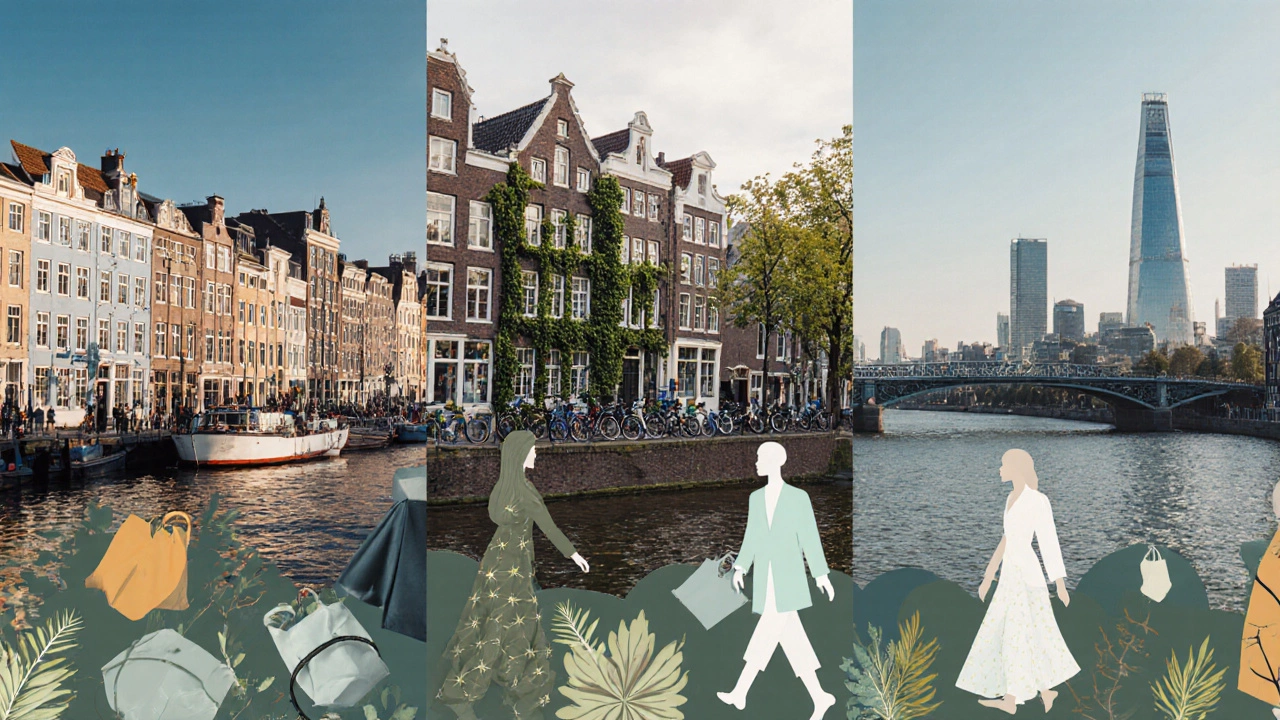
The Capital of Sustainable Fashion: Which City Leads the Eco‑Style Movement?
Explore why Copenhagen, Amsterdam, and London vie for the title of sustainable fashion capital, learn the criteria that define the lead, and discover how you can support the green‑style movement.