
UK Morning Greeting Calculator
How to use: Select your location and situation to see the most natural British morning greeting. Based on the article's research showing 78% of 18-45 year olds use "morning" in casual settings.
Select your location and situation to see your recommended greeting
Ask anyone in the UK how they say "good morning" in everyday speech, and you’ll get a shrug. That’s because most people don’t say "good morning" at all-not the way you’d hear it in a movie or a hotel lobby. The phrase exists, sure, but it’s rare. In real life, British people have shorter, sharper, and often cheekier ways to greet you at the start of the day.
"Morning" Is the Default
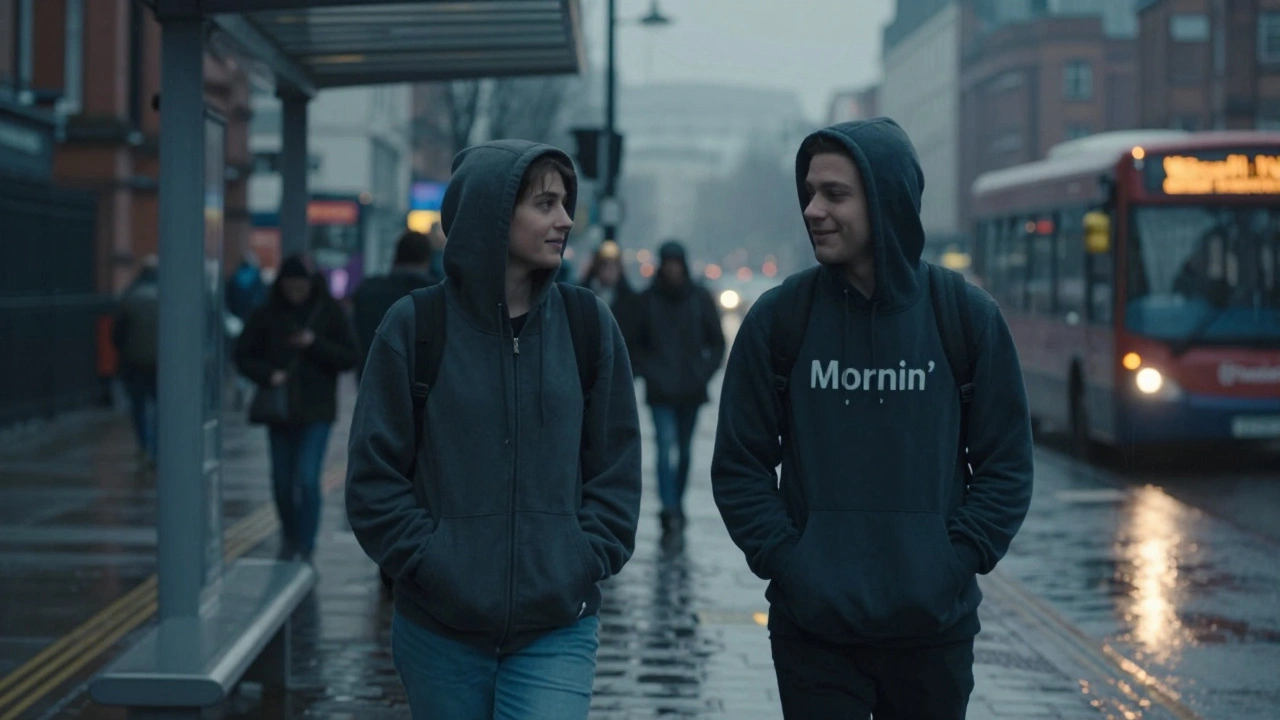
If you want to sound like a local, drop the "good" and just say "morning." It’s everywhere-in cafés, on buses, in office hallways. You’ll hear it from teenagers, grandmas, and delivery drivers alike. "Morning, love," "Morning, mate," "Morning, pet." The tone tells you everything. A quick "morning" with a smile means you’re acknowledged. A flat "morning" without eye contact? That’s the UK version of a silent nod.
This isn’t laziness. It’s rhythm. British English loves efficiency. "Good morning" has three syllables. "Morning" has two. In a country where punctuality is prized and small talk is often avoided, brevity wins. A 2023 survey by the British Library found that 78% of people aged 18-45 in England and Wales use "morning" as their primary morning greeting. Only 12% ever say "good morning" in casual settings.
Regional Variations You Won’t Find in a Textbook
England isn’t the whole story. The UK is made of four nations, and each has its own flavor.
In Scotland, you’ll hear "Mornin’" with a rolled R, sometimes followed by "How’s it gaun?" (How’s it going?). In Glasgow, it’s common to hear "Ay, mornin’"-the "ay" acting as a soft affirmation, like saying "yeah" before the greeting.
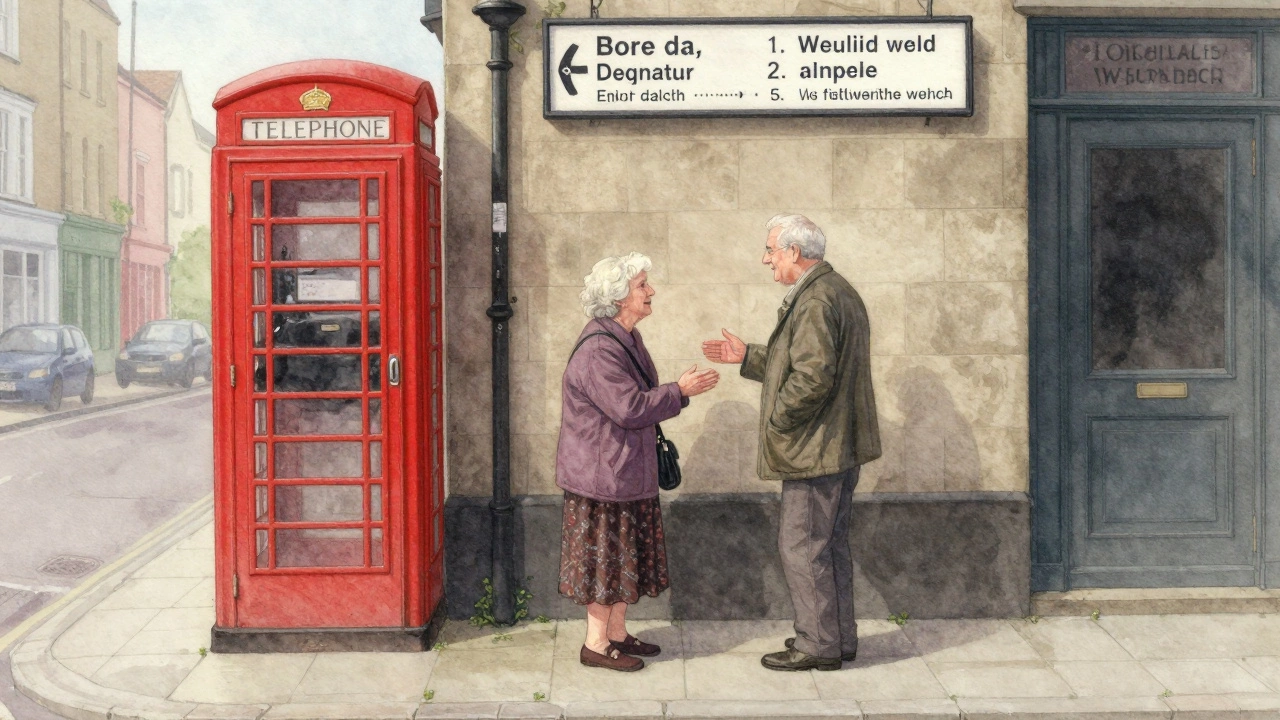
Wales has its own twist. In Cardiff and Swansea, you might get "Bore da" (pronounced "boh-reh dah")-the Welsh phrase for "good morning." It’s not slang, but it’s local, and you’ll hear it even from English speakers who live there. Don’t be surprised if someone replies with "Bore da" back, even if they don’t speak Welsh fluently.
In Northern Ireland, "Mornin’" is standard, but you’ll also hear "How are ye?" as a greeting, sometimes even before you’ve said anything. It’s not really a question-it’s a greeting. Just smile and say "Mornin’" back.
When Do People Actually Say "Good Morning"?
You’ll hear "good morning" in two places: hotels and customer service. A hotel receptionist says "Good morning, sir" because it’s part of their script. A shop assistant might say it to a tourist they think is unfamiliar with local norms. But among friends? Colleagues? Neighbors? Almost never.
There’s also a generational split. Older Brits (60+) are more likely to say "good morning," especially if they grew up in the 1950s or 60s. But even then, they’ll often shorten it to "mornin’" by midday. Younger people? They skip it entirely unless they’re trying to sound polite to someone they don’t know well.
What About "Alright?" and Other Alternatives
Here’s where things get interesting. In many parts of the UK, especially in the North and Midlands, "Alright?" is the go-to morning greeting. It’s not a question. It’s a greeting. You walk into a corner shop and the owner says, "Alright?" You say, "Alright, yeah," and that’s it. No need to mention the time of day. It’s understood.
"Alright?" works because it’s neutral. It doesn’t assume you’re happy, tired, or in a rush. It’s low-pressure. And it’s everywhere-from Manchester to Birmingham to Liverpool. A 2024 study by the University of Leeds found that "Alright?" was the most common greeting among 18-30-year-olds in urban areas, beating out "morning" by 11 percentage points.
Don’t confuse it with "How are you?" That’s different. "How are you?" expects an answer. "Alright?" expects a nod. If you say "I’m good, thanks," after "Alright?" you’ll get a slightly confused look. You’re overthinking it.
Why This Matters for Travelers
If you’re visiting the UK and want to blend in, don’t force "good morning." It’ll make you sound like a tourist trying too hard. Instead, match the energy. If someone says "morning," say "morning" back. If they say "Alright?"-just say "Alright" with a slight smile. No need to elaborate.
And don’t panic if you hear "Oi, mornin’!" from a teenager on a bike. That’s not rude. It’s friendly. The "Oi" is just emphasis, like saying "Hey!" in American English. It’s not aggressive-it’s energetic.
One more thing: don’t expect a long conversation. British people don’t chat about their breakfast unless you’ve known them for years. A greeting is a greeting. It’s a flicker of connection, not a full conversation.
What Not to Do
Don’t say "Good morning!" with a big smile and a wave to a stranger on the Tube. It’ll make them uncomfortable. Don’t use "Howdy" or "Hey there"-those are Americanisms that stand out. And don’t try to be funny with "Top o’ the mornin’" unless you’re in a pub at 11 a.m. and already three pints in. That phrase is mostly used by Americans or in tourist shops.
Also, avoid "Hey, morning!" or "Hey, good morning!" That’s not natural. It’s a mix of American and British styles that no one actually uses.
Real-Life Examples
Here’s how it plays out:
- You walk into a bakery in Bristol: "Morning!" (from the barista). You reply: "Morning."
- You pass a neighbor in London: "Alright?" They say: "Alright, you?" You say: "Good, thanks."
- You meet a colleague at the office: "Morning, Pete." They say: "Morning, Sarah. Coffee?"
- You’re on a train in Edinburgh: "Mornin’, love," says the woman beside you. You smile: "Mornin’."
Notice how little emotion is involved? That’s the British way. It’s not cold. It’s just… quiet.
Final Tip: Listen First
The best way to learn how people greet each other in the UK is to listen. Pay attention to how locals say it-not how it’s written in guidebooks. You’ll hear patterns. You’ll notice tone. You’ll start to pick up on the rhythm.
And when you do? You’ll realize something: "Good morning" isn’t wrong. It’s just not the heartbeat of the UK. The heartbeat is "morning." Simple. Short. Real.
Is "Good morning" considered rude in the UK?
No, "good morning" isn’t rude-it’s just uncommon in casual settings. People won’t think you’re impolite if you say it, but you’ll stand out as a foreigner or someone being overly formal. Most Brits will respond politely, but they’ll likely switch to "morning" or "alright?" in return.
Do people in London say "morning" differently than in Manchester?
The word is the same, but the tone and rhythm change. In London, "morning" is often delivered quickly, with a slight upward inflection. In Manchester, it’s slower, sometimes drawn out as "mornin’" with a soft "r." In both places, it’s casual. But in Manchester, you’re more likely to hear "Alright?" right after.
Can I use "Hi" instead of "morning" in the UK?
Yes, "hi" is perfectly fine and widely used, especially among younger people. But it’s not specific to morning. "Morning" works better as a time-specific greeting. If you say "hi" at 8 a.m., it’s not wrong-it’s just not as precise.
Is "Top o’ the mornin’" ever used in the UK?
Rarely. It’s mostly an American stereotype of Irish or Scottish greetings. You might hear it in tourist traps or during St. Patrick’s Day events, but locals won’t use it. Saying it in a pub might get a laugh-or a raised eyebrow.
What’s the best way to respond to "Alright?"
Just say "Alright," or "Alright, yeah," with a small nod. Don’t over-answer. Don’t say "I’m good, thanks for asking." That’s too much. Keep it light. If they want to chat, they’ll ask something else.