Greenwashing Detector
Enter a product claim or marketing slogan to analyze its credibility based on sustainability standards.
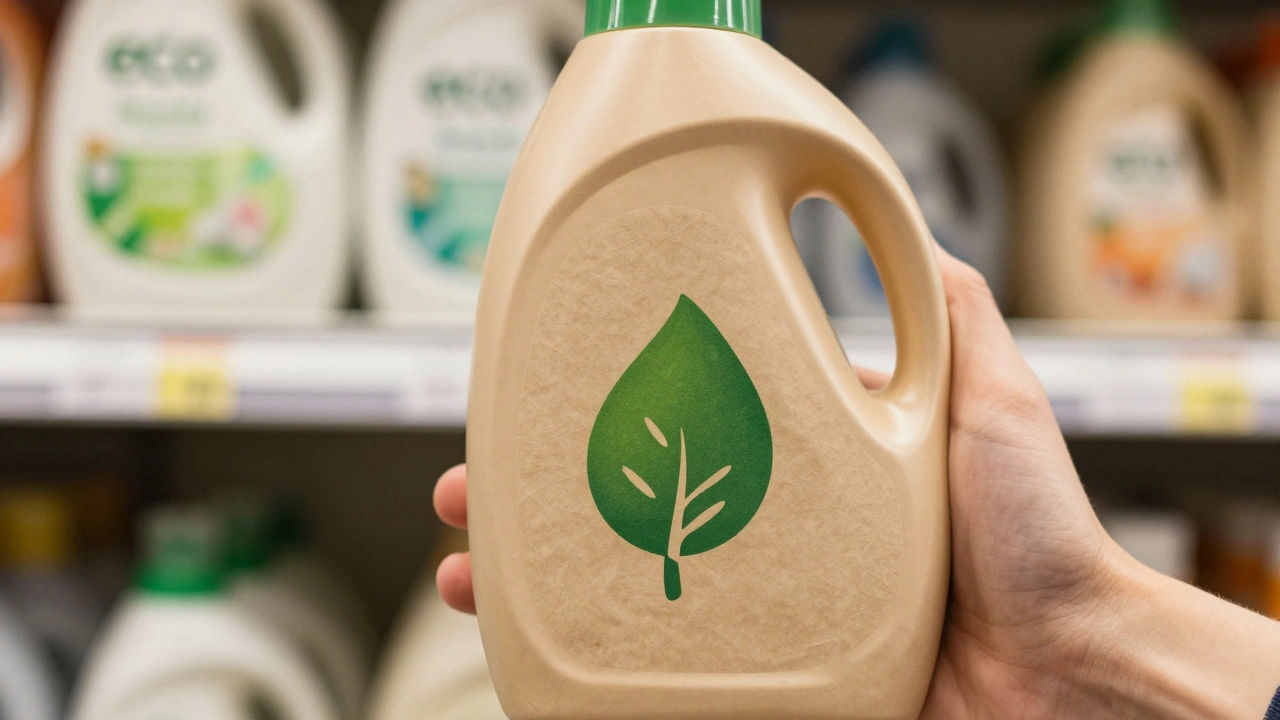
You pick up a bottle of detergent. It’s wrapped in brown paper, has a leaf on the label, and screams 100% eco-friendly. You feel good buying it. But do you really know what that claim means? More often than not, it means very little.
In 2026, we are drowning in green claims. From shampoo to smartphones, brands promise a zero-impact future. Yet, if you look closely, the term "100% eco-friendly" is rarely backed by hard science. It is usually a marketing trick designed to make you pay more for a product that might only be slightly better-or worse-than the conventional alternative.
So, what does it actually mean when something is labeled as completely eco-friendly? Is it possible for any product to have zero negative impact on the planet? Let’s strip away the marketing fluff and look at the reality of sustainability.
The Myth of Zero Impact
Here is the hard truth: nothing is truly 100% eco-friendly. Every product you buy requires resources to create. Trees are cut down for packaging. Water is used for manufacturing. Energy is burned to transport goods from factories to your doorstep. Even the most "natural" item leaves a footprint.
When a brand claims their product is "100% eco-friendly," they are usually ignoring parts of the story. They might focus on one aspect, like using recycled plastic, while hiding the fact that the production process uses toxic chemicals or excessive water. This selective transparency is the core of the problem.
True sustainability looks at the entire lifecycle of a product. This is called Life Cycle Assessment (LCA). An LCA tracks a product from raw material extraction to its final disposal. If a company hasn’t done an LCA, they can’t honestly claim anything about their total environmental impact. Without this data, "100% eco-friendly" is just an opinion, not a fact.
Understanding Greenwashing
If "100% eco-friendly" isn't real, why do companies use it? Because it works. Consumers want to do the right thing. Brands exploit this desire through a practice known as greenwashing. Greenwashing is when a company spends more time and money marketing themselves as environmentally friendly than on actually minimizing their environmental impact.
There are several common tactics used in greenwashing:
- Vague Language: Terms like "green," "earth-friendly," and "pure" have no legal definition. A company can slap these words on anything.
- The Halo Effect: Using nature imagery (leaves, forests, animals) to suggest a product is natural, even if it contains synthetic chemicals.
- Hidden Trade-offs: Highlighting one green feature (like being recyclable) while ignoring major negatives (like high carbon emissions during shipping).
- Fake Certifications: Creating logos that look like official seals of approval but are actually made up by the company itself.
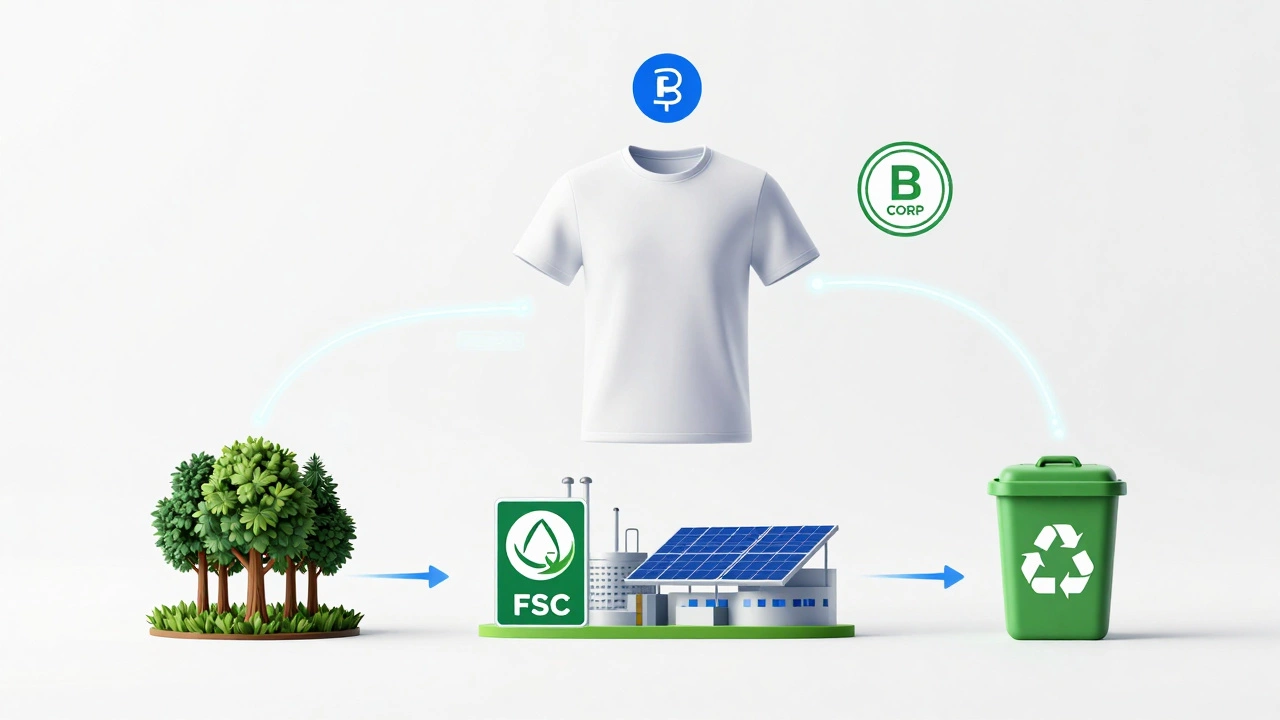
For example, a clothing brand might market a t-shirt as "eco-friendly" because it uses organic cotton. However, if that shirt is manufactured in a factory powered by coal and shipped via air freight to save time, the carbon footprint is massive. The "organic" part is true, but the "eco-friendly" claim is misleading.
Real Certifications vs. Marketing Fluff
Since self-declared labels are unreliable, how can you tell what is genuinely sustainable? You need to look for third-party certifications. These are independent organizations that audit companies against strict standards. Unlike marketing slogans, these certifications require proof.
Here are some of the most credible certifications to look for in 2026:
| Certification Name | Focus Area | Key Criteria |
|---|---|---|
| B Corp | Overall Business Practices | Measures social and environmental performance, accountability, and transparency. Requires a rigorous assessment. |
| Energy Star | Electronics & Appliances | Set by the EPA. Ensures products meet strict energy efficiency guidelines to save electricity and reduce greenhouse gas emissions. |
| FSC (Forest Stewardship Council) | Paper & Wood Products | Ensures wood and paper come from responsibly managed forests that provide environmental, social, and economic benefits. |
| Leaping Bunny | Cosmetics & Household | Guarantees that no animal testing was used at any stage of product development by the company or its suppliers. |
| USDA Organic | Food & Textiles | Requires that products contain at least 95% certified organic ingredients. Prohibits synthetic pesticides and fertilizers. |
If you see a logo that says "Eco-Approved" but you’ve never heard of the organization behind it, do a quick search. If there’s no website or clear criteria, it’s likely a fake seal designed to mimic trust.
The Hidden Costs of "Natural" Products
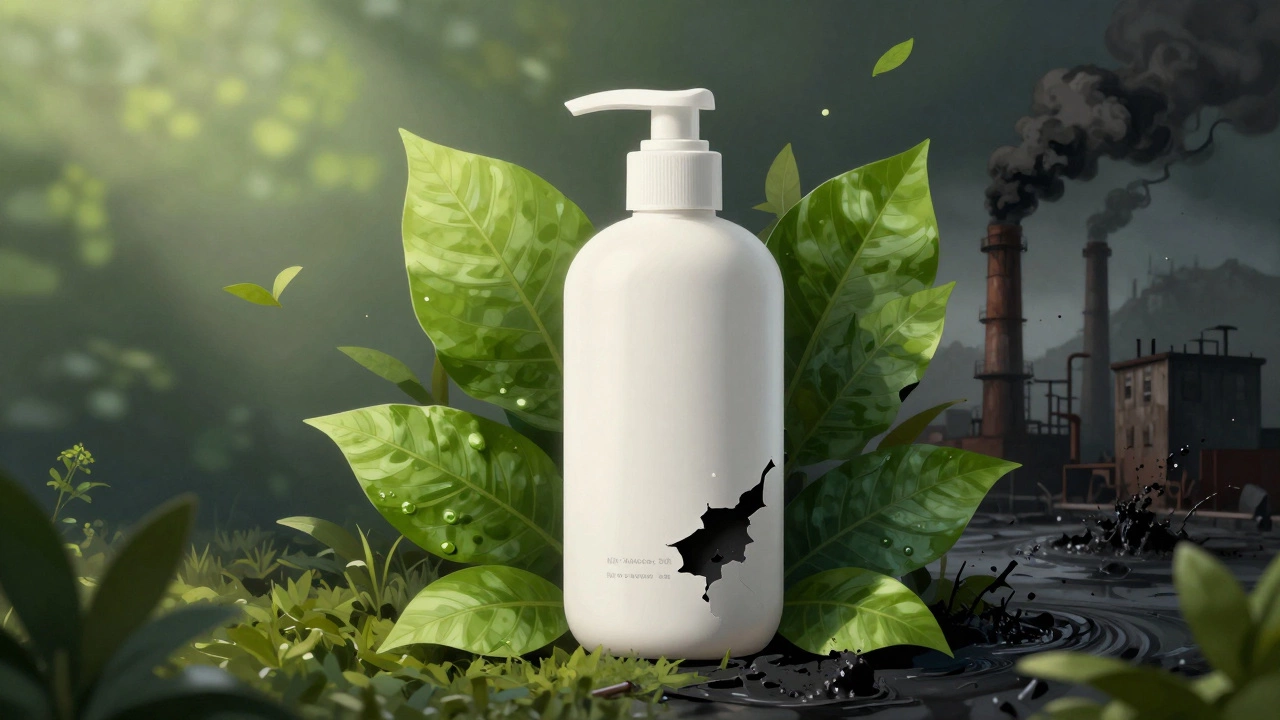
Many consumers assume that "natural" equals "eco-friendly." This is a dangerous assumption. Just because something comes from nature doesn’t mean it’s safe for the environment or your health.
Take essential oils, for instance. They are plant-based and popular in "clean" beauty products. However, producing enough lavender oil for a single bottle requires thousands of pounds of lavender flowers. This leads to over-harvesting, soil depletion, and high water usage. Furthermore, essential oils are volatile organic compounds (VOCs). When released into the air, they can contribute to indoor air pollution and smog.
Another example is palm oil. While it is a natural vegetable oil, its production is linked to deforestation in Southeast Asia. Many "natural" snacks and cosmetics still rely on palm oil. Unless it is certified sustainable by the Roundtable on Sustainable Palm Oil (RSPO), it contributes directly to habitat loss for orangutans and other species.
Always check the ingredient list. If you don’t recognize the chemicals, look them up. Avoid vague terms like "fragrance" or "parfum," which can hide hundreds of undisclosed synthetic chemicals.
How to Spot Genuine Sustainability
So, how do you navigate this confusing landscape? Here is a practical checklist to help you identify truly sustainable products without falling for greenwashing traps.
- Check the Packaging: Does it use minimal materials? Is it made from post-consumer recycled content? Can it be easily recycled in your local area? Excessive packaging is a red flag.
- Look for Specifics: Vague claims like "green" are bad. Specific claims like "made with 30% recycled ocean plastic" are better because they are measurable and verifiable.
- Investigate the Company: Visit their website. Do they publish an annual sustainability report? Do they disclose their supply chain? Transparent companies have nothing to hide.
- Consider Durability: The most eco-friendly product is the one you don’t have to replace. Cheap "eco-friendly" items that break quickly create more waste than durable conventional ones.
- Read the Fine Print: Look for footnotes. Often, big bold claims are qualified by tiny text that reveals the limitations, such as "bottle only" or "compared to previous formula."
Remember, sustainability is a journey, not a destination. No company is perfect. Look for brands that are honest about their progress and committed to continuous improvement rather than those claiming perfection.
The Role of Consumer Behavior
While products matter, your behavior matters more. Buying a "100% eco-friendly" toothbrush won’t save the planet if you still fly frequently, eat a diet high in meat, and throw away electronics every year. Individual consumption habits have a larger impact than the specific brand of soap you choose.
The most effective way to reduce your environmental footprint is to consume less. Before buying anything new, ask yourself: Do I really need this? Can I borrow it? Can I buy it second-hand?
Repairing items instead of replacing them is also a powerful act of sustainability. The Right to Repair movement is gaining momentum in 2026, pushing for laws that require manufacturers to make products easier to fix. Supporting this movement helps combat the culture of planned obsolescence.
Additionally, consider the end-of-life of your purchases. Where will this item go when you’re done with it? If it can’t be composted, recycled, or resold, it will likely end up in a landfill. Choosing products with circular economy principles-where materials are kept in use for as long as possible-reduces waste significantly.
Regulations Are Changing
Good news is coming. Governments around the world are starting to crack down on greenwashing. In the European Union, the Green Claims Directive is set to ban unsubstantiated environmental claims. Companies will soon need to prove their statements with scientific evidence or face heavy fines.
In South Africa, the National Environmental Management Act is being strengthened to address climate change and pollution. As regulations tighten, the gap between genuine sustainability and marketing hype will shrink. By 2027, we expect to see clearer labeling requirements and stricter penalties for false advertising.
This regulatory shift empowers consumers. We no longer have to take a company’s word for it. We can demand proof. And as more people ask for that proof, companies will be forced to adapt.
Is there such thing as a 100% eco-friendly product?
No. Every product has an environmental cost due to resource extraction, manufacturing, transportation, and disposal. The goal should be to minimize impact, not eliminate it entirely. Look for products with low-carbon footprints and sustainable sourcing rather than impossible "zero impact" claims.
How can I tell if a certification is legitimate?
Legitimate certifications are issued by independent third parties, not the company itself. Check if the certifying body is accredited by recognized standards organizations like ISO. Search for the certification online to verify its criteria and whether the brand is listed as a current licensee.
Why do companies use vague terms like "green"?
Terms like "green," "natural," and "eco-friendly" are unregulated in many regions. Companies use them to appeal to environmentally conscious consumers without having to meet specific legal standards or undergo costly audits. This is a form of greenwashing.
What is greenwashing?
Greenwashing is a deceptive marketing practice where a company misleads consumers about the environmental benefits of its products or practices. It involves exaggerating positive attributes while hiding negative impacts to appear more sustainable than they actually are.
Are natural products always better for the environment?
Not necessarily. Natural products can still involve harmful processes like deforestation, excessive water use, or pesticide application. Additionally, some natural ingredients can be toxic or contribute to air pollution. Always look for specific certifications and lifecycle assessments rather than assuming "natural" means "safe."