Decluttering Strategy Planner
Step 1: Select Your Target Zones
Click the rooms you want to tackle. We'll calculate the estimated time and provide a tailored strategy.
Your Action Plan
The Decision Helper
Struggling to let go? Ask yourself:
If the answer is NO, it belongs in the Donate or Trash pile.
Feeling Overwhelmed? Try this:
Build momentum first, then tackle the bigger zones.
- Start with a 'trash run' to remove obvious garbage.
- Focus on one small area (like a single drawer) to build momentum.
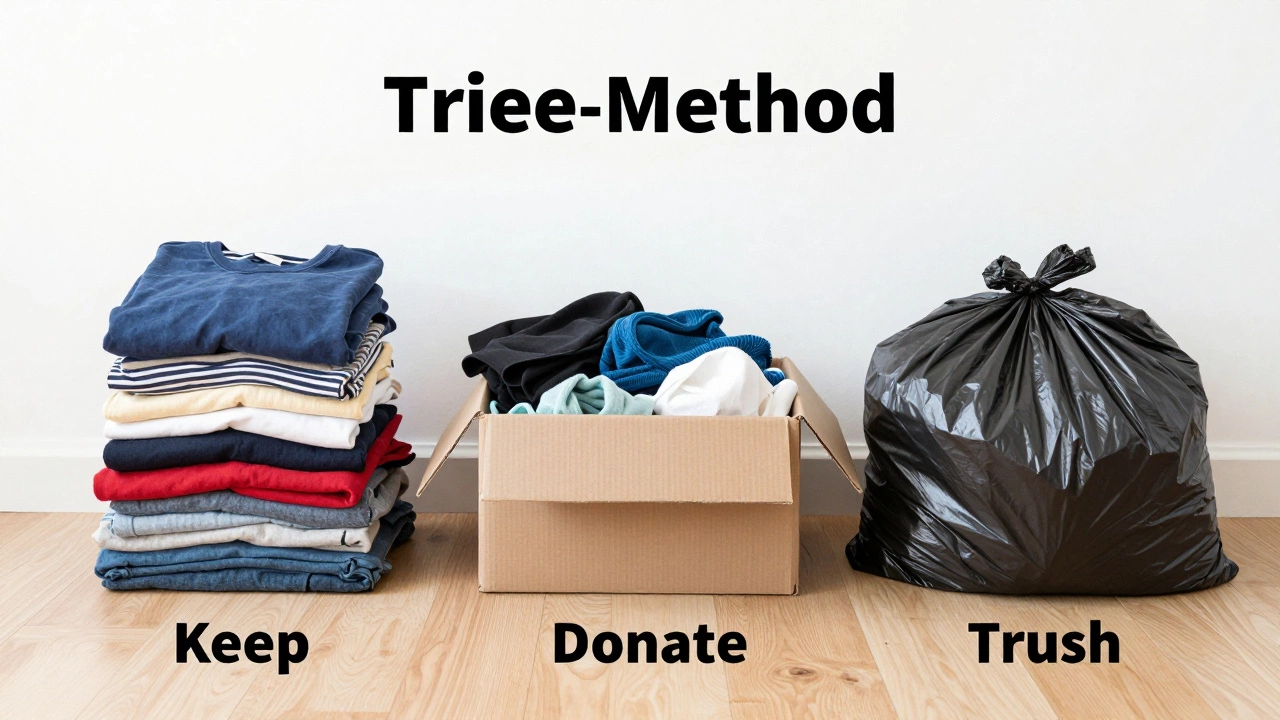
- Use the 'Three-Pile Method': Keep, Donate, Trash.
- Set a timer for 20 minutes to avoid burnout.
- Don't buy organizers until the decluttering is finished.
Stop the Inflow Before You Start
You can't bail water out of a boat if there's still a hole in the bottom. Before you move a single box, you have to stop new things from entering your home. This means a strict 'one-in, one-out' rule. If you buy a new pair of shoes, an old pair has to leave the house immediately. Many people make the mistake of buying Storage Bins plastic or fabric containers used to hold items before they actually purge. This is a trap. Buying bins doesn't remove clutter; it just gives your clutter a nicer place to live. Wait until you've stripped a room down to its essentials before you even think about buying a shelving unit. Ask yourself: do I actually need a container for this, or should I just get rid of the item entirely?
The Psychology of the Purge
The hardest part of declutter a cluttered house isn't the physical lifting; it's the emotional attachment. We often hold onto things not because we use them, but because of who we were when we bought them or who we hope to become. This is called 'aspirational clutter.' It's the exercise bike that became a clothes rack or the fancy cookbooks for a cuisine you've never actually tried. To break this cycle, stop asking 'Could I use this someday?' because the answer is always yes. Instead, ask 'Would I buy this today if I saw it in a store?' If the answer is no, the item is taking up valuable mental and physical real estate. Use a technique called Decision Fatigue Mitigation the process of reducing the number of choices to avoid mental exhaustion by making quick, gut-level decisions for the first 30 minutes of your session. If you hesitate for more than five seconds, put it in a 'Maybe' box and hide it in the garage for a month. If you don't miss it by then, it's gone.
The Room-by-Room Attack Plan
Tackling a whole house at once is a recipe for failure. You'll end up with five half-finished rooms and a huge mess in the middle of the hallway. Instead, use a zoning strategy. Start with the area that causes you the most daily stress-usually the kitchen or the bedroom. In the kitchen, start with the 'junk drawer.' It's small enough to finish in ten minutes, which gives you a dopamine hit to keep going. Then move to the pantry. Be ruthless with expired spices and that weird gadget you used once three years ago. When you move to the bedroom, focus on the closet. A great rule of thumb is the 'Hanger Trick': turn all your clothes hangers backward. When you wear something, put it back the normal way. After six months, anything still backward gets donated. This provides concrete evidence of what you actually use versus what you think you use.
| Area | Common Culprit | Best Approach | Expected Time |
|---|---|---|---|
| Kitchen | Duplicate utensils, old food | Expiration check & duplicate purge | 2-4 Hours |
| Bathroom | Expired meds, old makeup | Date checking & safety disposal | 1-2 Hours |
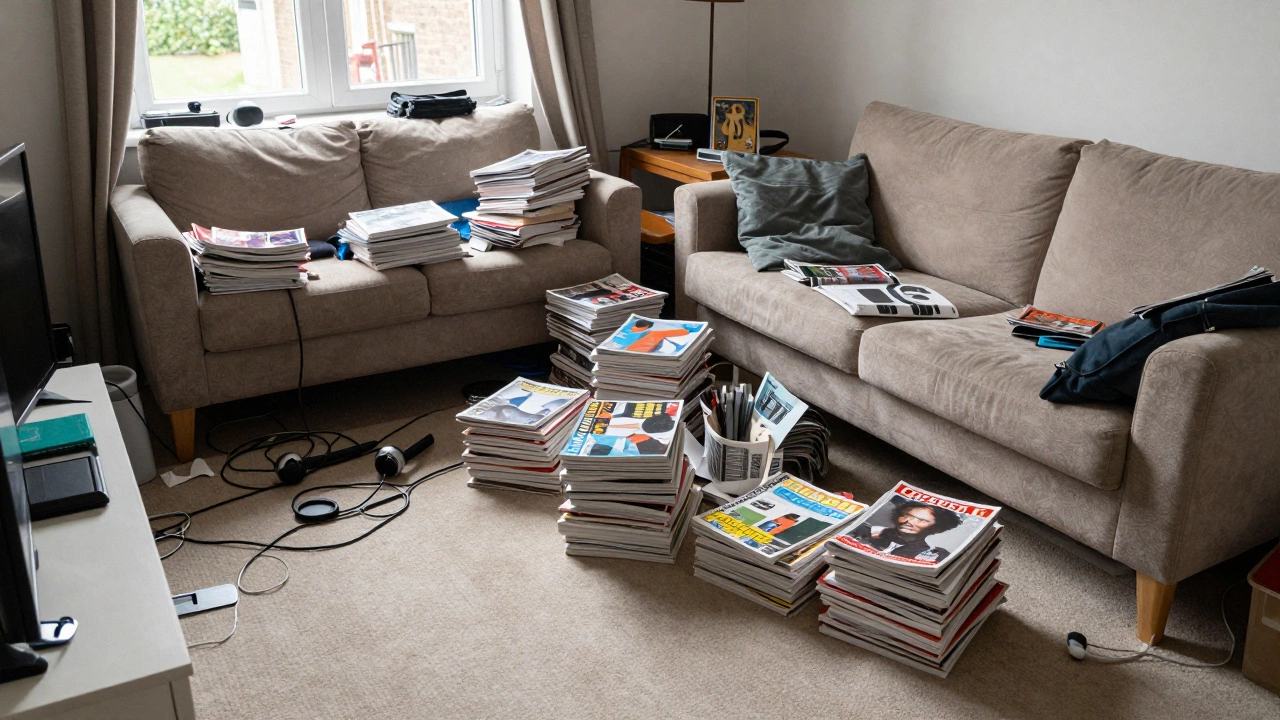
| Living Room | Old magazines, random cables | Surface clearing & cable sorting | 2-3 Hours |
| Closet | Clothes that don't fit | Hanger trick & fit test | 4-6 Hours |
Dealing with Paperwork and Digital Clutter
Paper is one of the sneakiest forms of clutter because it feels 'important.' We save receipts, old bills, and manuals for appliances we no longer own. The truth is, 90% of your paper trail can be digitized. Get a Document Scanner a device or app that converts physical paper into digital PDF files or even just use your phone's camera. Once you have a digital copy, shred the original. For the things you absolutely must keep-like passports, birth certificates, and house deeds-invest in a single, fireproof Filing Cabinet a piece of office furniture used to store organized documents or a secure folder. If it doesn't fit in that one folder, you probably don't need it.
Maintaining the Space (The 5-Minute Rule)
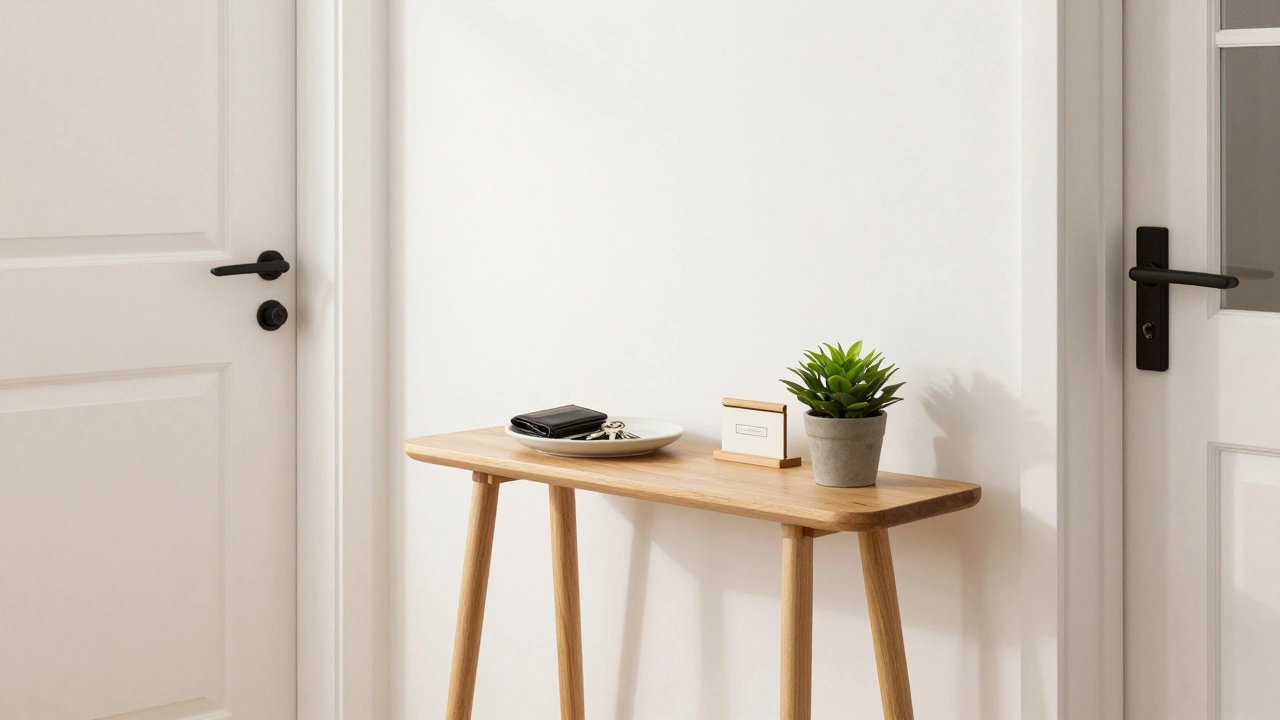
The biggest tragedy is spending a whole weekend decluttering only to have the house return to chaos within a month. This happens because we treat cleaning as an 'event' rather than a habit. To stop the relapse, implement the 5-Minute Rule: if a task takes less than five minutes, do it immediately. Putting your shoes in the rack takes 30 seconds. Hanging up a coat takes 20 seconds. Putting a dish in the dishwasher takes 10 seconds. When you ignore these tiny tasks, they accumulate into a mountain of clutter. By handling them in real-time, you prevent the 'clutter creep' that leads to those overwhelming weekends of cleaning. Also, designate a 'landing strip' near your front door. This is a specific spot for keys, mail, and bags. When everything has a designated home, the friction of putting things away disappears. If an object doesn't have a home, it's not a possession; it's just clutter waiting to happen.
The Final Exit Strategy
One of the biggest pitfalls is leaving 'donation bags' by the front door for three weeks. Those bags are still clutter; they're just clutter in bags. The moment a bag is full, it needs to leave your property. Whether you take them to a local charity shop or schedule a pickup from a non-profit, get the items out of your sight immediately. Seeing the physical space open up in your home creates a powerful psychological reward that motivates you to tackle the next room. If you're struggling to let go, remember that your items can be someone else's treasure. Giving a high-quality item to someone who truly needs it is a better outcome than letting it gather dust in your attic.
Where is the best place to start when I'm completely overwhelmed?
Start with a 'trash sweep.' Take a large black garbage bag and walk through every room, picking up only things that are undeniably trash (wrappers, broken items, old newspapers). This clears the 'visual noise' and makes the actual decluttering process much easier because you're no longer sorting through garbage to find the items you actually need to make decisions about.
How do I handle sentimental items without getting emotional?
Save sentimental items for the very end. If you start with your childhood photo albums, you'll spend four hours reminiscing and zero hours decluttering. Once you've built a 'winning streak' by clearing out non-emotional areas like the bathroom or pantry, you'll have the mental stamina to handle the hard stuff. When you do reach sentimental items, take a photo of the object to preserve the memory, then let the physical object go.
What if my family members don't want to declutter?
Never throw away someone else's belongings without their permission; it creates resentment and distrust. Instead, focus on the common areas first. Once your partner or children see the peace and functionality of a decluttered living room, they are more likely to be inspired. For personal spaces, create 'boundary zones.' Tell them, 'I can't manage the clutter in the hallway, but your bedroom is your choice.' Often, the visible success in shared areas encourages others to join in.
How often should I do a deep declutter?
A full-home deep declutter should happen once a year, ideally during a seasonal change like spring or autumn. However, the goal is to transition to 'micro-decluttering.' Spend 15 minutes every Sunday evening reviewing one drawer or one shelf. This prevents the buildup that leads to a 'very cluttered house' in the first place.
What do I do with things that are too broken to donate?
Don't let 'recycling guilt' keep clutter in your home. If an item is broken beyond a simple fix, it belongs in the trash or a specialized recycling center (like e-waste for electronics). Trying to save a broken toaster 'just in case' only adds to your mental burden. If it doesn't work, it's not an asset; it's a liability.