Work-Life Balance & Digital Presenteeism Score
Are you suffering from "Digital Presenteeism"? Answer these 5 questions honestly to calculate your Work-Life Balance Risk Score.
Recommended Actions
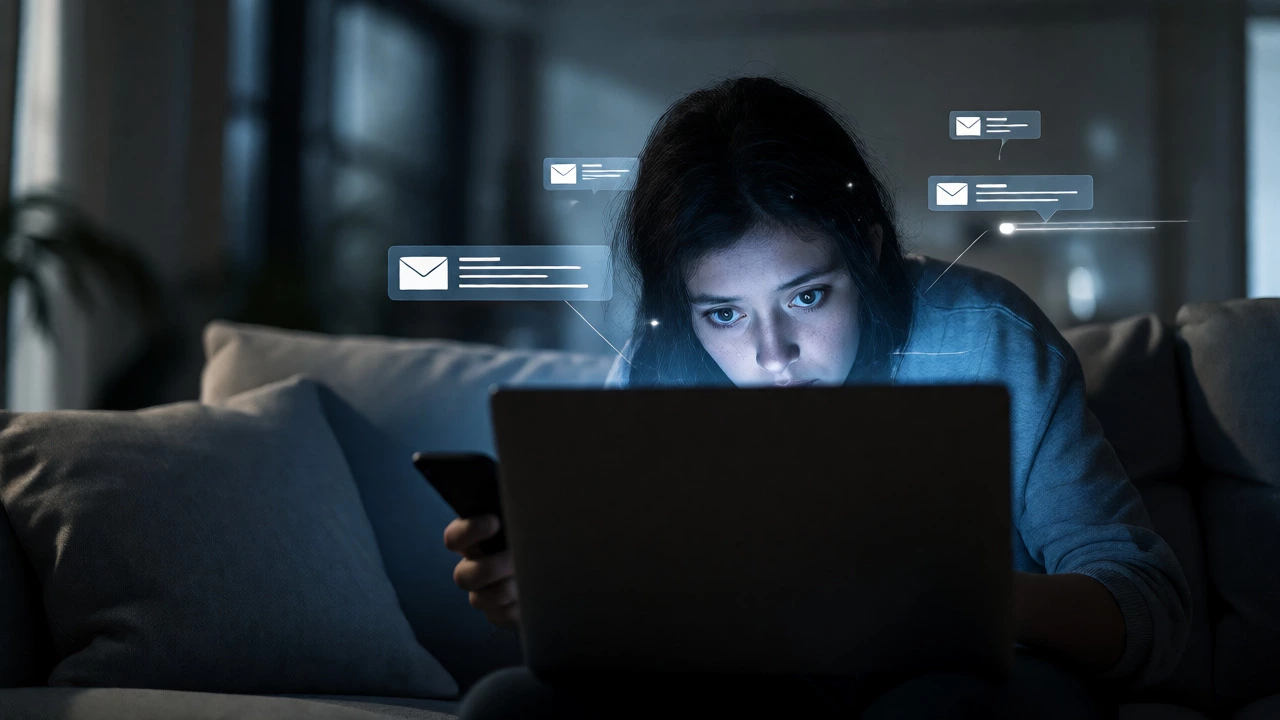
You’re sitting at your desk, or maybe on your couch with a laptop balanced on your knees. It’s 8:30 PM. You’ve been "working" for three hours, but you’ve only done twenty minutes of actual focused effort. The rest? Scrolling emails, answering Slack messages that didn’t need an answer, and feeling a low-level hum of anxiety because you might be missing something. This isn’t just bad habits. This is digital presenteeism, and it is quietly destroying work-life balance for millions of people.
We often blame long hours or demanding bosses. But if you ask most professionals why they feel burned out despite working standard 40-hour weeks, the answer rarely involves the clock. It involves the inability to disconnect. The boundary between "on" and "off" has dissolved. Let’s look at what actually drives this imbalance, why willpower alone won’t fix it, and how you can reclaim your evenings without getting fired.
The Myth of Time Management vs. Energy Management
For decades, we were told that poor work-life balance was a time management problem. If you just used a better calendar app or woke up at 5 AM, you’d have enough time for everything. That theory fails because it ignores human biology. You don’t run on time; you run on energy.
Burnout is a state of emotional, physical, and mental exhaustion caused by excessive and prolonged stress. It occurs when you feel overwhelmed, emotionally drained, and unable to meet constant demands. Unlike tiredness, which is cured by sleep, burnout requires a fundamental change in how you engage with your work. When you try to manage time instead of energy, you force yourself to push through fatigue. You sit at your desk for another hour, producing garbage-quality work, while resenting the fact that you aren’t living your life.
The core issue isn't that you lack hours in the day. It's that your cognitive resources are depleted by context switching. Every time you check your phone, you pay a "switching cost." Research from the University of California, Irvine, found it takes an average of 23 minutes and 15 seconds to get back to full focus after an interruption. If you check email every ten minutes, you never reach deep work. You stay in a shallow, anxious state all day, then crash in the evening with no energy left for family, hobbies, or rest.
Digital Presenteeism: The Invisible Boss
If there is one single culprit for modern imbalance, it is the smartphone. We call this digital presenteeism. In the pre-smartphone era, leaving the office meant leaving work. Today, the office is in your pocket. You carry it to dinner, to bed, and even to the bathroom.
This creates a psychological trap called "anticipatory stress." Even if no one emails you at 9 PM, the *possibility* that they might keeps your brain in a state of hyper-vigilance. Your nervous system doesn’t know the difference between a real threat (a tiger) and a perceived threat (an unread notification). Both trigger cortisol release. Over months, this chronic elevation of stress hormones leads to inflammation, sleep disruption, and irritability.
Consider the concept of "always-on culture." Companies like Amazon and Microsoft have tried to curb this by banning internal emails after certain hours. Why? Because leaders realized that employees who couldn’t disconnect were making worse decisions the next day. The data supports this: workers who take regular breaks and disconnect perform better than those who grind through uninterrupted blocks. Yet, many employees fear that disconnecting will make them look lazy. This fear is irrational but powerful.
The Role of Remote Work and Blurred Boundaries
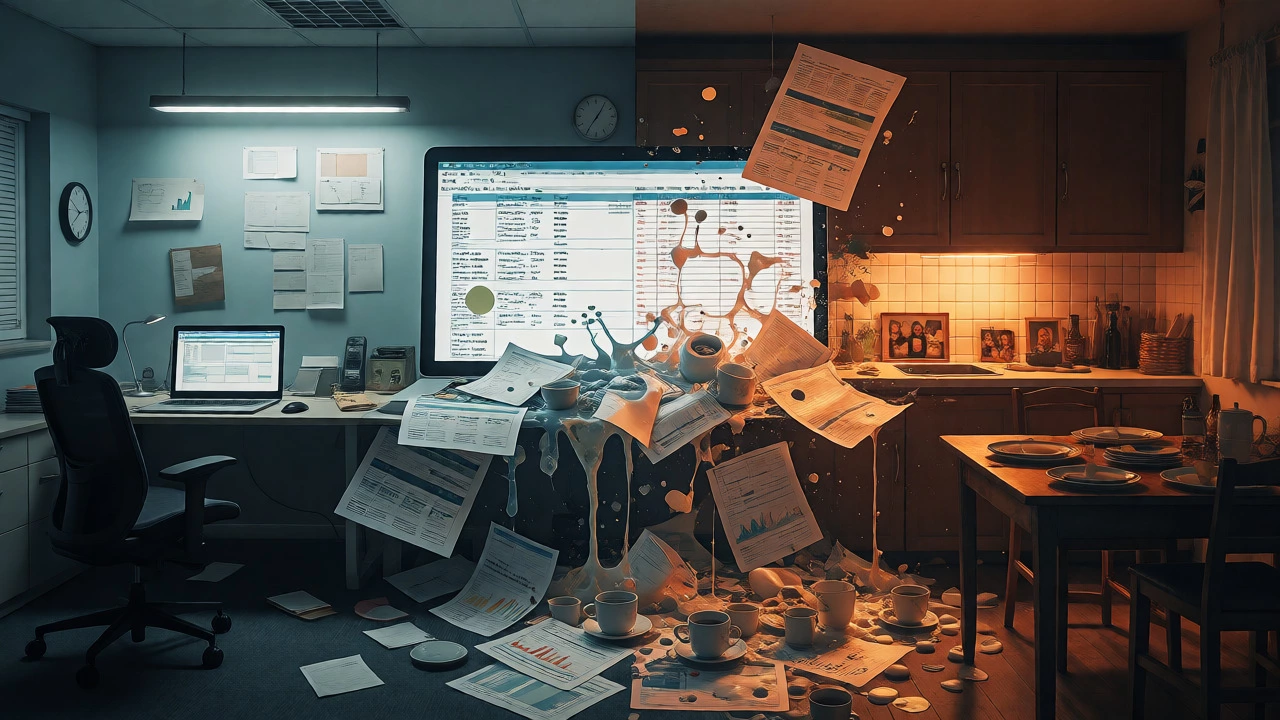
Remote work promised freedom. For many, it delivered flexibility. But for others, it erased the physical cues that signaled the end of the workday. In an office, walking out the door is a ritual. It tells your brain, "Work is over." At home, closing a laptop lid is a weak signal. If your kitchen table is your office, your brain associates eating with spreadsheets.
A study published in the Journal of Applied Psychology highlighted that remote workers often work longer hours not because they are less productive, but because they lack "transition rituals." Without a commute or a walk to the car, there is no buffer zone. You jump straight from high-stress meetings to household chores. This rapid context switching prevents mental recovery.
| Boundary Type | Description | Effect on Stress Levels | Recommended Action |
|---|---|---|---|
| Physical | Separate workspace from living space | Low | Create a dedicated corner or use noise-canceling headphones |
| Temporal | Fixed start and stop times | Moderate | Set hard stops for notifications after 6 PM |
| Psychological | Mental separation from work thoughts | High (if absent) | Practice mindfulness or journaling to close the day |
If you cannot create a physical boundary, you must build a temporal one. This means defining exactly when work starts and ends. And sticking to it. Not "roughly" 5 PM. Exactly 5 PM. The precision matters because it trains your brain to expect downtime.
Perfectionism and the Fear of Missing Out (FOMO)
Underneath the technology lies a deeper psychological driver: perfectionism. Many high-achievers believe that if they do not respond immediately, their value diminishes. They confuse visibility with productivity. This is exacerbated by FOMO-the fear that colleagues are collaborating without you, or that opportunities are passing you by.
This mindset leads to "over-functioning." You volunteer for extra projects, say yes to every meeting, and micromanage tasks that could be delegated. The result? You become the bottleneck. Your workload grows not because your employer demands it, but because you refuse to let go. This self-imposed pressure is often harder to break than external deadlines.
To combat this, adopt the "Minimum Viable Effort" principle. Ask yourself: What is the least amount of effort required to achieve a good outcome here? Often, 80% of the results come from 20% of the effort. The last 20% of polish consumes 80% of your energy and rarely adds proportional value. Learn to ship work at 90% quality rather than agonizing over 100%.

Practical Strategies to Reclaim Your Balance
Knowing the cause is half the battle. Fixing it requires actionable steps. Here is a checklist to reset your work-life equilibrium:
- Implement Tech Curfews: Turn off non-essential notifications after 7 PM. Use grayscale mode on your phone to make it less stimulating.
- Create Shutdown Rituals: Spend the last 15 minutes of your workday reviewing tomorrow’s priorities and closing all tabs. Say out loud, "Work is done."
- Schedule Leisure Like Meetings: Put gym, reading, or family time in your calendar. Treat these appointments as inviolable.
- Batch Communications: Check email only three times a day (e.g., 9 AM, 1 PM, 4 PM). Constant checking fragments attention.
- Communicate Boundaries Early: Tell your team, "I am offline after 6 PM unless it is an emergency." Most colleagues respect clarity.
Start small. Do not try to overhaul your entire life overnight. Pick one strategy, such as the tech curfew, and stick with it for two weeks. Notice how your sleep improves. Notice how your morning mood shifts. These micro-changes compound over time.
When to Seek Help
Sometimes, work-life balance issues are symptoms of deeper problems, such as clinical anxiety or depression. If you find that setting boundaries leads to panic attacks, or if you cannot enjoy leisure activities even when you have free time, consider speaking with a therapist. Cognitive Behavioral Therapy (CBT) is particularly effective for addressing the distorted thoughts that drive overwork, such as "If I rest, I will fail."
Remember, balance is not a static state. It is a dynamic process. Some weeks will require more work; others will demand more rest. The goal is not perfect equilibrium every day, but avoiding the downward spiral of chronic depletion. By recognizing that digital presenteeism and blurred boundaries are the primary culprits, you can stop blaming yourself for lacking discipline and start designing a lifestyle that sustains you.
Is checking email at night really harmful?
Yes. Checking email at night triggers anticipatory stress and disrupts sleep hygiene. The blue light suppresses melatonin, while the content activates the sympathetic nervous system, making it harder to fall asleep and reducing sleep quality.
How do I set boundaries without seeming uncommitted?
Frame boundaries around productivity, not personal preference. Explain that disconnecting allows you to return refreshed and more focused. Consistently delivering high-quality work during business hours builds trust, making boundaries easier to maintain.
Does remote work always worsen work-life balance?
Not necessarily. Remote work can improve balance by eliminating commutes and allowing flexible scheduling. However, it requires stricter self-discipline and clearer communication protocols to prevent work from bleeding into personal time.
What is the first step to fixing poor work-life balance?
Audit your current habits. Track how much time you spend on work-related tasks outside of designated hours. Identify the biggest source of interruption (usually phone notifications) and disable it for one week to test the impact.
Can exercise help with work-life balance?
Yes. Exercise reduces cortisol levels and improves mood, acting as a physiological counterbalance to work stress. It also provides a clear transition ritual between work and home life, especially if done immediately after logging off.