
Micro-Task Cleaning Assistant
Your Cleaning Task
Your Micro-Tasks
Enter your cleaning task and click "Generate Micro-Tasks" to see your personalized list.
"A clean room doesn't have to be spotless. It just has to be functional. A plate in the sink? Fine. A pile of clothes on the chair? Okay. As long as you can walk to the door, it's enough."
Think about the last time you looked at a messy room and thought, Why can’t they just clean it? For people with ADHD, that question isn’t about laziness or lack of willpower. It’s about biology.
The Brain Doesn’t Work the Way You Think
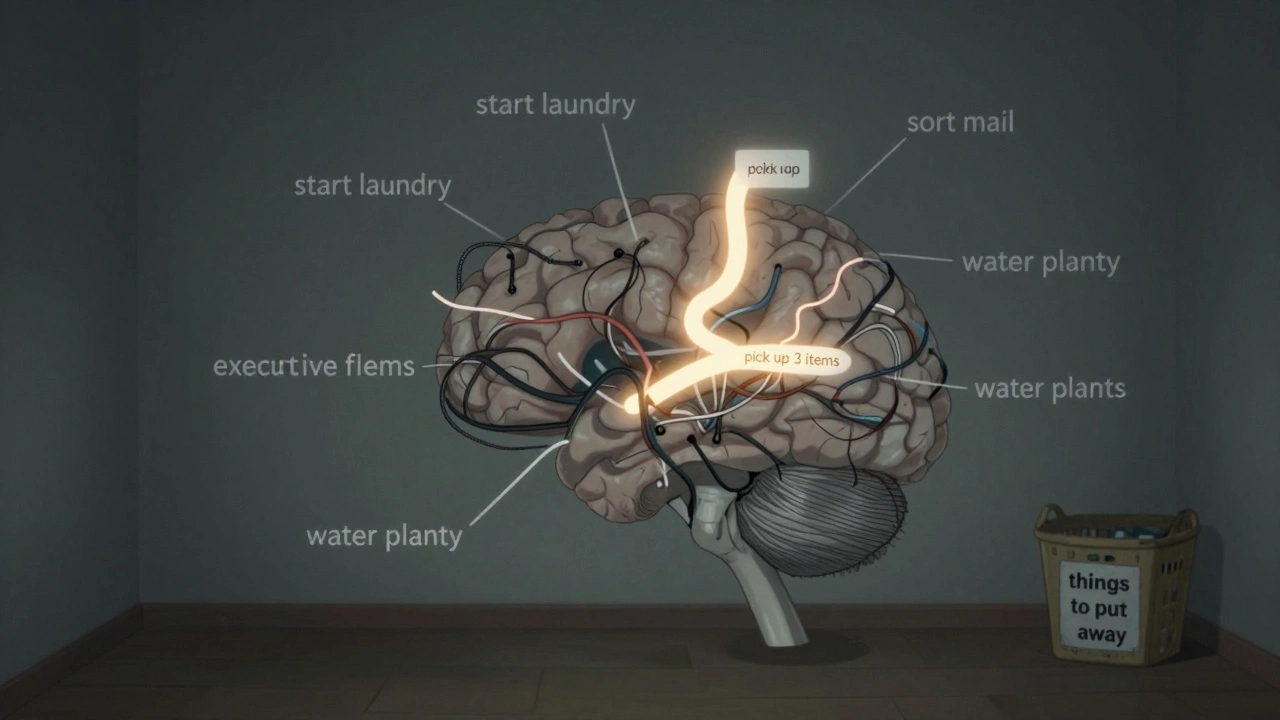
ADHD isn’t just about being distracted or hyperactive. At its core, it’s a neurological difference in how the brain handles executive function-the mental system that plans, starts, switches tasks, and finishes things. Cleaning isn’t one task. It’s a chain of dozens of tiny decisions: Where do I start? What goes where? Is this trash or recyclable? Do I need this? Should I wash this shirt or just put it away? For someone without ADHD, these decisions happen almost automatically. For someone with ADHD, each one feels like climbing a hill.
Imagine trying to run a marathon while someone keeps yelling random numbers in your ear. That’s what cleaning feels like with ADHD. Your brain is flooded with stimuli. A sock on the floor isn’t just a sock-it’s a memory of where you wore it, a feeling of guilt, a thought about laundry detergent, a worry about what your partner thinks, and a sudden urge to check your phone. All at once. And your brain doesn’t have a filter to turn off the noise.
Minimalism Doesn’t Fix ADHD-It Can Make It Worse
Minimalist blogs tell you to own less, declutter fast, and live with only what brings joy. Sounds great-until you try to do it with ADHD. The problem? Minimalism assumes you can make clear, rational decisions about possessions. But ADHD doesn’t work that way.
People with ADHD often form emotional attachments to objects not because they’re sentimental, but because the object represents a potential future self. That book you haven’t read? It’s not about the book. It’s about the person you’ll be when you finally read it. That t-shirt? It’s not about the fabric. It’s about the version of you who wore it to that concert, or that job interview, or that first date. Letting go feels like losing a part of your identity.
And here’s the twist: the more you try to force minimalism, the more overwhelmed you get. The pressure to “just get rid of it” triggers shame. Shame shuts down action. So instead of clearing clutter, you avoid the room entirely. The cycle tightens.
Executive Dysfunction Isn’t Laziness-It’s a System Failure
You’ve probably heard the phrase “executive dysfunction.” It sounds clinical. But here’s what it actually feels like:
- You stand in front of a pile of laundry for 20 minutes, staring, not moving.
- You start cleaning the kitchen, then suddenly remember you need to water the plants, then notice your phone battery is at 3%, then decide to reorganize your sock drawer-then you’re back to the kitchen, but now you’ve forgotten why you started.
- You clean one shelf. Then you feel exhausted. Not because you worked hard. Because your brain used up all its mental energy just deciding what to do next.
This isn’t procrastination. Procrastination is choosing to delay something you know you should do. With ADHD, you often don’t know how to start-even when you want to. Your brain doesn’t send the right signals. The dopamine system, which normally rewards you for completing tasks, is underactive. So cleaning doesn’t feel satisfying. It feels like work with no payoff.
Why Cleaning Feels Like an Impossible Task
Here’s a simple truth: cleaning requires three things most people with ADHD don’t have in steady supply:
- Task initiation - The ability to start something without external pressure.
- Task persistence - The ability to keep going when the initial excitement fades.
- Working memory - The ability to hold multiple steps in your mind at once.
Without these, even a simple task like making your bed becomes overwhelming. You think: Take off the sheets, wash them, put on fresh ones, fluff the pillows, arrange the blanket, make sure the corners are tight. That’s five steps. Most people with ADHD can’t hold all five in their head at once. They get stuck on step two and forget why they started.
And then there’s the sensory overload. A messy room isn’t just visually chaotic. It’s noisy. There’s dust, smells, textures, cluttered surfaces. For someone with ADHD, this isn’t background noise-it’s a full-blown sensory storm. Your brain is working overtime just to filter it out. So cleaning? That’s adding another layer of mental load on top of an already overloaded system.
What Actually Works (Not What You’ve Been Told)
Forget the 10-minute rule. Forget the Marie Kondo method. Here’s what actually helps people with ADHD clean:
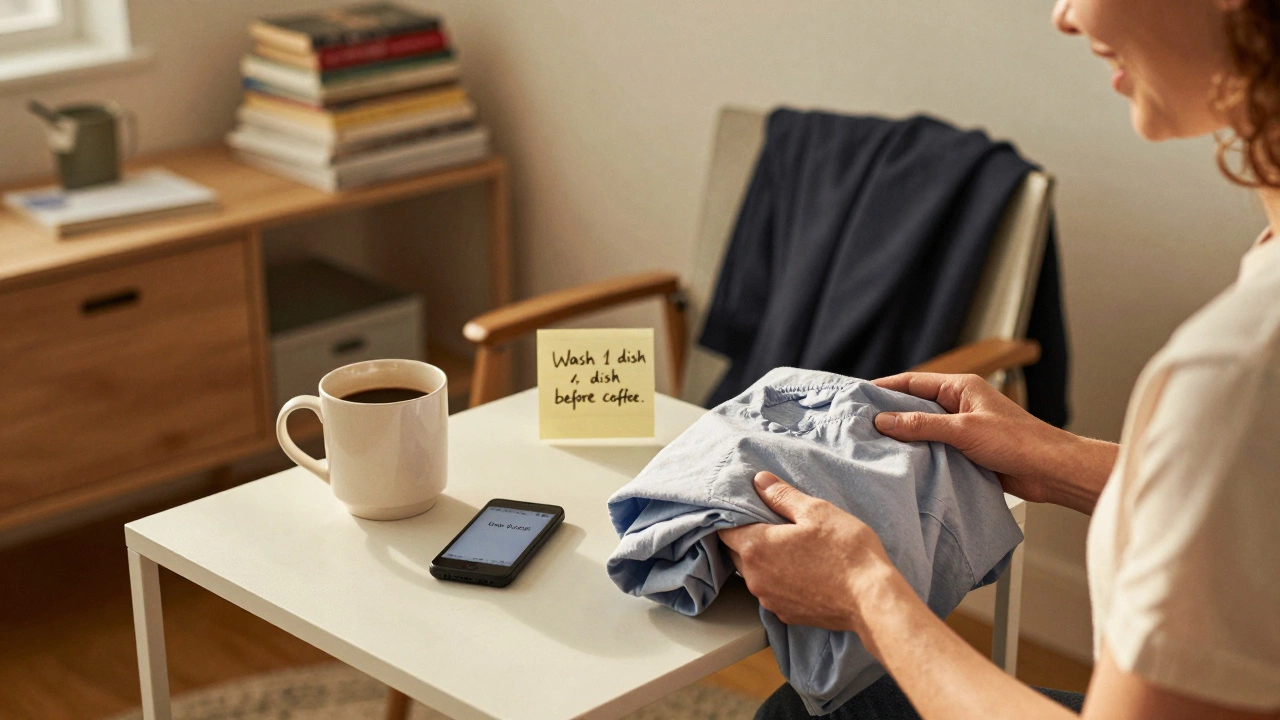
- Break it into micro-tasks - Instead of “clean the bedroom,” try: pick up 3 items off the floor. That’s it. One micro-task. Then stop. Celebrate. Repeat tomorrow.
- Use external cues - Put a basket next to the bed labeled “things to put away.” Put a note on the fridge: Wash 1 dish before coffee. Your brain doesn’t trust internal reminders. External ones do.
- Pair cleaning with dopamine - Listen to your favorite podcast while folding laundry. Watch a funny video while sorting mail. Attach a reward to the task so your brain says, “Oh, this is worth doing.”
- Let go of perfection - A clean room doesn’t have to be spotless. It just has to be functional. A plate in the sink? Fine. A pile of clothes on the chair? Okay. As long as you can walk to the door, it’s enough.
- Outsource or share - Hire a cleaning person for one hour a month. Ask a roommate to split the chores. You don’t have to do it all. You just have to do enough.
One person I spoke to in Durban said she started by cleaning just the area around her coffee mug. Every day, she added one more square foot. Within six months, her whole living room was usable. Not because she was disciplined. Because she stopped fighting her brain.
The Myth of the “Clean ADHD Person”
There’s this idea that if you’re “organized enough,” you can outgrow ADHD. That if you just use the right planner, or the right app, or the right color-coded system, you’ll be fine. But that’s not true. ADHD isn’t a habit problem. It’s a neurological one. And no amount of willpower can rewire your dopamine pathways.
Some people with ADHD do live in tidy spaces. But they didn’t do it by forcing themselves. They found systems that work with their brain-not against it. Maybe they use voice memos to remind themselves to clean. Maybe they have a cleaning buddy. Maybe they only clean when they’re hyper-focused on a project and accidentally tidy up while they’re in flow. Their success isn’t a sign they “beat” ADHD. It’s proof that ADHD can be managed-not cured.
It’s Not About the Clutter-It’s About the Shame
The real cost of not cleaning isn’t the dirt. It’s the shame. The guilt. The feeling that you’re failing at something everyone else finds easy. That shame builds up. It makes you avoid your space. It makes you hide from friends. It makes you believe you’re broken.
But you’re not broken. Your brain just works differently. And that’s okay.
There’s no such thing as a “lazy” person with ADHD. There’s only a person whose brain needs different tools. The goal isn’t to have a Pinterest-worthy home. It’s to have a home that lets you breathe. A home that doesn’t feel like a battlefield. A home that works for you-not the other way around.
Why does cleaning feel impossible even when I want to do it?
Cleaning requires executive function-starting tasks, holding multiple steps in mind, switching between actions, and staying focused. ADHD affects the brain’s ability to manage these processes. Even if you want to clean, your brain doesn’t send the right signals to begin or continue. It’s not laziness. It’s a neurological mismatch between what you want to do and how your brain operates.
Can minimalism help people with ADHD?
Minimalism can help-but only if it’s adapted. Strict minimalism demands clear decision-making, emotional detachment from objects, and discipline-all things ADHD makes hard. Instead, try “ADHD-friendly minimalism”: keep what you use, let go of what drains you, and don’t force yourself to own less. Focus on functionality, not aesthetics. A cluttered room that works for you is better than a perfectly tidy one that feels like a prison.
Is it normal to feel exhausted after cleaning for 10 minutes?
Yes. Cleaning isn’t just physical work-it’s mental work. For someone with ADHD, every decision-what to touch, where to put it, whether to keep it-uses up mental energy. That’s why even 10 minutes can feel like running a marathon. Your brain isn’t tired because you worked hard. It’s tired because it was forced to make dozens of decisions without the usual automatic filters.
What’s the best way to start cleaning if I’m overwhelmed?
Start with one micro-task: pick up three things off the floor. Or put one dish in the sink. Or open one drawer. Don’t aim for a clean room-aim for one small win. Celebrate it. Then stop. Tomorrow, do another micro-task. Progress isn’t measured in how clean the room is. It’s measured in how much you stop fighting your brain.
Why do I feel guilty when I don’t clean?
You feel guilty because society tells you a clean home equals discipline, worth, and control. But for people with ADHD, that’s a lie. Your value isn’t tied to your tidiness. The guilt comes from internalizing messages that you’re failing-when really, you’re just using a different system. The goal isn’t to be like everyone else. It’s to build a space that supports your brain, not fights it.
ADHD doesn’t make you lazy. It makes you human in a world that wasn’t built for you. Cleaning isn’t about perfection. It’s about survival. And sometimes, survival looks like a single sock in the laundry basket-and that’s okay.