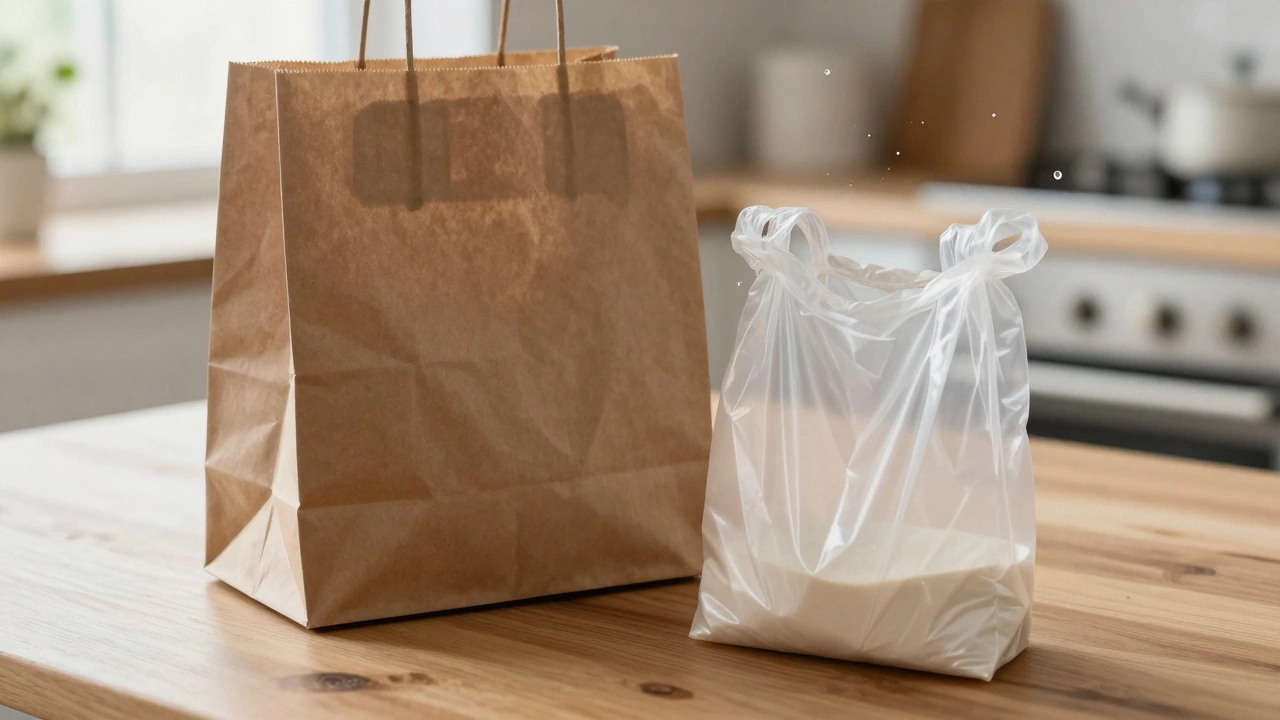
Paper vs. Plastic Environmental Impact Calculator
Configure Your Scenario
Environmental Analysis
Enter your details and click calculate to see the environmental impact comparison.
You grab a paper bag at the grocery store because you want to do the right thing for the planet. It feels sturdy, natural, and definitely better than that flimsy plastic sack that ends up in a landfill. But is it actually greener? The short answer is: it depends. A lot.
When we talk about paper bags are shopping containers made from wood pulp that serve as an alternative to single-use plastics, we often assume they are the hero of sustainable packaging. However, the reality is much messier. Producing a paper bag requires significantly more energy, water, and raw materials than making a plastic one. If you use a paper bag once and throw it away, you might actually be hurting the environment more than if you had used plastic.
The Hidden Cost of Making Paper Bags
To understand why paper isn't automatically "green," you have to look at how it’s made. Paper comes from trees, which means deforestation is a real concern. While many manufacturers claim their paper is sourced from sustainably managed forests, the process of turning wood into paper is intense.
First, there is the harvesting. Trees need decades to grow back. Then comes the pulping process. This involves chopping wood into chips, cooking them with chemicals to break down fibers, and bleaching the pulp to make it white. This stage consumes massive amounts of water and electricity. According to data from the Environmental Protection Agency (EPA), producing one ton of paper can require up to 7 gallons of water per pound of finished product. That adds up quickly when you consider how many bags are produced globally every year.
There is also the issue of chemical runoff. Bleaching agents like chlorine can contaminate local water sources if not handled correctly. Even modern "elemental chlorine-free" processes still leave a chemical footprint. So, while the bag itself is biodegradable, the journey to get it into your hands leaves a heavy industrial mark.
Plastic Bags: The Villain or Just Misunderstood?
Plastic bags are single-use shopping bags made from polyethylene derived from petroleum have gotten a bad rap. And rightly so-they litter streets, choke wildlife, and take hundreds of years to decompose. But from a pure resource-efficiency standpoint, they are surprisingly lightweight.
Making a plastic bag requires far less energy and water than making a paper bag. It takes about four times less energy to produce a plastic bag compared to a paper one. Because they are so light, you can transport millions of plastic bags in a single truckload, whereas paper bags are bulky and heavy. This means fewer trucks on the road, lower fuel consumption, and reduced greenhouse gas emissions during transportation.
The problem with plastic isn’t just production; it’s disposal. Most plastic bags are used for roughly 12 minutes before being discarded. They rarely get recycled because they jam up recycling machinery. Instead, they end up in landfills or, worse, in our oceans. So, while plastic wins on production efficiency, it loses badly on end-of-life impact.
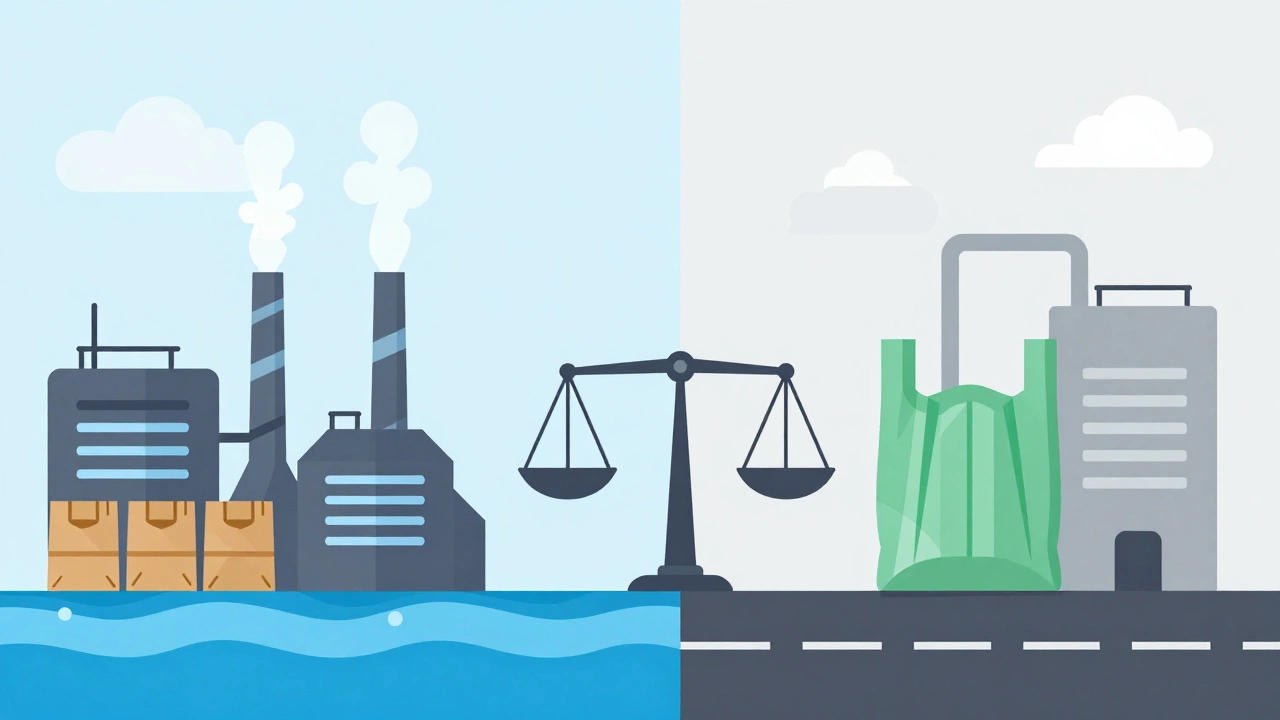
The Reuse Factor: How Many Times Must You Use a Bag?
This is where the math gets interesting. Since paper bags are heavier and cost more to produce, they need to be reused multiple times to offset their initial environmental debt. Studies suggest that a paper bag must be reused at least three to four times to match the environmental impact of a single-use plastic bag.
If you use a paper bag once and toss it, its carbon footprint is higher than that of a plastic bag. But if you use that same paper bag five times-maybe for groceries, then for storing files, then for taking out trash-it starts to pull ahead. The key here is behavior. Are you treating the paper bag as a disposable item, or are you integrating it into your routine?
Compare this to reusable tote bags. A cotton tote needs to be used over 100 times to break even with a plastic bag. A canvas bag might need 70 uses. Paper sits somewhere in the middle. It’s not as durable as canvas, but it’s more robust than thin plastic. This makes it a decent middle-ground option if you forget your reusable tote, provided you don’t just bin it after one trip.
| Bag Type | Water Usage (Liters) | Energy Required (MJ) | Reusable? | Decomposition Time |
|---|---|---|---|---|
| Paper Bag | High (~100L per bag) | High (~1.5 MJ) | Yes (3-4 times) | 2-6 weeks |
| Plastic Bag (HDPE) | Low (~1L per bag) | Low (~0.4 MJ) | Rarely | 100-500 years |
| Cotton Tote | Very High (~2,700L per bag) | Medium (~8 MJ) | Yes (100+ times) | 1-5 years |
Recycling and End-of-Life Scenarios
One argument for paper bags is that they are recyclable. In theory, yes. You can drop them off at most curbside recycling programs. But in practice, contamination is a huge issue. If your paper bag has food grease, oil, or dirt on it, it cannot be recycled. It has to go to the landfill. Given that paper bags are often used for carrying apples, bread, or cheese, they frequently come into contact with organic matter.
Composting is another option. Unlike plastic, paper breaks down naturally. If you have a home compost bin, a clean paper bag will decompose within a few weeks, returning nutrients to the soil. This is a significant advantage over plastic, which persists indefinitely. However, industrial composting facilities often reject paper bags with plastic windows or glossy coatings, which are common in branded retail bags.
So, the eco-friendliness of a paper bag hinges heavily on what you do with it after shopping. If it goes straight to the trash, the resources used to make it were wasted. If it gets recycled or composted, its environmental penalty drops significantly.
Biodegradability vs. Sustainability
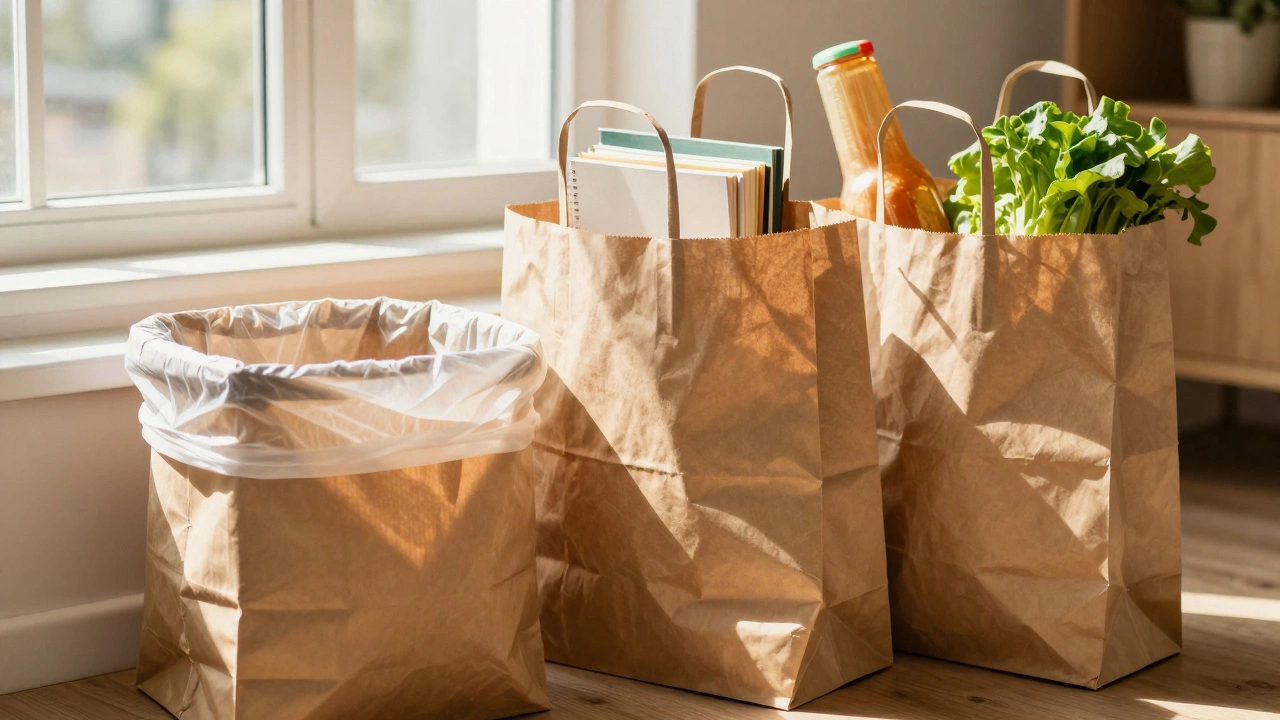
We often confuse "biodegradable" with "sustainable." Just because something breaks down doesn't mean it was good for the planet to create. Paper bags are biodegradable, which is great. But their production involves high carbon emissions due to energy-intensive manufacturing and transportation. Sustainability is the ability to maintain ecological balance by meeting current needs without compromising future generations looks at the entire lifecycle. From tree to trash, paper bags have a larger carbon footprint than plastic bags on a per-unit basis. To make them truly sustainable, we need to change how we use them.
In Durban, where waste management infrastructure can be strained, the idea of reusing paper bags for multiple purposes becomes even more critical. Using a paper bag to line a small trash bin, wrap fragile items, or store seasonal clothes extends its life and reduces the need for new packaging materials.
What Should You Do?
So, is a paper bag eco-friendly? Not if you treat it like a disposable napkin. But it can be a responsible choice if you reuse it. Here is a practical guide to minimizing your impact:
- Bring Your Own Bag: The best bag is the one you already own. Keep a foldable tote in your car or backpack.
- Reuse Paper Bags: If you accept a paper bag, use it again. Store it flat to keep it usable for future trips.
- Check for Contamination: Only recycle paper bags that are clean and dry. Greasy bags belong in the compost or trash.
- Avoid Laminated Bags: Shiny, coated paper bags often contain plastic layers that prevent recycling. Opt for plain brown kraft paper when possible.
- Refuse When Possible: If you’re buying just a few items, carry them in your hands or put them in your cart. Every bag refused is a win.
The goal isn’t to demonize paper bags, but to recognize that no single-use solution is perfect. Plastic has its place in low-impact scenarios if reused, and paper has its place when durability and compostability are needed. The most eco-friendly habit is reducing consumption altogether. By thinking twice before accepting any bag, you reduce demand for both industries and push retailers toward better, systemic solutions.
Next time you’re at the checkout, ask yourself: Do I really need this bag? If yes, can I use one I already have? If not, a paper bag is a better fallback than plastic-but only if you plan to give it a second life.
Is a paper bag better than a plastic bag for the environment?
Not necessarily. Paper bags require more water, energy, and raw materials to produce than plastic bags. However, paper bags are biodegradable and easier to recycle. If you reuse a paper bag three to four times, it becomes more environmentally friendly than a single-use plastic bag. If you throw it away after one use, plastic may have a lower immediate carbon footprint, though plastic pollution remains a severe long-term risk.
Can you recycle paper bags with handles?
Yes, usually. Most paper bag handles are made from twisted paper or thin plastic strips. If the handle is paper, it recycles fine. If it’s plastic, you should remove it before recycling the bag to avoid contaminating the batch. Check with your local recycling guidelines, as rules vary by municipality.
How many times do you need to reuse a paper bag to make it eco-friendly?
Research suggests you need to reuse a standard paper bag at least three to four times to offset its higher production costs compared to a plastic bag. For thicker, branded paper bags, the number might be slightly higher due to increased material usage.
Are paper bags compostable?
Plain, unbleached paper bags are fully compostable and will break down in a home compost bin within a few weeks. However, paper bags with glossy coatings, plastic windows, or heavy ink printing may contain non-compostable materials and should be checked before adding them to compost.
Why are paper bags so expensive compared to plastic?
Paper bags are more expensive because they require more raw materials (wood pulp), more water, more energy for processing, and more space for storage and transport. Their weight and bulkiness increase logistics costs for retailers, which is passed on to consumers or absorbed as higher operational expenses.