
Personalized Weekly Workout Planner
Your Profile
Your Weekly Schedule
Fill in your profile and click "Generate My Plan" to see your personalized routine.
Daily Safety Checklist
Check off items as you complete them today
Turning 60 doesn't mean your body is done with you. It just means the rules of engagement have changed. You can no longer rely on the "just push through" mentality that worked when you were thirty. Instead, you need a strategy that prioritizes joint health and sustainable momentum over intensity.
If you are starting from zero or returning after years of inactivity, the biggest risk isn't lack of progress-it's injury. The goal here is simple: build a foundation that lets you move without pain for the next decade. This guide breaks down exactly how to structure your first few months, what equipment actually matters, and how to listen to your body without letting fear stop you.
Key Takeaways
- Consistency beats intensity: Three short sessions per week are better than one exhausting marathon.
- Mobility comes first: Spend 5-10 minutes warming up joints before lifting anything.
- Simple equipment wins: Resistance bands and light dumbbells cover 90% of beginner needs.
- Balance is non-negotiable: Falls are a major risk factor; include single-leg stands daily.
- Pain is a signal: Distinguish between muscle soreness (okay) and sharp joint pain (stop).
The First Step: Listen to Your Body
Before you buy a single piece of gear or write a schedule, assess your current baseline. How do you feel after walking to the mailbox? Do your knees click when you climb stairs? These small details tell you where to start.
At 60, your recovery time is longer. What took 24 hours to recover from at 30 might take 48 or 72 hours now. That’s not a flaw; it’s biology. Acknowledge this reality early to avoid burnout. If you feel stiff the morning after a workout, that’s normal. If you feel sharp pain in your shoulder while reaching for a shelf, that’s a warning sign.
Consider keeping a simple log. Write down what you did, how it felt during, and how it felt the next day. After two weeks, patterns will emerge. Maybe squats hurt your knees but lunges feel fine. Maybe you have more energy in the mornings. This data is more valuable than any generic online plan.
Building the Foundation: Mobility and Balance
Most beginners skip straight to lifting weights. This is a mistake. Your joints need lubrication and range of motion before they handle load. Think of mobility work as oiling the engine before turning the key.
Start with dynamic stretches. Arm circles, leg swings, and torso twists get blood flowing to the muscles you’ll use. Aim for 5 to 10 minutes. Don’t hold static stretches here; keep things moving gently.
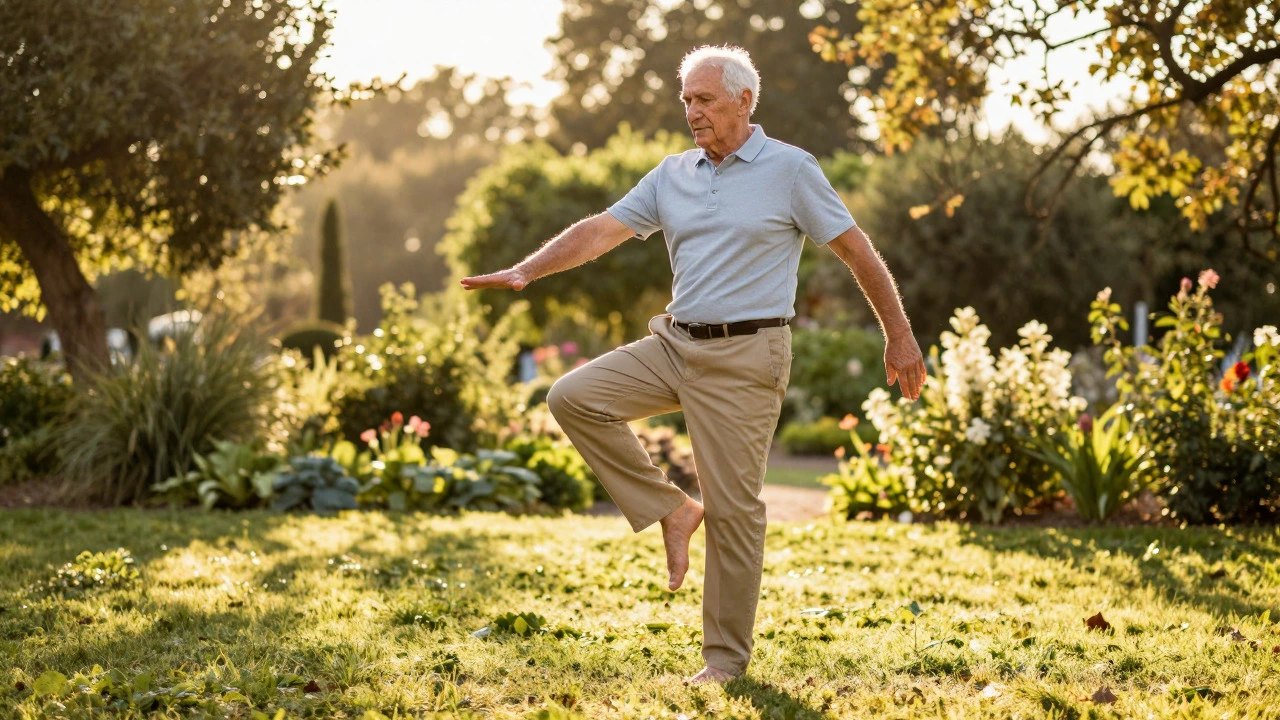
Balance training is often overlooked but critical. As we age, proprioception (your body’s sense of position in space) declines. Simple exercises like standing on one leg for 30 seconds, heel-to-toe walks, or gentle tai chi movements can significantly reduce fall risk. Do these barefoot if safe, to engage the small stabilizing muscles in your feet.
Choosing the Right Home Workout Equipment
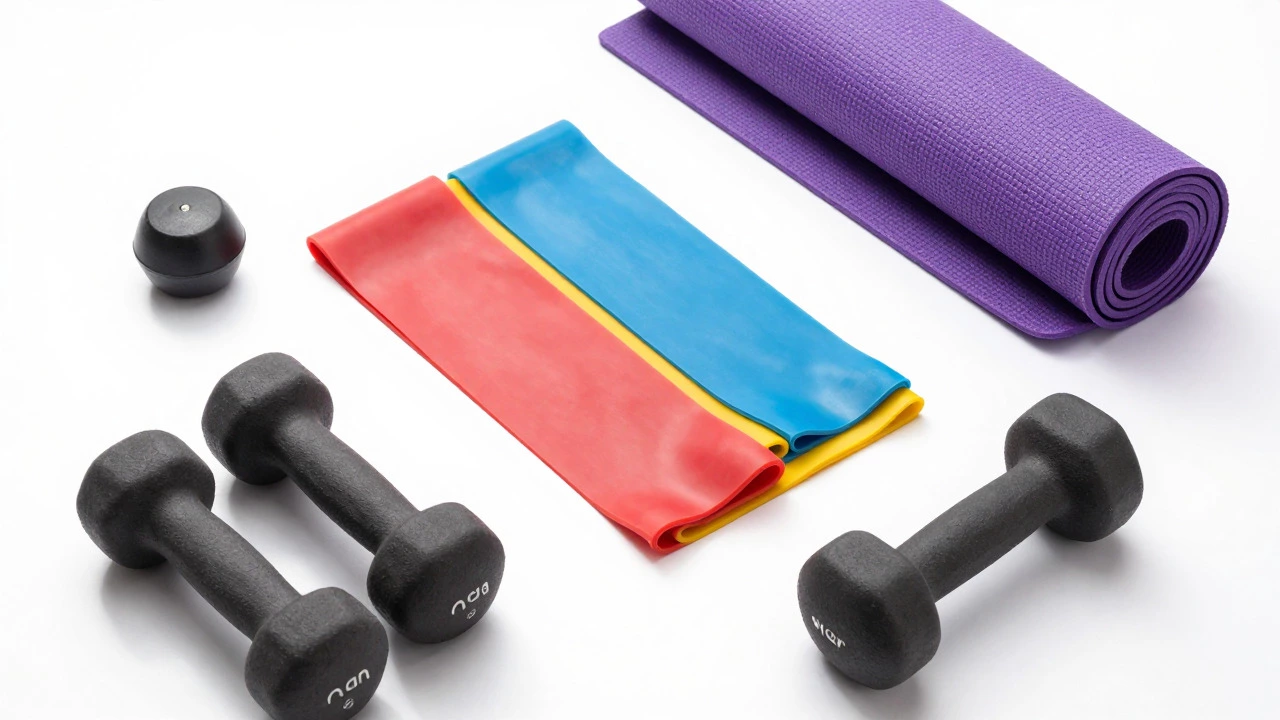
You don’t need a gym membership or a rack of heavy plates. In fact, too much equipment can be overwhelming. For a 60-year-old starter, three items cover almost everything:
- Resistance Bands: Lightweight, cheap, and versatile. They provide variable resistance, meaning they get harder as you stretch them, which is easier on joints than fixed weights.
- Light Dumbbells: Start with 3-5 lbs (1.5-2.5 kg). You can pair these for rows, presses, and curls. Avoid going heavier until you’ve mastered form for at least six weeks.
- Yoga Mat: Provides cushioning for floor work and prevents slipping during balance drills.
| Item | Best For | Cost Range | Joint Impact |
|---|---|---|---|
| Resistance Bands | Full-body strength, rehab | $10-$30 | Low |
| Light Dumbbells | Upper body tone, grip strength | $20-$50 | Moderate |
| Exercise Ball | Core stability, back support | $30-$60 | Low |
Avoid machines that lock your movement into a fixed path. Free-weight movements (even with bands) force your stabilizer muscles to work, which is essential for functional strength-like carrying groceries or getting out of a chair.
The Weekly Structure: What Actually Works
Don’t try to train every day. Your body needs rest days to repair tissue. A realistic schedule looks like this:
- Monday: Upper body focus (rows, presses, arm raises) + 10 min balance work.
- Tuesday: Active recovery (brisk walk, gentle stretching, or swimming).
- Wednesday: Lower body focus (sit-to-stands, step-ups, glute bridges) + 10 min balance work.
- Thursday: Rest or light activity.
- Friday: Full body mix (light circuits) + core stability (plank variations).
- Weekend: One longer walk or outdoor activity (golf, gardening, hiking).
Keep each session under 30 minutes. Quality over quantity. If you finish feeling drained, you did too much. If you finish feeling capable of doing more, you likely didn’t challenge yourself enough. Aim for the middle ground.
Common Mistakes to Avoid
Even with good intentions, pitfalls are common. Watch out for these:
- Rushing the warm-up: Cold muscles tear easily. Never skip the 5-minute prep.
- Comparing to younger friends: Their recovery times aren’t yours. Compete only against your past self.
- Ignoring nutrition: Protein intake becomes more important for muscle retention. Aim for lean protein at every meal.
- Overtraining: More is not better. Overuse injuries like tendonitis take months to heal.
When to See a Professional
Self-guided training works for many, but consider consulting a physical therapist or certified trainer if:
- You have chronic conditions (arthritis, heart disease, diabetes).
- Injury history limits your range of motion.
- You feel dizzy or short of breath during light activity.
A professional can modify exercises to fit your specific anatomy. For example, if knee osteoarthritis makes deep squats painful, a trainer can teach you hip-dominant movements that bypass the knee entirely.
Is it too late to start working out at 60?
No. Research shows that adults who start resistance training after 60 can gain significant muscle mass and bone density within six months. The key is consistency and proper form, not starting young.
What is the best exercise for seniors to prevent falls?
Single-leg stands and tandem walking (heel-to-toe) are highly effective. They challenge your vestibular system and strengthen ankle stabilizers. Aim for 3 sets of 30-second holds daily.
Should I lift heavy weights or stick to light ones?
Start light. Master form with 3-5 lb dumbbells or light bands. Increase weight only when you can complete 12 reps with perfect technique. Heavy weights increase injury risk without added benefit for beginners.
How long should a workout session be for a beginner?
20-30 minutes is ideal. This includes warm-up, main exercises, and cool-down. Longer sessions lead to fatigue and poor form, increasing injury risk.
Do I need a gym membership?
No. With resistance bands, light dumbbells, and a yoga mat, you can perform all major muscle group exercises at home. Gyms offer variety but are not necessary for foundational strength.