Single-Leg Stand Balance Trainer
Current Time
Goal: 10 seconds (Beginner)
Your Progress Log
| Date | Level | Leg | Time (sec) | Status |
|---|---|---|---|---|
| No attempts recorded yet. | ||||
Imagine this: you’re walking across your kitchen floor, and suddenly the tile feels slicker than usual. Your heart skips a beat not because of drama, but because you felt that terrifying wobble-the kind that whispers, "I might fall." For millions of adults over 65, this isn't just a bad dream; it's a daily reality. Falls are the leading cause of injury-related death among older adults, according to the Centers for Disease Control and Prevention (CDC). But here is the good news: balance isn't a fixed trait you're born with and lose forever. It’s a skill. And like any skill, you can train it.
If you could only pick one exercise to start improving your stability today, what would it be? You don't need fancy gym equipment. You don't need a personal trainer hovering over you. The answer is surprisingly simple, yet profoundly effective: the Single-Leg Stand. This movement is widely regarded by physical therapists and geriatric specialists as the gold standard for assessing and improving static balance. Why? Because standing on one leg forces your body to engage every stabilizing muscle from your ankles to your core, challenging the very systems that keep you upright.
Why Balance Matters More Than Strength Alone
We often obsess over how much weight we can lift or how far we can walk. But strength without stability is like building a skyscraper on sand. Your body relies on three main systems to stay balanced: vision, the vestibular system (your inner ear), and proprioception (your body's ability to sense where it is in space). As we age, these systems naturally slow down. Vision might blur slightly, inner ear fluid dynamics change, and nerve signals to muscles get slower.
The Single-Leg Stand is a static balance exercise where an individual stands on one foot while keeping the other foot off the ground. It directly targets proprioception. When you remove visual cues (by closing your eyes later in progression) or reduce your base of support (standing on one foot instead of two), your brain has to work harder to keep you from tipping over. This neural workout is crucial. It teaches your nervous system to react faster to unexpected shifts, like tripping over a rug or stepping onto uneven pavement.
How to Perform the Single-Leg Stand Correctly
Don’t let the simplicity fool you. Doing this poorly can lead to strain or frustration. Here is the step-by-step method to do it safely and effectively.
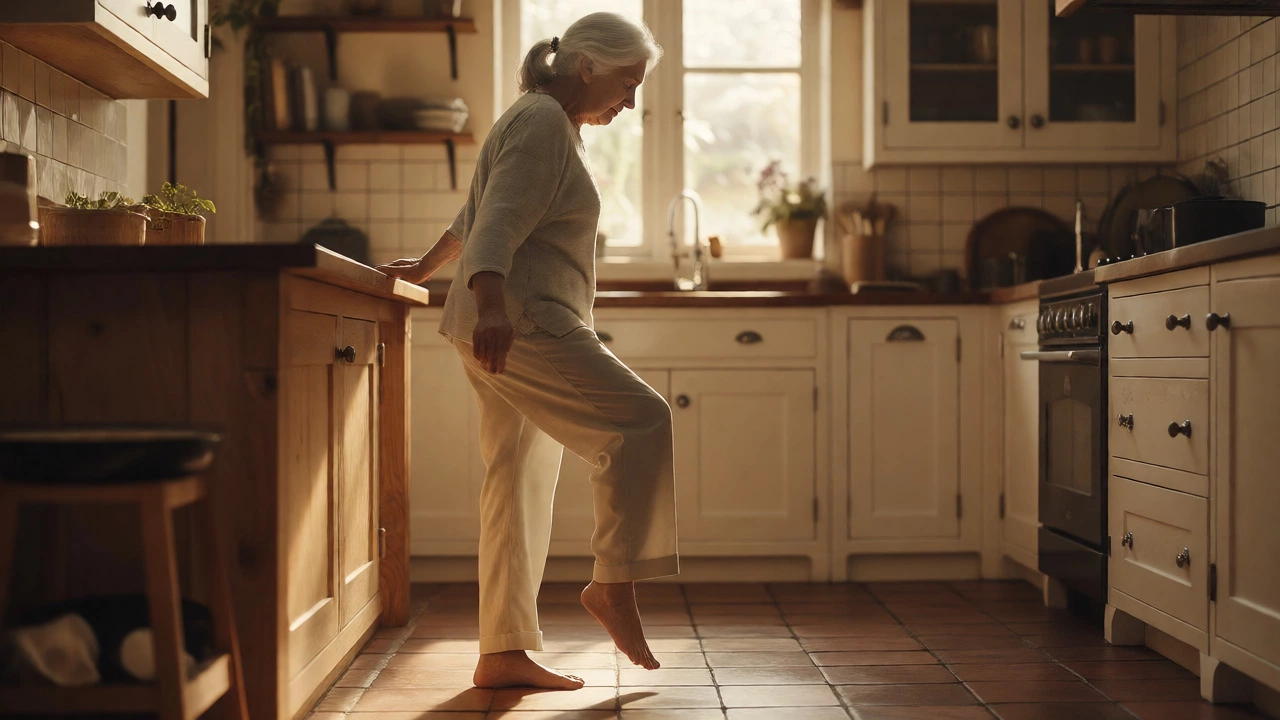
- Set up your safety net: Always start near a sturdy chair, counter, or wall. Place your hands lightly on it. Do not lean heavily; just hover so you can grab it instantly if you wobble.
- Stand tall: Keep your spine neutral, shoulders back, and eyes focused on a fixed point ahead. Looking at a spot helps stabilize your gaze, which supports balance.
- Lift one foot: Slowly raise one foot off the floor about six inches. Keep the lifted knee bent at a comfortable angle. Don't swing your arms wildly; try to keep them relatively still or use them minimally for adjustment.
- Hold and breathe: Aim for 10 seconds initially. Breathe normally. Holding your breath increases tension and makes balancing harder.
- Switch sides: Lower the foot gently and repeat on the other side. Aim for equal time on both legs.
Most seniors should aim for three sets per leg, holding each for 10-30 seconds. If 10 seconds feels easy, increase the duration or add complexity. If you can't hold it for more than a few seconds, that’s okay. That’s your baseline. Progress comes with consistency, not perfection.
Progressing Beyond the Basic Hold
Once you can comfortably hold a single-leg stand for 30 seconds on both sides, you’ve hit a milestone. Research suggests that being able to stand on one leg for 10 seconds is associated with lower mortality risk, but 30 seconds indicates robust stability. To keep challenging your body, you need to vary the stimulus.
| Level | Variation | Primary Challenge |
|---|---|---|
| Beginner | Hands on counter, eyes open | Basic stability and confidence |
| Intermediate | Fingertips on counter, eyes open | Reduced external support |
| Advanced | No hands, eyes closed | Reliance on proprioception alone |
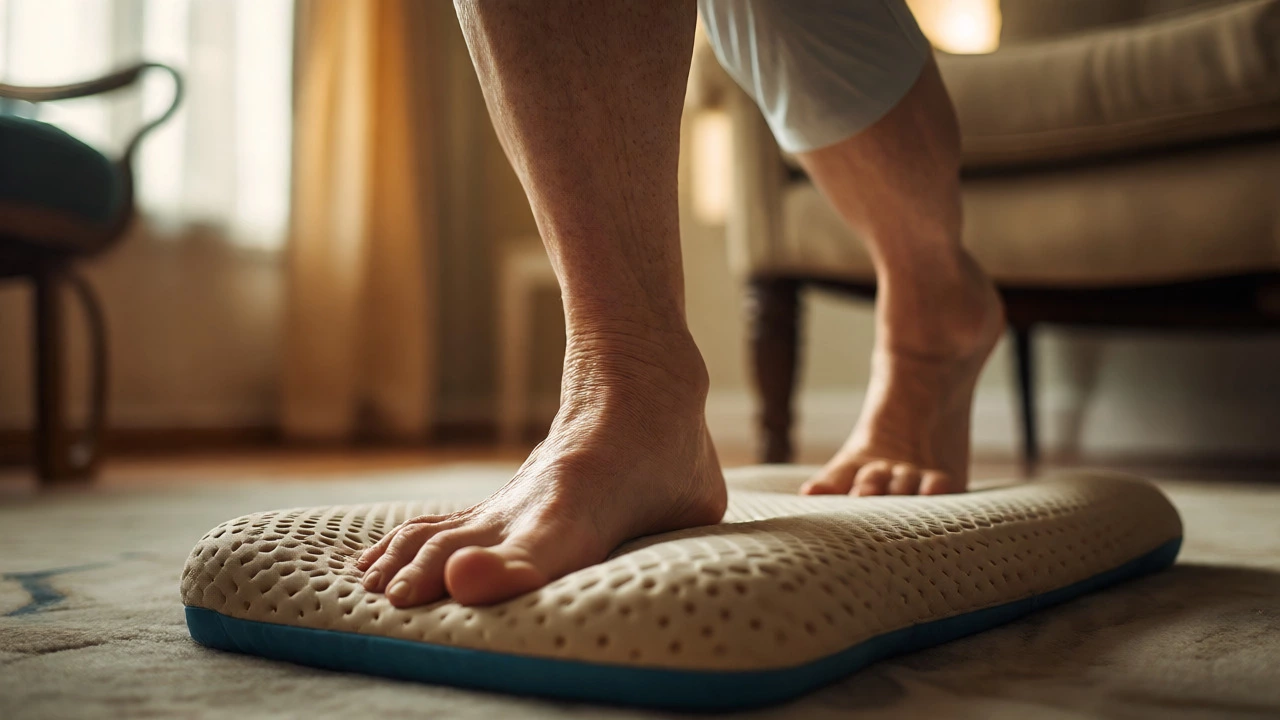
| Expert | Standing on foam pad or pillow | Unstable surface challenge |
Try closing your eyes once you feel steady. Removing visual input forces your inner ear and joint sensors to take over completely. You will likely wobble more-that’s normal. It means your brain is learning new pathways. Another great progression is adding dynamic movement, like slowly raising and lowering your heel while on one leg (single-leg calf raises). This adds strength endurance to your stability gains.
Common Mistakes That Hinder Progress
I see people make the same errors repeatedly when trying to improve balance. First, they rush. They hold their breath and tense their entire body, turning into a statue rather than a stable structure. Relaxation is key. A rigid body is brittle; a relaxed body absorbs shocks better.
Second, they ignore asymmetry. Most people have a dominant leg that is significantly stronger and more stable than the non-dominant one. Pay attention to your weaker side. Spend extra time there. Imbalances between left and right legs are a major predictor of falls. If your left leg holds for 30 seconds but your right only manages 10, focus on bringing the right leg up to par before progressing further.
Third, they neglect footwear. Practicing barefoot or in thin-soled socks provides the best feedback from the floor to your feet. Thick, cushioned running shoes dampen sensory input, making it harder for your brain to detect small shifts in weight. If you practice indoors, consider taking off your shoes. Outdoors, wear supportive but flexible shoes.
Beyond One Leg: Integrating Balance into Daily Life
You don't need to dedicate an hour to balance drills. In fact, integrating micro-practices into your routine works wonders. While brushing your teeth, stand on one leg. While waiting for the microwave, shift your weight from foot to foot. These small moments accumulate.
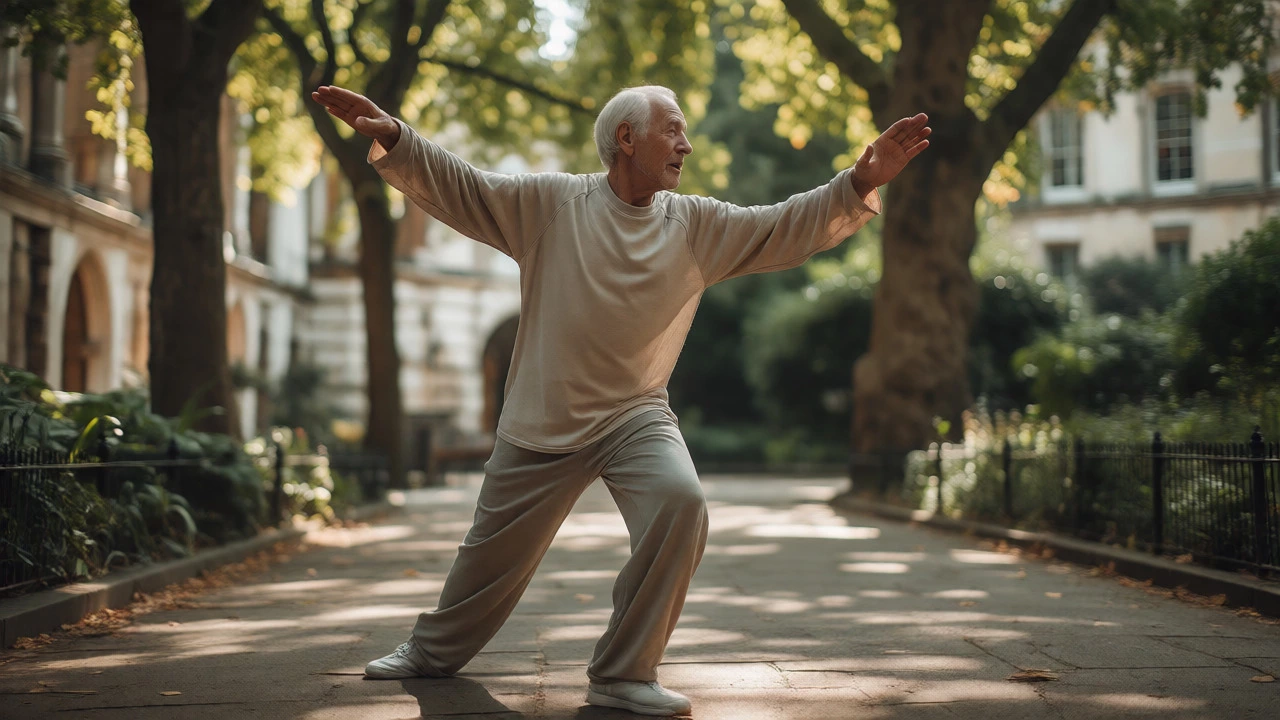
Consider adding Tai Chi to your weekly routine. It is a Chinese martial art characterized by slow, flowing movements and deep breathing. Studies published in journals like the New England Journal of Medicine have shown Tai Chi reduces fall rates by nearly half in older adults. It combines the static stability of a single-leg stand with dynamic movement patterns, making it a comprehensive complement to isolated exercises.
Also, look at your home environment. Remove loose rugs. Ensure lighting is adequate in hallways and staircases. Wear non-slip footwear. Your exercise routine builds internal resilience, but modifying your external environment removes triggers that could test that resilience too harshly.
When to Seek Professional Help
While the single-leg stand is safe for most, listen to your body. If you experience dizziness, vertigo, or sharp pain in your hips or knees, stop immediately. Dizziness might indicate issues with your inner ear or blood pressure regulation (orthostatic hypotension), which requires medical evaluation rather than just exercise.
A physical therapist can assess your specific deficits. Maybe your balance issue stems from weak glutes, poor ankle mobility, or neurological changes. They can tailor a program that addresses root causes, not just symptoms. If you’ve had a recent fall, even if you didn’t break anything, get checked out. Fear of falling can lead to reduced activity, which leads to weaker muscles, which leads to more falls-a vicious cycle known as the "fear-avoidance" loop. Breaking this cycle starts with confident, controlled movement.
How long should I hold a single-leg stand?
Start with 10 seconds per leg. Aim to gradually increase this to 30 seconds. Once you can hold 30 seconds comfortably with your eyes open and minimal hand support, you have reached a solid baseline for general health. Further progress involves closing your eyes or using an unstable surface.
Is it safe to close my eyes during balance exercises?
Yes, but only after you are confident with your eyes open. Closing your eyes removes visual input, forcing reliance on inner ear and joint sensors. Always perform this variation near a wall or chair for safety. If you feel dizzy, open your eyes immediately.
Can balance exercises prevent hip fractures?
Indirectly, yes. By improving reaction time and stability, you are less likely to fall. Fewer falls mean fewer injuries, including hip fractures. Additionally, weight-bearing balance exercises help maintain bone density, further reducing fracture risk.
What if I cannot lift my foot high?
You don't need to lift high. Even lifting the toe an inch off the ground engages the necessary stabilizers. Focus on keeping your torso upright rather than maximizing height. If lifting is difficult due to hip stiffness, try shifting your weight entirely to one leg while keeping the other toe lightly touching the floor.
How often should I practice?
Daily practice is ideal. Balance is a neural skill that benefits from frequent repetition. Three short sessions a day (morning, afternoon, evening) lasting just 2-3 minutes each are more effective than one long weekly session.