Skincare Routine Builder
1. What is your primary skin concern?
2. Do you wear heavy makeup or waterproof sunscreen?
3. Are you willing to rinse after cleansing?
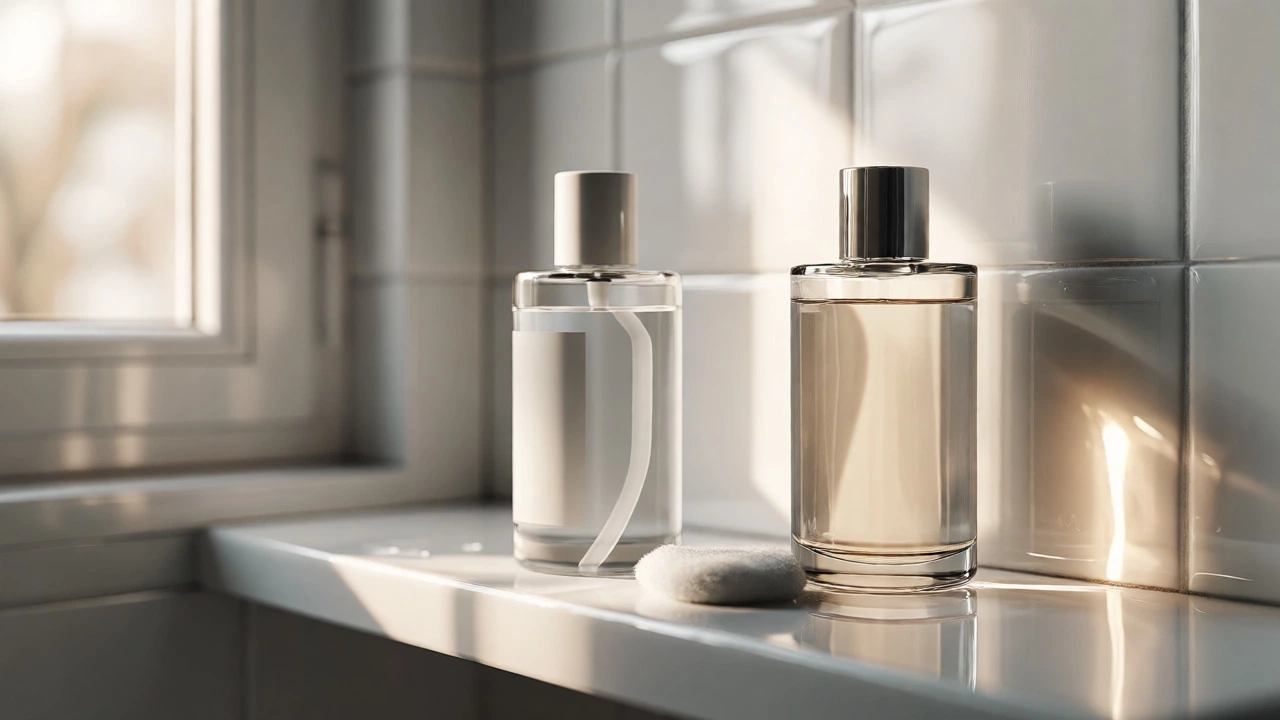
You’re standing in front of your bathroom mirror, cotton pad in hand, staring at two bottles on your shelf. One says Micellar Water and the other says Toner. Your friend just told you that micellar water is basically a toner with extra steps, or maybe it’s the other way around? It’s confusing because both are clear liquids, both come in bottles, and both claim to "prep" your skin. But here’s the hard truth: they are not interchangeable. Using one instead of the other isn’t just a minor tweak; it changes how your cleanser works and how well your serums absorb.
If you’ve ever felt tight after washing your face, or if your expensive moisturizer sits on top of your skin like a plastic wrap, understanding the difference between these two products could save your skin barrier. Let’s break down what each one actually does, why swapping them might be a mistake, and when-just when-you can get away with using one in place of the other.
The Science Behind Micellar Water
To understand why you can’t just swap micellar water for toner, you have to look at the chemistry. Micelles are tiny clusters of molecules called surfactants. Imagine them as microscopic sponges. Each micelle has a hydrophilic (water-loving) head and a lipophilic (oil-loving) tail. When you swipe micellar water across your face, those oil-loving tails grab onto dirt, sebum, and makeup, while the water-loving heads stay attached to the water base. This allows the impurities to lift off your skin without needing harsh scrubbing or rinsing.
This mechanism makes micellar water primarily a cleanser, specifically a gentle one. It is designed to remove surface debris. It doesn’t necessarily change the pH of your skin, nor does it deliver active ingredients deep into the pores. Its job is removal, not restoration. If you use it as a toner, you’re essentially leaving a layer of surfactants on your face. For some people, this causes irritation or dryness over time because those surfactants keep pulling moisture out even after the dirt is gone.
What Toner Actually Does for Your Skin
Toner has gotten a bad reputation from the alcohol-heavy formulas of the 1990s that stripped your face raw. Modern toners are completely different. Today, a Toner is a hydrating treatment step that balances your skin’s pH and preps it for absorption. After you cleanse with soap or gel, your skin’s natural acidic mantle (which usually sits at a pH of 4.5-5.5) gets disrupted by alkaline cleansers. Toner brings that pH back down quickly.
Beyond pH balancing, toners are delivery systems. They are packed with humectants like glycerin, hyaluronic acid, or niacinamide. Because the molecule size in toners is often smaller than in creams, they penetrate faster. Think of toner as a primer for your skin. If you skip it, your subsequent serums and moisturizers have to work harder to penetrate. In fact, applying serum to damp, toned skin increases absorption rates significantly compared to dry, untoned skin.
Can You Use Micellar Water Instead of Toner?
So, can you use micellar water as a toner? Technically, yes. Physically, you can pour it on a pad and swipe it on. But should you? Usually, no. Here is why:
- Residue Buildup: Micellar water leaves behind surfactant residue. If you don’t rinse it off, that residue can clog pores for acne-prone skin or cause stinging for sensitive skin types.
- Lack of Hydration: Most micellar waters do not contain significant amounts of humectants. You miss out on the hydration boost that toners provide.
- pH Imbalance: While many micellar waters are pH-balanced, they aren’t formulated to correct the alkaline shift caused by cleansing as effectively as dedicated toners.
However, there is an exception. If you have extremely dry or sensitive skin, some dermatologists suggest skipping the second cleanse entirely and using micellar water as your sole cleanser. In this specific case, you might swipe it on, let it sit, and then apply moisturizer. But even then, it’s acting as a cleanser, not a toner. If you try to use it *after* a foam cleanser as a toner substitute, you risk irritating your skin barrier.
| Feature | Micellar Water | Toner |
|---|---|---|
| Primary Function | Cleansing (removing dirt/makeup) | Prepping (balancing pH/hydrating) |
| Main Ingredients | Surfactants (micelles), water | Humectants, acids, botanicals |
| Rinsing Required? | Yes (usually recommended) | No (leave-on) |
| Best For | First step of double cleansing | Step after cleansing, before serum |
| Skin Sensation | Can feel sticky if left on | Should feel refreshing/hydrating |

The Double Cleansing Method: Where They Fit
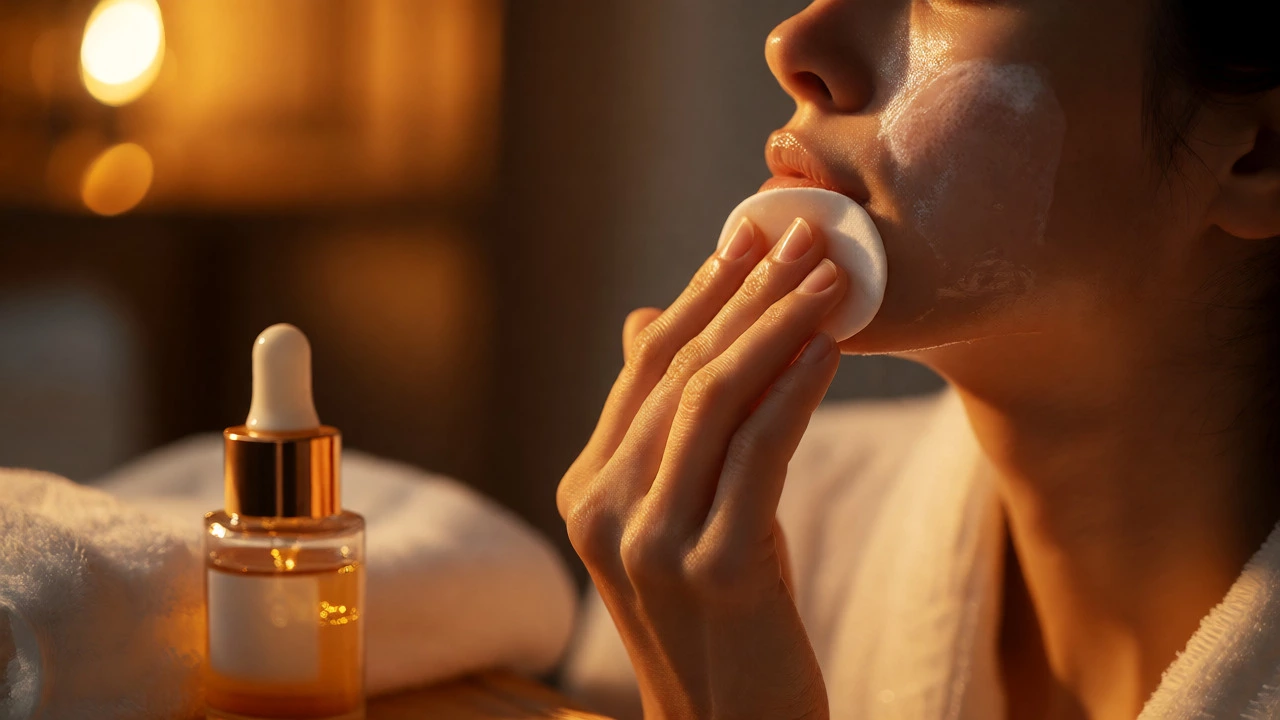
If you wear sunscreen or makeup, you likely need to double cleanse. This is where the confusion often stems from. The first step removes SPF and makeup; the second removes sweat and bacteria. Micellar water is excellent for Step 1. It dissolves oils gently without stripping. Toner comes in later, after Step 2 (your regular cleanser).
Here is the ideal order:
- Step 1: Micellar Water. Swipe to remove makeup/sunscreen. Rinse if your skin feels sticky.
- Step 2: Gel or Foam Cleanser. Wash your face to clean the actual skin cells.
- Step 3: Toner. Apply to rebalance pH and add hydration.
- Step 4: Serum/Moisturizer. Lock in the benefits.
Notice that micellar water and toner never touch each other directly in this routine. They serve different phases. Trying to merge them creates a hybrid product that does neither job perfectly. Some brands now sell "cleansing toners," which blur the line, but these are specifically formulated with milder surfactants and higher humectant loads than standard micellar water.
When Swapping Might Work (And When It Won’t)
Are there scenarios where you can skip toner and just use micellar water? Yes, but only under strict conditions. If you have very oily skin and you are using a highly hydrating micellar water (look for ones with glycerin or rose water listed high up), you might find it sufficient for a quick refresh mid-day. However, this is a temporary fix, not a replacement for a full PM routine.
Conversely, can you use toner instead of micellar water? Absolutely not. Toner lacks the surfactant power to dissolve waterproof mascara or heavy foundation. If you try to wipe off makeup with toner, you’ll end up dragging grit across your face, causing micro-tears in the skin. Always use a proper remover or cleanser for makeup.
For those with compromised skin barriers (redness, eczema, rosacea), adding more steps can be overwhelming. In these cases, simplifying is key. A single, gentle cleanser followed by a rich moisturizer is often better than forcing a four-step routine. If you must choose between micellar water and toner for a minimal routine, choose the one that addresses your biggest concern. If you wear heavy makeup, prioritize the micellar water (and rinse it). If you struggle with dehydration, prioritize the toner (and ensure you cleanse properly beforehand).
How to Choose the Right Product for Your Skin Type
Your skin type dictates which product deserves a spot on your shelf. Let’s look at specific profiles:
- Oily/Acne-Prone: You need effective cleansing. Stick with micellar water for makeup removal, but follow up with a salicylic acid toner to keep pores clear. Do not skip the toner here; it helps control sebum production.
- Dry/Dehydrated: Avoid alcohol-based toners. Look for micellar waters labeled "for dry skin" (often milky or with added oils). However, still use a hydrating toner with hyaluronic acid after cleansing to combat tightness.
- Sensitive: Fragrance-free is non-negotiable. Use micellar water sparingly and always rinse. Choose a soothing toner with centella asiatica or aloe vera. If your skin reacts to surfactants, switch to a cleansing balm instead of micellar water.
- Mature Skin: Focus on hydration and pH balance. A glycolic acid toner can help with cell turnover, while micellar water ensures gentle removal of evening grime without tugging delicate skin.
Remember, consistency matters more than complexity. If using both products feels like too much work, you won’t do it. Pick the essential steps for your lifestyle.
Frequently Asked Questions
Do I really need to rinse off micellar water?
Ideally, yes. While many brands claim "no-rinse," leaving surfactants on the skin can lead to irritation or clogged pores over time, especially for acne-prone individuals. Rinsing ensures all dissolved dirt and chemical residues are washed away, preventing potential breakouts.
Can I use toner to remove makeup?
No, toner is not designed to break down oils and pigments found in makeup. It lacks the necessary surfactants. Using toner to remove makeup will likely result in incomplete cleansing and may drag bacteria across your face, leading to congestion.
Is micellar water bad for sensitive skin?
Not inherently, but it depends on the formula. Some micellar waters contain preservatives or surfactants that can sting compromised skin barriers. If you have rosacea or eczema, opt for fragrance-free, hypoallergenic options and consider rinsing thoroughly to minimize contact time.
What happens if I skip toner?
Skipping toner means your skin’s pH may remain slightly elevated from cleansing, and you miss a layer of hydration. This can make your serums less effective and leave your skin feeling tighter. However, if you have a simple routine with a gentle cleanser and rich moisturizer, you can survive without it.
Can I mix micellar water and toner together?
You can, but it’s inefficient. Mixing them dilutes the effectiveness of both. The surfactants in micellar water might interfere with the absorption of active ingredients in the toner. It’s better to use them sequentially: cleanse first, then tone.