Attractiveness Estimator
Enter your measurements below to estimate where you stand relative to common biological preferences for health and fertility cues.
You’ve probably heard the old saying that beauty is in the eye of the beholder. But when it comes to what men find physically attractive, are we all just guessing? If you’re trying to figure out if your current weight is a hurdle or a help in the dating world, you’re not alone. The truth is, there’s no single magic number that works for every guy on the planet. However, decades of psychological studies and evolutionary biology research give us some pretty clear patterns about what tends to draw attention.
Here’s the kicker: while pop culture pushes the idea that "thinner is better," actual data shows men often prefer women who are slightly heavier than the average fashion model. In fact, many men report finding an ideal body mass index (BMI) between 20 and 25 most appealing. That’s solidly in the "normal" range, not underweight. So before you stress about dropping those last five pounds, let’s look at what the science actually says about weight, shape, and attraction.
The Science Behind Male Preference
Why do men like what they like? It’s not just random. Evolutionary psychologists argue that male attraction is wired to spot cues of health and fertility. For centuries, this meant looking for signs that a woman could successfully carry and raise children. Today, even though we have modern medicine, our brains still run on these ancient operating systems.
A landmark study published in the journal Personality and Social Psychology Bulletin found that men consistently rated women with a BMI around 19 to 24 as more attractive than those who were significantly underweight or overweight. This range isn’t accidental; it correlates with optimal hormonal balance and reproductive health. When men see a woman in this range, their subconscious brain flags her as healthy and capable.
But here’s where it gets interesting. While weight matters, waist-to-hip ratio (WHR) is a measurement of body shape calculated by dividing waist circumference by hip circumference, which has been shown to be a stronger predictor of attractiveness than overall weight alone. Studies suggest that a WHR of approximately 0.7-meaning the waist is about 70% the size of the hips-is universally considered attractive across many cultures. Why? Because this specific curve signals high estrogen levels and good health, regardless of whether the person weighs 120 pounds or 160 pounds.
Cultural and Regional Differences Matter
If you think one standard fits all, think again. Where you live plays a massive role in what’s considered attractive. In Western countries like the United States and the UK, there’s a strong cultural bias toward slimmer figures, largely driven by media and fashion industries. But step outside those borders, and the picture changes dramatically.
In many parts of Africa, Latin America, and the Pacific Islands, a fuller figure is often celebrated. In Durban, for example, curvaceousness is frequently viewed as a sign of vitality and prosperity. Research from the University of Texas indicated that in societies where food scarcity was historically common, men preferred women with higher body fat percentages because it signaled access to resources and health reserves. Conversely, in places where obesity is prevalent, thinner bodies become status symbols.
| Region/Culture | Preferred Trait | Typical BMI Range | Cultural Driver |
|---|---|---|---|
| Western Urban | Slim/Lean | 18.5 - 22.9 | Media influence, fitness trends |
| Sub-Saharan Africa | Curvy/Fuller | 23.0 - 27.5 | Sign of health and wealth |
| East Asia | Petite/Slim | 18.5 - 21.5 | Cultural emphasis on delicacy |
| Latin America | Hourglass Shape | 20.0 - 25.0 | Emphasis on curves over scale weight |

It’s Not Just About the Scale
Let’s get real for a second. You can weigh 130 pounds and look soft, or weigh 150 pounds and look toned. Men aren’t walking around with calculators checking your BMI. They’re reacting to visual cues. This is why body composition is the proportion of fat, muscle, bone, and water in the body, which determines how a person looks and feels regardless of total weight. is so critical.
Two women can have the exact same height and weight but completely different shapes. One might have low muscle mass and higher fat distribution, while the other has significant muscle tone. Studies show that men generally prefer the latter-not necessarily because they want a bodybuilder, but because muscle tone signals activity, energy, and youthfulness. A toned stomach, firm arms, and defined legs are often cited as more attractive features than simply being thin.
Think about it this way: would you rather date someone who is naturally slender but lacks energy, or someone who carries a few extra pounds but moves with confidence and strength? Most men will pick the confident, active person every time. Confidence is a huge attractor. If you’re obsessed with your weight, it shows. If you’re comfortable in your skin, that radiates outward.
The Impact of Clothing on Perception
Since this article touches on choosing clothing style, let’s talk about how what you wear changes the game entirely. You don’t need to change your body to change how attractive you appear. You just need to dress for your shape.
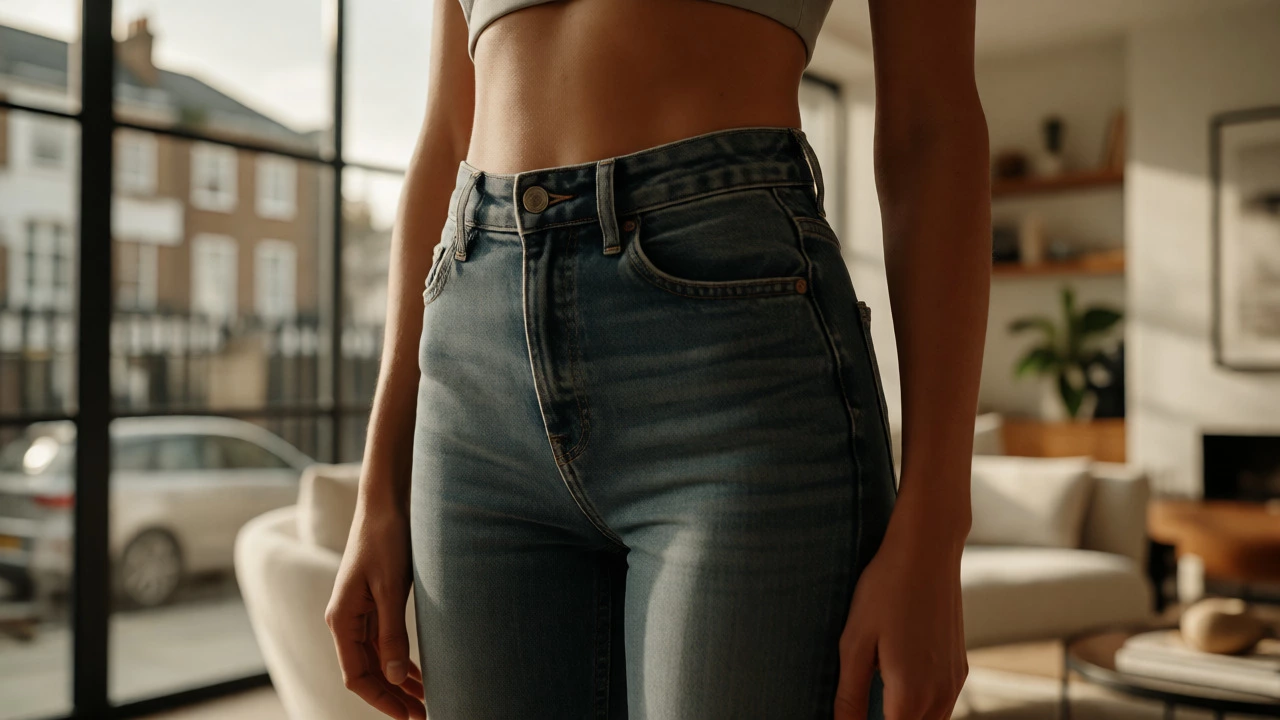
Men are visual creatures, but they respond to silhouette. If you have a pear-shaped body (wider hips), wearing high-waisted jeans or A-line skirts highlights your waist and balances your proportions. If you’re apple-shaped (weight carried in the midsection), V-neck tops and wrap dresses draw the eye upward and create a flattering line. The goal isn’t to hide your body; it’s to frame it.
Also, consider fabric and fit. Ill-fitting clothes-whether too tight or too loose-can distort your natural shape. Clothes that skim the body without clinging too tightly often make people look leaner and more put-together. Dark colors can create a slimming effect, but pattern and texture add depth. A well-tailored blazer over a simple top can instantly elevate your perceived attractiveness by signaling care and attention to detail.
Common Myths vs. Reality
There’s a lot of noise out there about what men want. Let’s bust a few myths right now.
- Myth: Men only like skinny women. Reality: Many men find very thin women less attractive because they associate extreme thinness with poor health or lack of femininity. Curves are widely appreciated.
- Myth: Abs are mandatory. Reality: While visible abs are popular in media, most men prefer a flat or slightly soft stomach. Visible six-packs are impressive, but not necessary for attraction.
- Myth: Age doesn’t matter. Reality: Preferences shift with age. Younger men (18-25) may lean toward younger-looking, slimmer figures. Older men (30+) often appreciate maturity and stability, sometimes preferring a slightly softer, more mature body type.
Another big factor is facial symmetry and grooming. Honestly, a clean face, nice hair, and a genuine smile outweigh almost any minor fluctuation in weight. If you’re spending hours worrying about calories but skipping skincare or sleep, you’re missing the bigger picture.
How to Apply This to Your Life
So, what should you actually do with this information? Don’t obsess over the scale. Instead, focus on health markers that improve both your appearance and your well-being.
- Check your waist-to-hip ratio. Grab a tape measure. Measure your narrowest point (usually above the belly button) and your widest point (around the buttocks). Divide the first by the second. Aim for closer to 0.7 if you want to align with general biological preferences, but don’t stress if you’re off.
- Prioritize strength training. Building muscle improves posture, tones areas prone to fat storage, and boosts metabolism. It also makes you feel stronger and more confident.
- Dress for your best features. Identify what you love about your body-maybe it’s your legs, your shoulders, or your eyes-and highlight those. Wear clothes that make you feel powerful.
- Practice self-compassion. Attraction is reciprocal. If you hate your body, you’ll project insecurity. If you accept yourself, you’ll project warmth. Men notice energy more than inches.
Remember, the "ideal" weight is whatever allows you to move freely, feel energetic, and enjoy life. If you’re healthy, happy, and dressed well, you’re already winning.
Is there a perfect BMI for women?
While individual preferences vary, research suggests men generally find a BMI between 20 and 25 most attractive. This range is associated with optimal health and fertility markers. However, body shape (like waist-to-hip ratio) often matters more than the BMI number itself.
Do men prefer thin or curvy women?
Preferences are split, but many men prefer a balance: a smaller waist with wider hips (curviness). Extreme thinness is often rated lower than moderate fullness. Cultural background heavily influences this preference, with some regions valuing fuller figures more than others.
Does muscle mass affect attractiveness?
Yes, moderately. Toned muscles signal health and vitality. Men typically prefer firm, athletic bodies over extremely bulky or completely untoned physiques. Muscle definition can make a person look leaner and more youthful than their actual weight suggests.
How does age change what men find attractive?
Younger men often prioritize traits associated with peak fertility, such as a slimmer waist and smoother skin. As men age, they may place more value on comfort, stability, and shared values, sometimes becoming less rigid about specific body metrics and more appreciative of natural aging.
Can clothing really change how attractive I look?
Absolutely. Well-fitted clothes that highlight your best features and create a balanced silhouette can enhance your perceived attractiveness significantly. Fit, color, and style communicate confidence and self-awareness, which are highly attractive traits.