Skincare Routine Order Builder
Available Products
Click products to add them to your routine.
Your Routine
Select from the left to start.
Have you ever stood in front of your bathroom mirror, holding a bottle of expensive vitamin C in one hand and a tub of heavy cream in the other, wondering which one goes on first? It is a common dilemma. You want to get the most out of your products, but applying them in the wrong order can block absorption or cause irritation. The short answer is simple: serum always comes before moisturizer.
But why does this specific order matter so much? It is not just about following arbitrary beauty rules. It is about chemistry, molecular size, and how your skin barrier functions. Getting this sequence right ensures that the active ingredients in your serum actually reach the deeper layers of your skin where they work their magic, rather than sitting on top of a greasy layer of cream.
Why does serum go before moisturizer?
Serums contain smaller molecules designed to penetrate deeply into the skin. Moisturizers have larger molecules meant to sit on the surface and lock in moisture. If you apply moisturizer first, it creates a barrier that prevents the serum from absorbing effectively.
The Science of Molecular Size
To understand why order matters, you need to look at what these products are made of. Think of your skin like a sponge. A serum is like water; it is thin, watery, and absorbs quickly. A moisturizer is more like oil or butter; it is thicker and sits on top to seal things in.
Serums are concentrated treatments with low viscosity and small molecular weights. They are formulated with high concentrations of active ingredients like hyaluronic acid, niacinamide, or retinol. Because these molecules are tiny, they can slip between the cells in your epidermis (the outer layer of skin) to deliver nutrients where they are needed most.
Moisturizers, on the other hand, are emollient-rich creams or lotions designed to hydrate and protect the skin barrier. They contain larger molecules like ceramides, fatty acids, and occlusives such as petrolatum or shea butter. Their job is not to penetrate deep but to create a protective film over the skin to prevent water loss.
If you put the thick moisturizer on first, you are essentially putting a lid on the jar before you have added the contents. The serum cannot get through that occlusive layer. By applying the serum first, you allow those potent actives to sink in. Then, the moisturizer acts as a sealant, trapping that goodness inside along with your skin's natural hydration.
The General Rule: Thinnest to Thickest
In skincare, there is a golden rule that applies to almost every product you own: apply products from thinnest consistency to thickest. This heuristic works because lighter textures absorb faster and do not require the friction or heat that heavier creams might need to melt into the skin.
- Cleanser: Starts with a clean slate.
- Toner/Essence: Water-based, balances pH.
- Serum: Thin, active-heavy treatment.
- Eye Cream: Often slightly richer than serum but lighter than face cream.
- Moisturizer: Cream or lotion to lock everything in.
- Sunscreen (AM) / Face Oil (PM): The final sealant.
This sequence minimizes pilling (when products ball up on your face) and maximizes efficacy. If you skip steps, that is fine, but never reverse the order of the ones you do use.
Exceptions to the Rule: When Things Get Tricky
While "serum then moisturizer" is the standard, modern skincare has introduced some hybrid products and specific ingredients that can confuse the timeline. Here is how to handle the tricky scenarios.
Water-Based vs. Oil-Based Serums
Most serums are water-based. However, some facial oils are marketed as serums. If your "serum" is actually an oil (like rosehip seed oil or jojoba oil), it behaves differently. Oils are occlusive by nature. If you are using a pure oil serum, it should generally go after your water-based serums but before your moisturizer if your moisturizer is very light. If your moisturizer is rich and creamy, the oil might go last. A good test: if the product feels slippery and takes time to absorb, it is likely acting as an occlusive and should be applied later in the routine.
Retinol and Sensitive Skin
Retinol is a powerful ingredient often found in serums. For beginners, dermatologists sometimes recommend the "sandwich method." In this case, you apply a thin layer of moisturizer first, let it dry, apply your retinol serum, and then apply another layer of moisturizer. This buffers the retinol, reducing irritation while still allowing it to work. This is one of the few times you break the "thinnest to thickest" rule intentionally for safety reasons.
Niacinamide and Vitamin C
You might hear conflicting advice about mixing niacinamide and vitamin C. Historically, people believed they canceled each other out. Current research suggests they are compatible, especially in stable formulations. If you use both, apply the vitamin C serum first (since it is usually more acidic and needs a lower pH to work), wait a minute, and then apply the niacinamide serum. Follow with moisturizer. Do not worry too much about perfect timing here; consistency matters more than perfection.
How to Apply for Maximum Absorption
Knowing the order is only half the battle. How you apply these products changes how well they work. Many people rush through their routine, slapping product onto damp or dry skin without giving it a chance to settle.
First, ensure your skin is clean and slightly damp. Hyaluronic acid, a common serum ingredient, pulls moisture from the environment. If your skin is bone dry, it might pull water from deeper layers, causing dehydration. Spritz your face with water or a hydrating toner before applying your serum.
Second, use the right amount. A pea-sized amount is usually enough for the whole face. Using too much serum wastes money and can feel sticky. Gently press the serum into your skin using your fingertips. Do not rub aggressively. Patting helps absorption.
Third, and most importantly, wait. Give your serum 60 seconds to absorb before applying your moisturizer. You do not need a stopwatch, but you should wait until the tackiness subsides. If you slap moisturizer on immediately, you might drag the serum around your face, leading to uneven distribution and potential clogged pores.
Morning vs. Night: Does the Order Change?
The fundamental rule remains the same: serum before moisturizer. However, the types of serums you choose change based on the time of day.
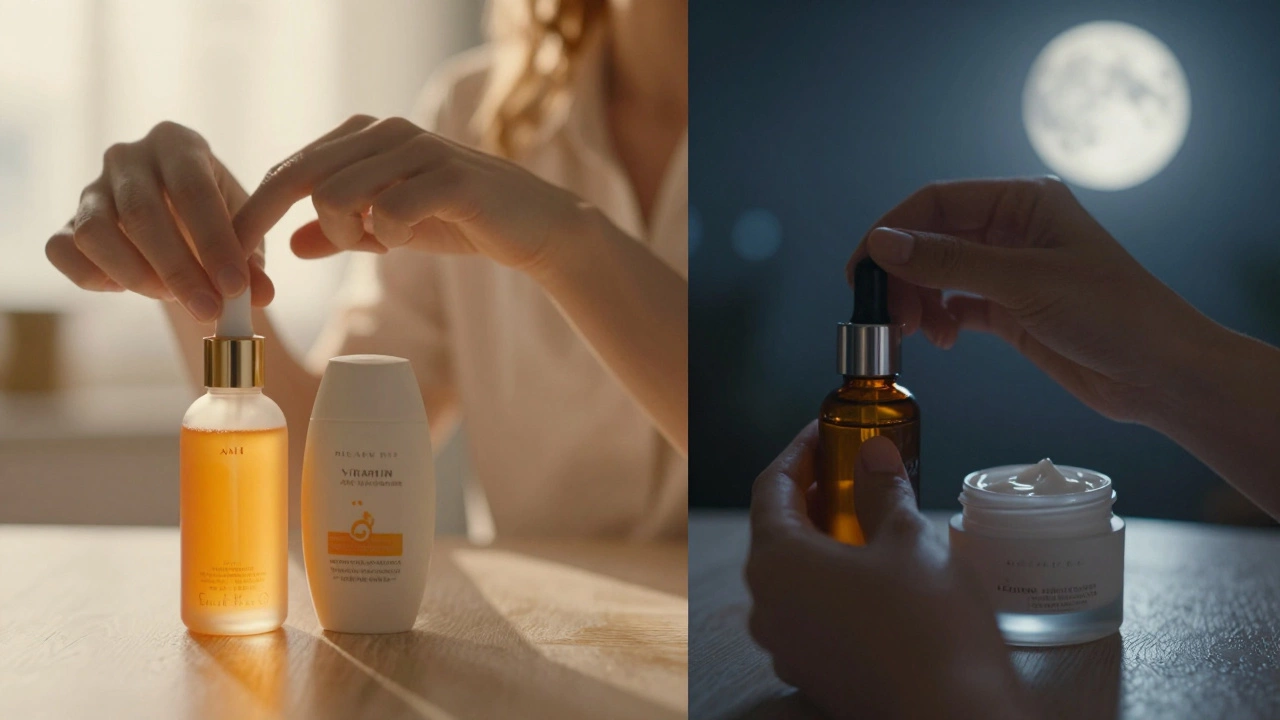
In the morning, your goal is protection. Use antioxidants like Vitamin C to fight free radicals from pollution and UV rays. Follow with a moisturizer and, crucially, sunscreen. Sunscreen is the absolute last step in your morning routine. No exceptions.
At night, your goal is repair. Your skin regenerates while you sleep. This is when you use active serums like retinol, peptides, or exfoliating acids (AHA/BHA). After these treatments, you need a richer moisturizer to support the skin barrier, which can become compromised by strong actives. Nighttime is also when you can use heavier oils if desired.
Common Mistakes That Ruin Results
Even with the right order, small errors can undermine your efforts. Here are the most frequent pitfalls I see people make.
- Layering Too Quickly: Applying three different serums back-to-back without pausing can lead to a cocktail effect that irritates the skin. Stick to one or two active serums max per routine.
- Ignoring Neck and Chest: Your serum and moisturizer should extend down to your collarbone. Aging shows here first, and the skin is thinner than on your face.
- Using Expired Products: Active ingredients degrade. Vitamin C turns orange and loses potency. Retinol breaks down in light. Check expiration dates. An expired serum is worse than useless; it can oxidize and damage skin cells.
- Over-Exfoliating: If you use an exfoliating serum (like glycolic acid), do not use it every day. Two to three times a week is plenty. Over-exfoliation destroys your moisture barrier, making your skin red and sensitive, regardless of how much moisturizer you apply.
Building a Routine That Sticks
The best skincare routine is the one you will actually do. You do not need ten steps. A basic effective routine looks like this:
- Cleanse
- Treat (Serum)
- Moisturize
- Protect (Sunscreen in AM)
Start here. Once your skin is healthy and tolerant, you can add more serums or specialized treatments. But never compromise on the order. Serum first, moisturizer second. This simple habit protects your investment and keeps your skin looking clear, hydrated, and youthful.
Can I mix serum and moisturizer together?
It is generally not recommended. Mixing them in your palm can alter the pH balance and stability of the active ingredients in the serum. It also makes it difficult to control the dosage. Apply them separately for best results.
Do I need a moisturizer if I use a hydrating serum?
Yes. Hydrating serums add water to the skin, but they do not lock it in. Without a moisturizer containing occlusives or emollients, that water will evaporate (transepidermal water loss), potentially leaving your skin drier than before.
What if my serum pills under my moisturizer?
Pilling happens when ingredients clash or when you apply too much product. Try waiting longer between steps, using less serum, or switching to a moisturizer with a simpler formula. Avoid rubbing your face vigorously during application.
Should I apply eye cream before or after serum?
Apply eye cream after your serum but before your moisturizer. The skin around the eyes is delicate, and eye creams are formulated specifically for that area. Applying it after serum ensures the actives don't migrate into your eyes, and before moisturizer ensures it isn't blocked by heavier creams.
Does the order matter for oily skin?
Yes, the order still matters. Even if you have oily skin, you need hydration. Use a lightweight, gel-based serum followed by an oil-free, non-comedogenic moisturizer. Skipping moisturizer can signal your skin to produce even more oil to compensate for dryness.