
Self-Made Success Archetype Analyzer
Select the trait that best describes your approach to challenges and goals:
How it works
- 1. Choose your core trait based on the article's themes.
- 2. Discover which historical figure matches your mindset.
- 3. Learn their specific strategy for success.
When we hear the phrase "self-made man," what comes to mind? Is it a billionaire who started with nothing but a laptop? Or perhaps an inventor who built an empire from scrap metal? The term has been tossed around for centuries, often carrying a romanticized weight that doesn't always match reality. In truth, identifying the single greatest self-made figure in history is less about picking a winner and more about understanding what "self-made" actually means across different eras.
We tend to look back at giants like Andrew Carnegie, a Scottish-American industrialist who revolutionized the steel industry in the late 19th century or Honkaku Honda Soichiro, the founder of Honda Motor Co., who rose from a bicycle repair shop to global automotive dominance and see pure meritocracy. But their stories are complex. They had access to networks, timing, and resources that many today still lack. If you're looking for inspiration to build your own path, whether through career moves or personal development, understanding these nuances matters. For those interested in exploring other forms of independent professional networking and verified profiles, you can check out this directory as an example of how modern platforms organize independent service providers, though our focus here remains on historical business titans.
Redefining "Self-Made" Through History
The concept of the self-made man didn't exist in the same way during the Middle Ages. Back then, social mobility was nearly impossible if you weren't born into nobility. The idea really took root during the Industrial Revolution and the Enlightenment. People began to believe that hard work, innovation, and resilience could overcome birthright. This shift changed everything. It allowed individuals like Frederick Douglass, an escaped slave who became one of the most prominent abolitionists, writers, and orators of the 19th century to redefine success not just in wealth, but in freedom and influence.
Today, when we talk about being self-made, we usually mean someone who achieved significant wealth or status without inheriting it. However, even this definition has cracks. Did they have supportive parents? Did they attend a good school because their community valued education? True self-making is rarely a solo act; it's a combination of individual grit and seizing opportunities when they arise. Recognizing this helps us appreciate the journey without falling into the trap of thinking success is purely linear or guaranteed by effort alone.
Andrew Carnegie: The Steel Magnate Who Gave It Away
If you ask historians who the quintessential self-made man is, Andrew Carnegie's name usually tops the list. Born in Dunfermline, Scotland, in 1835, Carnegie arrived in the United States at age thirteen with his family. His father was unemployed, and his mother worked as a seamstress to keep them fed. Carnegie started working in a cotton factory at twelve, earning $1.20 a week. That experience taught him the value of labor and the importance of efficiency.
His big break came when he became a telegraph messenger. He impressed Thomas A. Scott, a high-ranking official in the Pennsylvania Railroad, with his diligence and intelligence. Scott promoted him repeatedly, giving Carnegie insights into railroad logistics and investment strategies. Carnegie used this knowledge to invest heavily in the steel industry. He saw that steel would be the backbone of America's infrastructure-bridges, skyscrapers, and railways all needed it.
Carnegie didn't just make money; he redefined production. He adopted the Bessemer process, which made steel cheaper and faster to produce. By vertically integrating his business-owning the iron mines, coal fields, and railroads that transported materials-he cut costs drastically. Competitors couldn't keep up. By the time he sold his company, Carnegie Steel, to J.P. Morgan in 1901, it was worth $480 million (equivalent to over $15 billion today). But Carnegie's legacy isn't just his wealth; it's his philosophy of philanthropy. He believed the rich had a moral obligation to give away their fortunes during their lifetime. He funded thousands of libraries, universities, and peace initiatives.
Soichiro Honda: From Failure to Global Dominance
While Carnegie represents the American industrial boom, Soichiro Honda embodies the post-war Japanese economic miracle. Born in 1906 in Hamamatsu, Japan, Honda showed an early interest in mechanics. He apprenticed at a Toyota subsidiary but left after World War II when the company rejected his piston ring designs. Undeterred, he set up a small workshop and continued experimenting.
In 1945, a typhoon destroyed his factory. Instead of quitting, Honda pivoted. He noticed that bicycles were scarce due to fuel shortages, so he attached a small gasoline engine to a bicycle frame. The "power-assisted bicycle" was a hit. This invention led to the creation of Honda Motor Co. in 1948. Honda faced countless rejections from banks and investors who thought motorcycles were too dangerous or impractical. But he persisted, focusing on quality and reliability.
Honda's approach to management was unique. He encouraged open communication between workers and executives, fostering a culture of innovation. Under his leadership, Honda expanded into cars, becoming the first Japanese automaker to sell vehicles in the United States. Today, Honda is a global powerhouse, known for its engineering excellence and environmental initiatives. Honda's story teaches us that failure is not the end; it's often the beginning of a better idea.
Frederick Douglass: Self-Made in Freedom and Influence
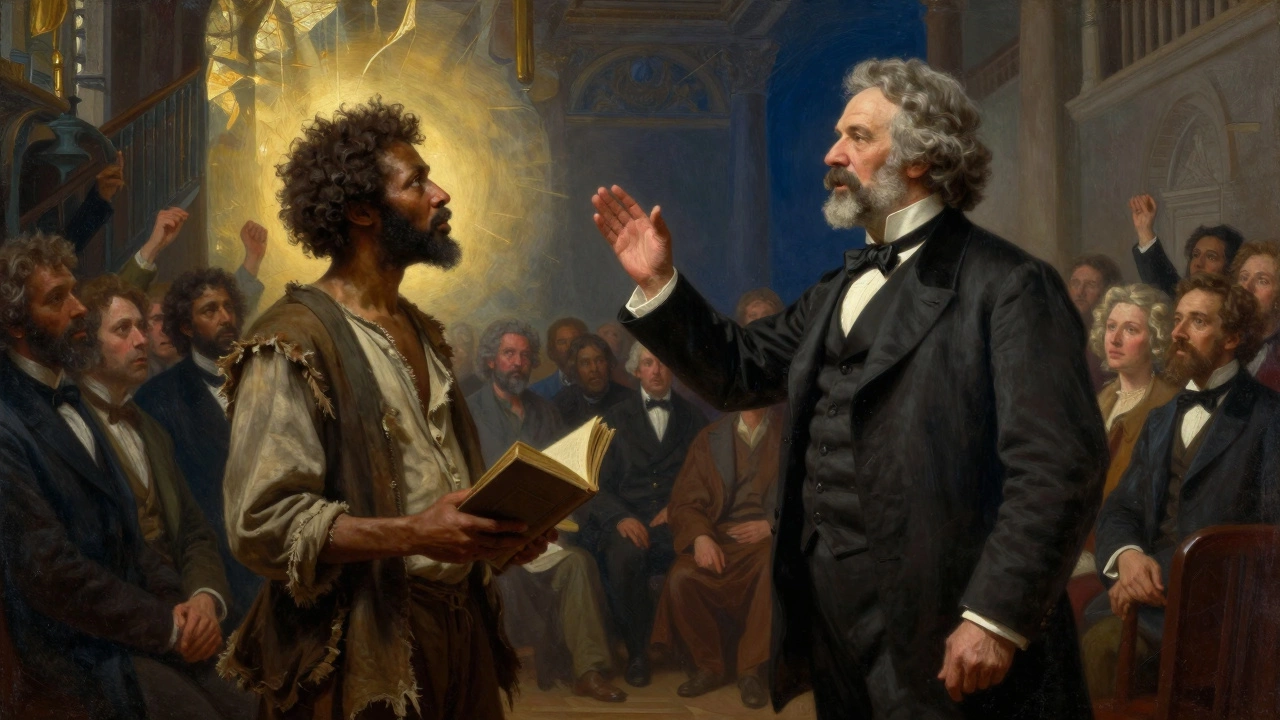
Not all self-made men built empires of steel or cars. Some built legacies of justice and equality. Frederick Douglass is a prime example. Born into slavery in Maryland around 1818, Douglass endured brutal conditions. But he refused to accept his fate. He secretly learned to read and write, often trading food for lessons with white children in Baltimore. Education became his weapon against oppression.
In 1838, Douglass escaped to New York, changing his name to avoid capture. He quickly became involved in the abolitionist movement. His powerful speeches and writings, including his autobiography *Narrative of the Life of Frederick Douglass*, shocked readers with their honesty and eloquence. Douglass challenged the notion that enslaved people were inferior, proving that intellect and dignity were universal human traits.
Douglass didn't stop at speaking. He met with President Abraham Lincoln during the Civil War, advocating for the enlistment of Black soldiers. After emancipation, he continued fighting for civil rights, becoming the first African American to hold a federal office as U.S. Marshal in Washington, D.C. Douglass's life shows that being self-made isn't just about accumulating wealth; it's about claiming your humanity and influencing society for the better.
Modern Interpretations: Oprah Winfrey and Elon Musk
In recent decades, the definition of self-made has expanded to include media moguls and tech entrepreneurs. Oprah Winfrey grew up in poverty in Mississippi, facing abuse and discrimination. She landed her first job as a news anchor at age 19 but struggled with the rigid format. She switched to daytime talk shows, where her empathy and authenticity resonated with audiences. Her show, *The Oprah Winfrey Show*, became the highest-rated program of its kind, launching a media empire that includes a magazine, a network, and a book club that can make bestsellers overnight.
On the tech side, Elon Musk often cites himself as self-made, though critics point out his early funding came from the sale of Zip2 and PayPal. Regardless of debate, Musk's ventures-Tesla, SpaceX, Neuralink-have pushed boundaries in electric vehicles, space exploration, and brain-computer interfaces. His ability to attract talent and capital demonstrates a different kind of self-making: visionary leadership that inspires others to follow.
| Name | Industry | Key Achievement | Philosophy |
|---|---|---|---|
| Andrew Carnegie | Steel | Built largest steel producer in world | Gospel of Wealth |
| Soichiro Honda | Automotive | Founded Honda Motor Co. | Persistence and Innovation |
| Frederick Douglass | Abolition/Civil Rights | Escaped slavery, became influential orator | Education and Equality |
| Oprah Winfrey | Media | Created global media brand | Empathy and Authenticity |

Lessons for Personal Growth Today
What can we learn from these figures? First, resilience is non-negotiable. Every one of them faced setbacks that would have broken lesser spirits. Second, adaptability matters. Carnegie shifted from railroads to steel; Honda moved from pistons to motorcycles. Third, purpose drives longevity. Douglass fought for freedom; Carnegie gave back to society. When you align your goals with a larger mission, you sustain motivation longer.
If you're on a personal growth journey, consider reading biographies or memoirs of these individuals. Books like *The Autobiography of Andrew Carnegie* or *Long Walk to Freedom* by Nelson Mandela offer deep insights into mindset and strategy. You don't need to replicate their paths, but you can adopt their principles: continuous learning, ethical leadership, and unwavering commitment to your values.
Why the Debate Matters
Asking who the greatest self-made man is forces us to examine our own biases. Do we value wealth over impact? Innovation over justice? There's no single answer, and that's okay. The real takeaway is recognizing that greatness comes in many forms. Whether you're building a business, advocating for change, or simply trying to improve your daily life, the spirit of self-making is within reach. It starts with taking responsibility for your choices and refusing to let circumstances define your limits.
Who is considered the greatest self-made man in history?
There is no single consensus, but Andrew Carnegie, Soichiro Honda, and Frederick Douglass are frequently cited due to their immense impact on industry, technology, and civil rights respectively. Each represents a different facet of self-made success.
What does it mean to be a self-made person?
Being self-made generally means achieving significant success, wealth, or status primarily through one's own efforts, rather than inheriting it. However, it often involves leveraging opportunities, networks, and timing alongside hard work.
Did Andrew Carnegie inherit any money?
No, Andrew Carnegie did not inherit money. He immigrated to the US in poverty and built his fortune from scratch through strategic investments in the steel industry.
How did Frederick Douglass become successful?
Douglass escaped slavery, taught himself to read and write, and became a powerful orator and writer. His advocacy for abolition and civil rights established him as a key historical figure.
Are there female equivalents to the self-made man?
Yes, figures like Oprah Winfrey, Madam C.J. Walker, and Sara Blakely are often cited as self-made women who overcame significant barriers to build empires in media, cosmetics, and fashion.