
Book Reader Matchmaker
Not sure where to start with the world's biggest best-sellers? Answer three quick questions to find the text that aligns with your interests.
You might be surprised to learn that the answer to "what is the most popular book in the world" isn't a single novel or a modern self-help manual. It’s actually a tie between two religious texts that have shaped human history for millennia. When we talk about popularity, we usually mean one of two things: total copies distributed or active readership. Depending on how you measure it, the Bible and the Quran dominate the conversation, far outstripping any other title ever printed.
Why does this matter? Because understanding what people actually read tells us something profound about global culture, faith, and community. While lists like "Top 10 Novels of All Time" are fun for dinner party trivia, they often ignore the massive, steady demand for spiritual guides. If you’re looking for the best self-help books to change your life, you might start with secular classics, but if you want to know what billions of people turn to for guidance, comfort, and moral framework, these two texts are the undisputed kings.
Defining Popularity: Sales vs. Distribution
Before we crown a winner, we need to clear up a common confusion. There is no central registry that tracks every single book sold globally. Publishers report their own numbers, which can be inflated by marketing hype or bundled deals. For religious texts, the data is even trickier because millions of copies are given away for free by churches, mosques, and charitable organizations. You don’t buy a Bible at a hotel; you find one in the nightstand. You might receive a Quran as a gift upon conversion. These distributions count towards "readership" but not always towards "sales revenue."
Most reliable estimates place the Bible at approximately 5 billion copies distributed since its inception. The Quran follows closely, with estimates ranging from 800 million to over 3 billion copies, depending on whether you include digital downloads and regional printings in non-Arabic speaking countries. No fiction book comes close. The Guinness World Records recognizes the Bible as the best-selling book of all time, largely due to the sheer volume of production by groups like the Gideons International and various Bible societies.
The Bible: The Unchallenged Leader
The Bible is a collection of religious texts or scriptures sacred to Christians and Jews. It is not just one book but an anthology, divided into the Old Testament and the New Testament. Its popularity stems from its role as the foundational text of Christianity, the world’s largest religion with over 2.4 billion adherents.
What makes the Bible so enduring? First, accessibility. It has been translated into more languages than any other book-over 700 complete translations and thousands of partial ones. Second, cultural ubiquity. Even in secular societies, biblical references permeate literature, law, and language. Phrases like "good Samaritan" or "David and Goliath" are part of our daily vocabulary, regardless of religious belief.
If you are interested in reading it for personal growth rather than purely theological study, many people start with specific books within the Bible. The Book of Proverbs offers practical wisdom on money, relationships, and discipline. Ecclesiastes tackles the meaning of life and happiness. These sections often appeal to those looking for self-help insights without the dogma.
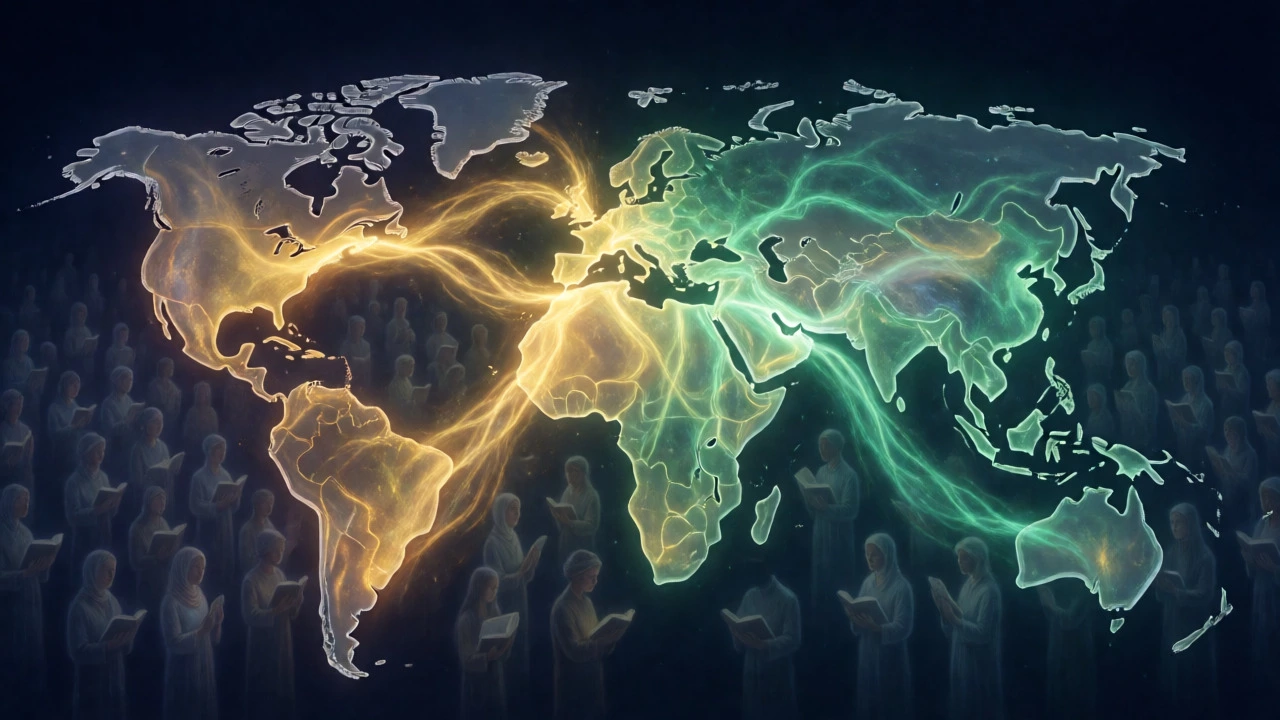
The Quran: The Global Spiritual Companion
The Quran is the central religious text of Islam, believed by Muslims to be a revelation from God. Unlike the Bible, which was written by multiple authors over centuries, the Quran was revealed to the Prophet Muhammad over 23 years and compiled shortly after his death.
The Quran’s popularity is driven by the rapid growth of Islam, which is now the second-largest religion globally, with nearly 2 billion followers. In many Muslim-majority countries, memorizing the entire Quran is a respected achievement, leading to high per-capita ownership rates. Furthermore, the Quran is recited aloud five times a day during prayers, meaning it is heard and engaged with far more frequently than most books are read silently.
For non-Muslims curious about why it’s so popular, the structure is key. It is short enough to be memorized (about 600 pages) yet deep enough to provide lifelong study material. Many converts describe finding clarity and purpose through its rhythmic prose and direct address to the reader. If you’re exploring global best-sellers, ignoring the Quran means missing out on the perspective of a quarter of the human population.
Beyond Religion: What Comes Next?
Once you step outside the realm of scripture, the competition gets tighter and more subjective. Who holds third place? This is where data becomes messy. Some sources cite Mao Zedong’s "Quotations from Chairman Mao" (the Little Red Book) with hundreds of millions of copies, largely due to state-mandated distribution in China during the mid-20th century. Others point to Charles Dickens’ "A Tale of Two Cities," which claims 200 million copies sold, though this figure is debated by historians who argue it includes reprints and school editions.
In the modern era, J.K. Rowling’s "Harry Potter" series and Agatha Christie’s works dominate fiction sales. But none reach the sustained, multi-generational consistency of the Bible or the Quran. Religious texts aren’t subject to trends. They don’t go out of style when a new genre becomes popular. They remain relevant because they address fundamental human questions: Why are we here? How should we live? What happens after death?
How These Texts Compare to Modern Self-Help
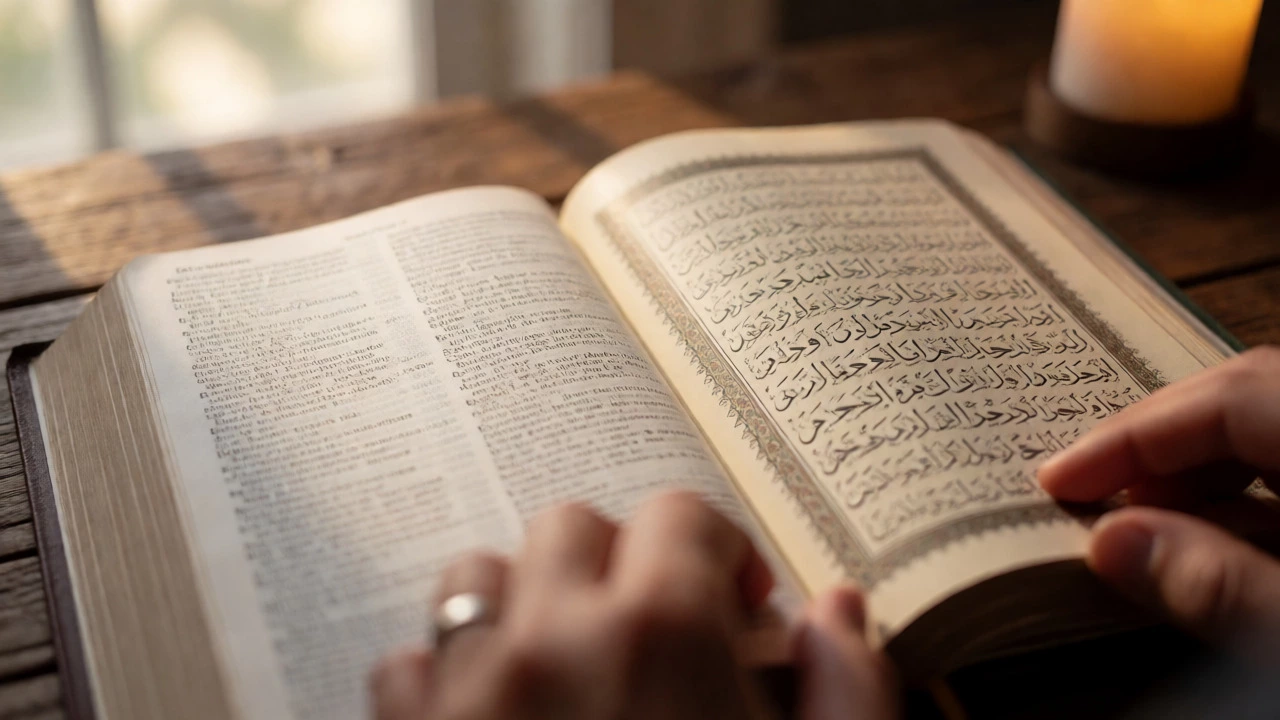
You mentioned an interest in best self-help books. It’s worth noting that many modern self-help titles borrow heavily from the principles found in these ancient texts. Concepts like gratitude, forgiveness, mindfulness, and resilience are core themes in both the Bible and the Quran, long before psychology formalized them.
| Feature | The Bible | The Quran | Modern Self-Help (e.g., Atomic Habits) |
|---|---|---|---|
| Estimated Copies | ~5 Billion | ~3 Billion | ~15 Million (per top title) |
| Primary Audience | Christians/Jews/Curios | Muslims/Curios | General Public |
| Longevity | 2,000+ Years | 1,400+ Years | Decades |
| Access Method | Purchase/Gift/Library | Purchase/Gift/Memorization | Purchase/Audio/App |
The difference lies in authority. A self-help book argues for a method based on research or anecdote. The Bible and Quran present themselves as divine truth. For billions, this distinction changes everything. It turns reading into worship and application into obedience. That emotional and spiritual weight drives consistent engagement in a way that a productivity tip never quite matches.
Which One Should You Read?
If you’re trying to decide where to start, ask yourself what you’re seeking. Are you looking for historical context, literary beauty, or spiritual grounding?
- Choose the Bible if: You want to understand Western literature, art, and history better. Or if you are interested in narrative storytelling, poetry, and diverse voices across different eras.
- Choose the Quran if: You are interested in Islamic culture, theology, or philosophy. Or if you prefer a concise, unified voice that focuses on monotheism and ethical living.
- Read both if: You are open-minded and want to see the shared roots of Abrahamic faiths. Both texts share figures like Abraham, Moses, and Jesus, though their roles differ significantly.
Don’t feel pressured to read cover-to-cover immediately. Try reading one chapter a day. Use a translation that feels natural to you. For the Bible, the NIV or ESV are popular for readability. For the Quran, the Saheeh International or Yusuf Ali translations are widely respected. Remember, the goal isn’t to finish quickly; it’s to engage deeply.
Is the Bible really the best-selling book of all time?
Yes, according to Guinness World Records and most publishing industry estimates, the Bible is the best-selling book of all time, with approximately 5 billion copies distributed. However, exact sales figures are hard to verify because many copies are given away for free rather than sold.
What is the second most popular book in the world?
The Quran is widely considered the second most popular book, with estimates ranging from 800 million to over 3 billion copies. Its ranking is solidified by the large and growing Muslim population worldwide, ensuring continuous high demand for new copies.
Does "popular" mean the same as "best-selling"?
Not exactly. "Best-selling" refers to paid transactions. "Popular" can include total distribution (sold + given away) and active readership. Religious texts score high in both categories, while some fiction books may have high sales spikes but lower long-term readership.
Are there any fiction books close to these numbers?
No fiction book comes close to the billions in distribution. The closest contenders are typically classic novels like "Don Quixote" or "A Tale of Two Cities," or modern series like "Harry Potter," but they generally range in the tens or low hundreds of millions, not billions.
Can I read these books for self-improvement?
Absolutely. Many readers approach these texts as sources of wisdom, ethics, and psychological insight. Sections like Proverbs in the Bible or verses on patience and charity in the Quran offer practical advice applicable to daily life, regardless of religious affiliation.