Personalized Reading Guide
Not sure where to start? Answer three simple questions below to get a tailored book recommendation from our curated list of timeless classics.
Tip: Use the Feynman Technique after reading—explain the main idea simply to test your understanding.
Have you ever finished a book and felt like it rewired your brain? That’s the power of lifelong reading. It’s not just about entertainment; it’s about building a mental toolkit that serves you from your twenties until your final days. But with millions of titles out there, how do you pick the ones worth your time?
The truth is, there is no single "best" book for everyone. Your needs at 20 are different from your needs at 50. However, certain books have stood the test of time because they address fundamental human experiences: resilience, empathy, critical thinking, and meaning. This guide breaks down the best categories of books for life-long reading, helping you build a library that grows with you.
Why Some Books Stick With You Forever
Most books are disposable. You read them, enjoy them, and forget them within a week. The books that stick usually share three traits:
- Universal Themes: They tackle issues every human faces-love, loss, ambition, failure.
- Re-readability: You find new layers in them each time you open them.
- Actionable Wisdom: They don’t just tell you what to think; they show you how to live.
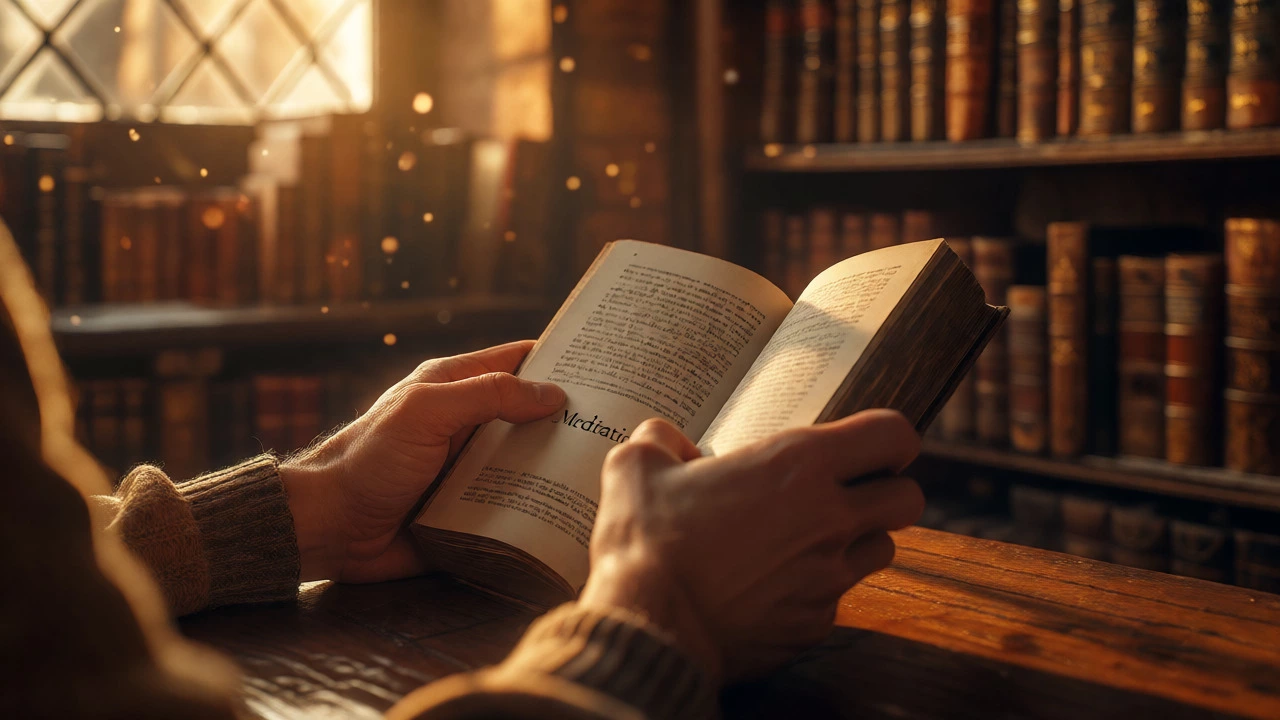
Think of Meditations by Marcus Aurelius. Written nearly 2,000 years ago by a Roman emperor, it remains one of the most recommended self-help books today. Why? Because anxiety and the need for inner peace haven’t changed since ancient Rome.
The Foundation: Philosophy and Stoicism
If you want a book that helps you handle life’s inevitable curveballs, start with philosophy. Not the dry, academic kind, but practical wisdom.
Man’s Search for Meaning by Viktor Frankl is arguably the most impactful book on this list. Frankl, a psychiatrist and Holocaust survivor, argues that humans are driven by a need for meaning, not just pleasure or power. His insights help readers navigate suffering without losing hope.
Another essential is The Alchemist by Paulo Coelho. While some critics find it simplistic, its core message-that pursuing your "Personal Legend" requires listening to your heart-resonates deeply with people at career crossroads.

Fiction That Builds Empathy
Fiction isn’t just escapism. Studies suggest that reading literary fiction improves your ability to understand others’ emotions and perspectives. If you want to be a better partner, friend, or leader, read novels.
| Book Title | Author | Core Lesson | Best For |
|---|---|---|---|
| To Kill a Mockingbird | Harper Lee | Empathy and moral courage | Understanding social justice |
| The Kite Runner | Khaled Hosseini | Redemption and friendship | Navigating guilt and forgiveness |
| 1984 | George Orwell | Critical thinking and truth | Digital age skepticism |
| Pride and Prejudice | Jane Austen | Self-awareness and judgment | Relationship dynamics |
Take To Kill a Mockingbird. Atticus Finch’s advice to his daughter Scout-"You never really understand a person until you consider things from his point of view... until you climb into his skin and walk around in it"-is a masterclass in empathy that applies to everything from office politics to family arguments.
Science and Human Behavior
Understanding how your brain works can save you decades of trial and error. These books explain why we make bad decisions, how habits form, and what actually makes us happy.
Sapiens: A Brief History of Humankind by Yuval Noah Harari offers a macro-perspective on where we came from and where we’re going. It challenges religious, political, and economic narratives, forcing you to question the stories society tells you.
For more immediate application, Atomic Habits by James Clear is the gold standard for behavior change. Unlike dense psychological texts, it provides a clear framework: make habits obvious, attractive, easy, and satisfying. It’s less about theory and more about doing.

How to Choose Your First "Life Book"
You don’t need to read all of these at once. In fact, trying to will lead to burnout. Here’s a simple decision tree to pick your starting point:
- Feeling lost or purposeless? Start with Man’s Search for Meaning.
- Struggling with discipline or productivity? Read Atomic Habits.
- Need perspective on humanity? Pick up Sapiens.
- Want to improve relationships? Dive into Pride and Prejudice or The Seven Principles for Making Marriage Work.
Remember, the goal isn’t to finish the book. It’s to let the book finish you-to change how you see the world.
Tips for Retaining What You Read
Reading is useless if you forget it. Here are three tactics to make these books stick:
- The Feynman Technique: After finishing a chapter, try to explain the main idea in simple terms, as if teaching a child. If you can’t, you didn’t understand it.
- Highlight with Purpose: Don’t highlight everything. Only mark sentences that challenge your current beliefs or offer actionable advice.
- Discuss It: Join a book club or talk to a friend about what you read. Social reinforcement cements memory.
Is it better to read fiction or non-fiction for life improvement?
Both serve different purposes. Non-fiction (like psychology or history) gives you direct tools and frameworks to apply immediately. Fiction builds emotional intelligence and empathy by letting you experience lives different from your own. A balanced diet of both is ideal for holistic growth.
How many books should I aim to read per year?
There is no magic number. Quality beats quantity. Reading five deep, transformative books per year is far more valuable than skimming fifty shallow ones. Focus on retention and application rather than completion rates.
Are audiobooks as good as physical books?
For narrative non-fiction and memoirs, audiobooks are often superior because hearing the author’s voice adds emotional context. For complex technical books or dense philosophy, physical books allow for easier re-reading and note-taking. Choose the format that fits your lifestyle and the book’s complexity.
What if I stop enjoying a book halfway through?
Give it 50 pages after the initial hook. If it still doesn’t click, put it down. Life is too short for bad books. You can always return to it later when you’re in a different headspace. Abandoning a book is a skill, not a failure.
Do I need to read classic literature to be well-read?
No. While classics offer cultural literacy and timeless themes, modern books often address contemporary issues like digital distraction or modern work-life balance more directly. Build a mix that reflects your interests and current life stage.