
Natural Skincare Routine Builder
Configure Your Routine
Your Custom Routine Appears Here
Select your preferences on the left to build your regimen.
Washing your face feels like the most basic part of getting ready for the day. You grab a bottle off the shelf, lather up, and rinse. But have you ever stopped to think about what is actually touching your skin? Most commercial cleansers are packed with synthetic fragrances, harsh sulfates, and preservatives that can strip away your natural oils. When those oils go, your skin panics. It produces even more oil to compensate, leading to breakouts, dryness, and irritation. This is why so many people are turning back to nature.
Cleaning your face naturally isn't just about avoiding chemicals; it's about working with your skin's biology rather than against it. Your skin has a protective layer called the acid mantle. It keeps bacteria out and moisture in. Harsh soaps destroy this barrier. Natural ingredients, on the other hand, tend to be gentler and often provide extra benefits like hydration or anti-inflammatory properties. Living in Durban, where the humidity hits hard and the sun is relentless, I’ve learned that simple, natural routines keep skin balanced without the guesswork.
The Foundation: Choosing the Right Natural Cleanser
The first step in any natural face cleansing routine is picking a base that actually works. Water alone rarely removes dirt, sunscreen, or excess sebum effectively. You need something with emulsifying properties-something that can bind to oil and lift it away. Here are three reliable, time-tested options that you likely already have in your kitchen.
Raw Honey is a natural humectant and antibacterial agent that draws moisture into the skin while gently lifting debris. Unlike soap, honey doesn't strip your skin. It contains enzymes that help break down dead skin cells. Manuka honey is the gold standard, but local raw honey works wonders too. Apply a thin layer to damp skin, massage in circles for sixty seconds, and rinse with warm water. Your skin will feel soft, not tight.
- Olive Oil: If you have dry or sensitive skin, olive oil is fantastic. It mimics the skin’s natural sebum. Use cold-pressed extra virgin olive oil. Massage it onto dry skin to dissolve makeup and grime, then wipe it off with a warm, wet cloth. The heat helps open pores slightly, allowing for a deeper clean.
- Green Tea: Brew a cup of green tea and let it cool completely. Green tea is rich in antioxidants, specifically catechins, which fight inflammation. Dip a cotton pad into the cooled tea and swipe it across your face. This acts as a mild toner and cleanser in one step, perfect for oily or acne-prone skin types.
- Aloe Vera Gel: Fresh from the plant is best, but pure store-bought gel works if it has no added alcohol or fragrance. Aloe soothes redness and hydrates. It’s excellent for removing light sweat and dust after a workout without disrupting the skin barrier.
Exfoliation: Gentle Removal of Dead Skin Cells
You don’t need to scrub your face raw to get clear skin. In fact, physical scrubs made of large particles like walnut shells or coarse salt can cause micro-tears in the skin. These tiny wounds lead to inflammation and worsen acne. Natural exfoliation should be chemical or enzymatic, meaning it dissolves dead cells rather than grinding them off.
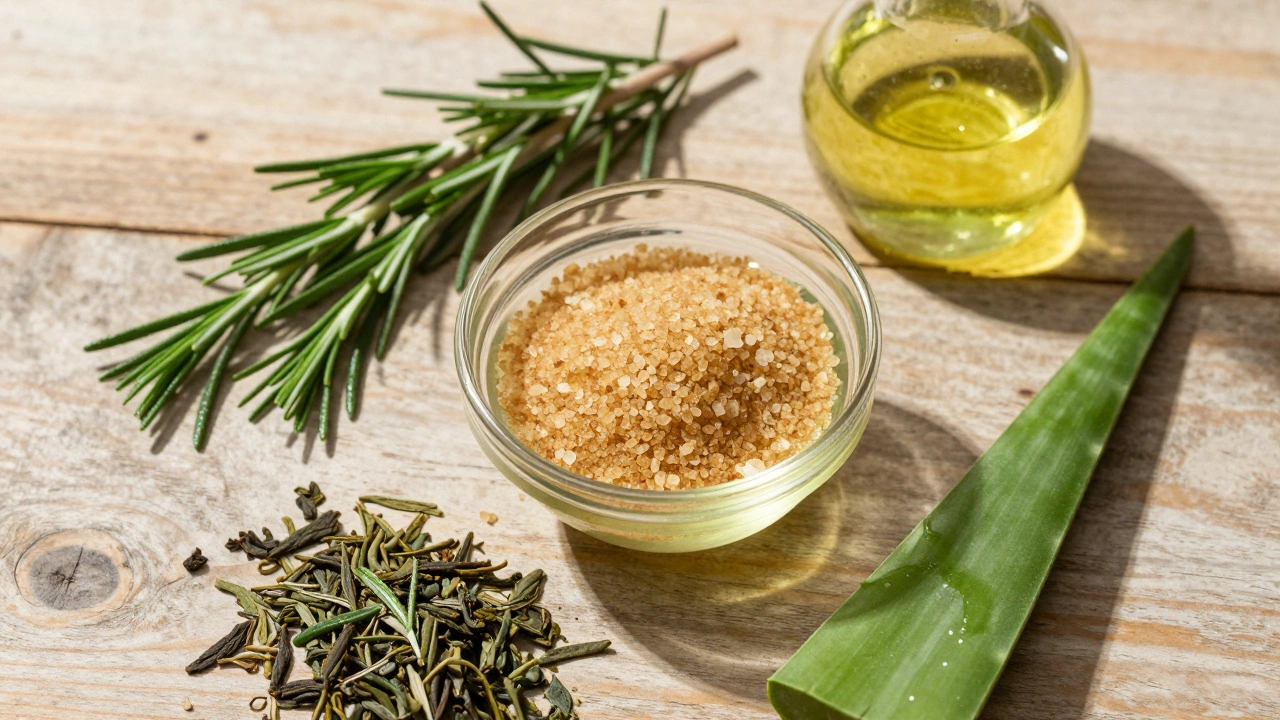
Sugar and oil make a surprisingly effective exfoliant. Sugar crystals are rounder and dissolve quickly, reducing friction. Mix one tablespoon of fine brown sugar with half a tablespoon of coconut oil or jojoba oil. Apply this paste to your face using very light pressure. Focus on areas prone to blackheads, like the nose and chin. Rinse thoroughly. Do this only once or twice a week. Over-exfoliating damages the acid mantle, leaving your skin vulnerable to environmental pollutants.
Another powerful option is yogurt. Plain, unsweetened yogurt contains lactic acid, an alpha-hydroxy acid (AHA). AHAs loosen the bonds between dead skin cells, allowing them to shed naturally. Apply a layer of yogurt to your face, leave it on for ten minutes, then rinse. This brightens the complexion and smooths texture without any abrasion. It’s a gentle way to maintain clarity between deeper cleanses.
Toning and Balancing pH Levels
After cleansing, your skin’s pH might be slightly altered. Tap water, especially in places with hard water minerals, can leave a residue that disrupts balance. A natural toner restores the skin’s optimal acidic pH, which sits around 4.5 to 5.5. This acidity discourages harmful bacteria growth.
| Ingredient | Best For | Key Benefit | Preparation |
|---|---|---|---|
| Apple Cider Vinegar | Oily, Acne-Prone | Balances pH, kills bacteria | Dilute 1 part vinegar with 3 parts water |
| Rose Water | Dry, Sensitive | Soothes inflammation, hydrates | Use pure rose hydrosol directly |
| Witch Hazel | Combination | Tightens pores, reduces oil | Apply alcohol-free witch hazel with cotton pad |
Apple cider vinegar is potent. Never apply it straight to your face. The acetic acid can burn if undiluted. Always mix it with water. Rose water is incredibly soothing and smells divine. It’s derived from steam-distilled rose petals and retains essential nutrients. Witch hazel, when alcohol-free, acts as an astringent that shrinks enlarged pores temporarily. Choose based on how your skin feels after washing. If it feels tight, you need more hydration (rose water). If it feels slick, you need more astringency (vinegar).
Hydration: Sealing in Moisture Naturally
Cleansing and toning remove impurities, but they also remove some moisture. Locking that moisture back in is crucial. Many people skip moisturizer because they fear clogging pores, but dehydrated skin produces more oil to compensate. Natural moisturizers are lightweight and non-comedogenic.
Jojoba oil is chemically almost identical to human sebum. This means your skin recognizes it and absorbs it easily without sitting on top and causing breakouts. A few drops warmed between your palms and pressed into the skin provide deep hydration. For thicker skin types, shea butter offers intense nourishment. It’s rich in vitamins A and E, which protect against oxidative stress. However, shea butter is heavy, so use sparingly in humid climates like Durban’s summer.
For daytime protection, consider a natural sunscreen alternative. While zinc oxide mineral sunscreens are the safest bet, you can boost your skin’s defense with vitamin C-rich foods topically. A mask made from mashed papaya and a drop of lemon juice provides enzymes that brighten and protect. Note that lemon juice is photosensitive, so always wash it off completely before going into direct sunlight. Never leave citrus on your face during the day.

Building Your Daily Routine
Consistency beats intensity. A complex routine you abandon after a week does nothing. Build a habit that fits your life. Here is a simple framework for morning and evening.
- Morning: Splash face with lukewarm water. If you wake up oily, use a diluted green tea rinse. Follow with rose water toner. Finish with a light layer of jojoba oil or aloe vera gel.
- Evening: Start with an oil cleanse (olive or jojoba) to remove the day’s grime and sunscreen. Wipe away with a warm cloth. Follow with a honey cleanse if your skin feels congested, or just rinse with water if it feels calm. Tone with apple cider vinegar mixture if needed. Moisturize with shea butter or heavier oil.
Listen to your skin. Some days it needs more oil; other days it needs less. Seasonal changes matter too. Winter air is drier, requiring richer creams. Summer humidity allows for lighter gels. Adjust your ingredients accordingly. There is no one-size-fits-all formula, only what works for your unique biology.
Pitfalls to Avoid in Natural Skincare
Natural doesn't automatically mean safe. Essential oils, for instance, are highly concentrated. Lavender and tea tree oil have antimicrobial properties, but applying them undiluted can cause contact dermatitis. Always dilute essential oils in a carrier oil like jojoba or almond oil. A general rule is one drop of essential oil per teaspoon of carrier oil.
Also, beware of "all-natural" marketing claims. Just because a product says natural doesn't mean it's free of irritants. Fragrance, even natural fragrance, is a common allergen. Stick to single-ingredient products whenever possible. You know exactly what you're putting on your face. If you mix ingredients at home, patch test first. Apply a small amount behind your ear or on your inner wrist and wait twenty-four hours. If there’s no reaction, proceed.
Finally, patience is key. Switching from synthetic cleansers to natural ones can cause a "purge" period. As your skin adjusts to its natural rhythm, it may break out temporarily. This usually lasts two to four weeks. Don't give up. Keep the routine simple and consistent. Your skin will thank you with a clearer, healthier glow.
Can I use baking soda to clean my face?
No, you should avoid baking soda. It has a high pH (around 9), which is far too alkaline for your skin's natural acidic barrier (pH 4.5-5.5). Using baking soda disrupts the acid mantle, leading to dryness, irritation, and increased susceptibility to bacteria. Stick to gentler alternatives like honey or oatmeal.
How often should I exfoliate naturally?
Most skin types benefit from exfoliating once or twice a week. Oily skin might tolerate three times a week, while sensitive or dry skin should stick to once every ten days. Over-exfoliating strips protective oils and causes inflammation. Listen to your skin-if it feels tender or looks red, take a break.
Is lemon juice good for acne?
Lemon juice contains citric acid, which can help lighten scars and kill bacteria. However, it is highly acidic and phototoxic. This means it makes your skin extremely sensitive to sunlight, potentially causing burns or dark spots. If you use it, dilute it heavily, apply only at night, and rinse thoroughly. It is generally safer to use salicylic acid from willow bark extract instead.
What is the best natural oil for oily skin?
Jojoba oil is the best choice for oily skin. Its molecular structure closely matches human sebum, signaling your skin to produce less oil. Grapeseed oil is another lightweight option that absorbs quickly without leaving a greasy residue. Avoid heavy oils like coconut oil if you are prone to clogged pores.
Do natural cleansers remove makeup effectively?
Yes, oil-based cleansers are excellent for removing makeup. The principle is "like dissolves like." Facial oils break down waterproof mascara, foundation, and sunscreen better than water-based cleansers. Massage the oil onto dry skin for at least thirty seconds, then wipe away with a warm, damp cloth for a thorough clean.