
Rapid Fitness Efficiency Calculator
How it works: Enter your details below to calculate the precise nutritional targets needed to lose fat while preserving muscle mass during high-intensity training.
Protein Requirements
Aim for the higher end of this range to maximize satiety and thermic effect during a calorie deficit.
Enter your stats to generate your personalized efficiency plan.
Let’s be honest: nobody wants to spend three hours a day in the gym if they don’t have to. You want results fast. You want to see changes in your mirror, feel stronger on the stairs, and maybe fit into that old pair of jeans sooner rather than later. But here is the hard truth about getting fit quickly: there is no magic pill, no secret supplement, and no ten-minute ab workout that replaces consistency. However, there *is* a most efficient path. It relies on doing less, but doing it with higher intensity and smarter planning.
If you are looking for the quickest way to get fit, you need to stop thinking about "working out" as a punishment and start treating it like a precise engineering problem. The goal is maximum stimulus for minimum time investment. This approach combines specific training methods, nutritional tweaks, and recovery strategies that work together to accelerate adaptation. Let’s break down exactly how to do this without burning out or injuring yourself.
The Efficiency Engine: High-Intensity Interval Training (HIIT)
When speed matters, steady-state cardio (like jogging for an hour) takes a back seat to High-Intensity Interval Training, also known as HIIT. HIIT involves short bursts of near-maximum effort followed by brief rest periods. Why is this the fastest route? Because it triggers what scientists call Excess Post-exercise Oxygen Consumption (EPOC). Simply put, your body continues to burn calories at an elevated rate for hours after you finish working out as it tries to return to its resting state.
A typical HIIT session might look like this: sprint for 30 seconds, walk for 60 seconds, repeat for 15 minutes. That’s it. Fifteen minutes can sometimes yield more metabolic benefits than forty-five minutes of moderate jogging. The key is intensity. If you can hold a conversation during your "high" intervals, you aren’t going hard enough. You should be breathing heavily, unable to speak more than a few words. This stress signals your body to adapt rapidly, improving cardiovascular health and boosting metabolism simultaneously.
- Sprint Intervals: Run or cycle at 90% effort for 20-30 seconds, recover for 60-90 seconds.
- Circuit Training: Perform 4-5 exercises back-to-back with minimal rest (e.g., burpees, kettlebell swings, push-ups).
- Tabata Protocol: 20 seconds of all-out effort, 10 seconds of rest, repeated for 8 rounds (4 minutes total).
Don’t overdo it, though. Because HIIT is taxing on your central nervous system, limit these sessions to three times a week. Doing them daily leads to diminishing returns and increases injury risk. On off-days, focus on mobility or light activity to aid recovery.
Strength Training: The Metabolic Multiplier
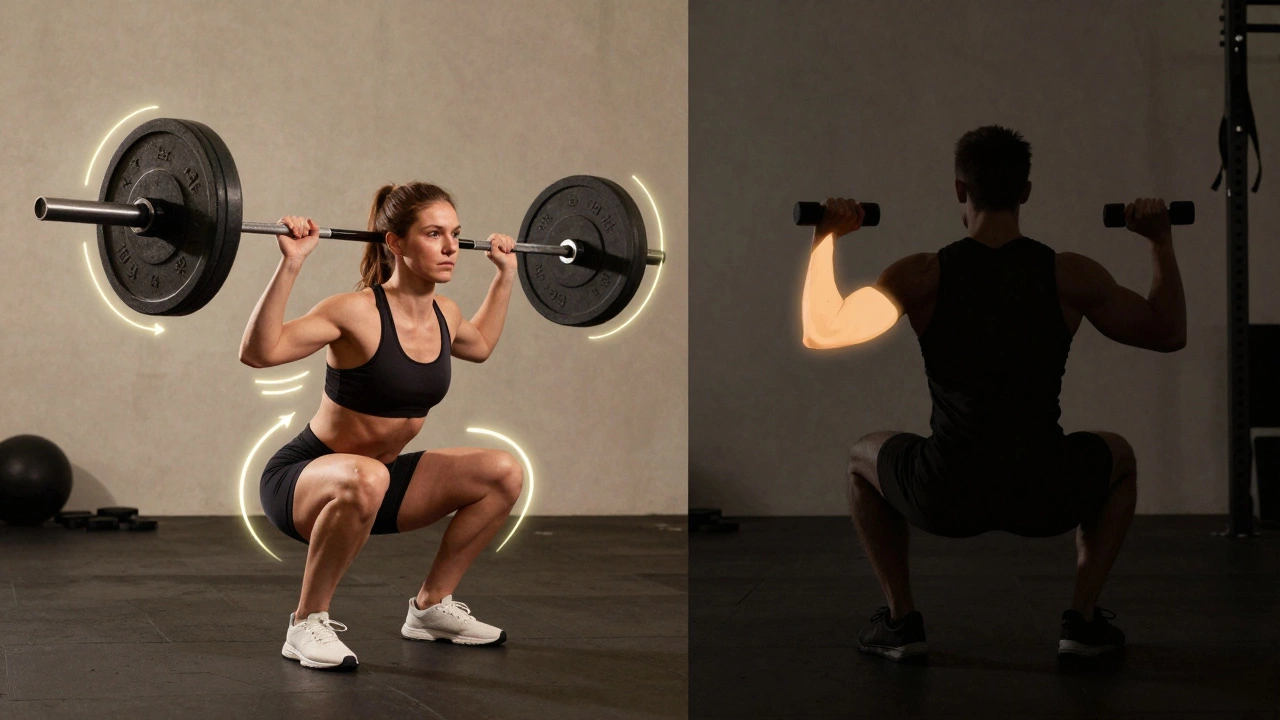
You cannot talk about getting fit quickly without addressing muscle. Muscle tissue is metabolically active, meaning it burns more calories at rest than fat tissue does. Building muscle raises your Basal Metabolic Rate (BMR), so you become a calorie-burning machine even while sleeping. The quickest way to build functional strength is through compound movements.
Compound exercises engage multiple muscle groups and joints at once. Instead of doing bicep curls (which only target one small muscle), you do pull-ups or rows. Instead of leg extensions, you do squats or deadlifts. These movements recruit more fibers, release more growth hormones, and require more energy expenditure per rep. A study published in the Journal of Strength and Conditioning Research consistently shows that compound lifts produce greater hormonal responses and strength gains compared to isolation exercises.
| Exercise Type | Muscles Engaged | Time Efficiency | Calorie Burn (Post-Workout) |
|---|---|---|---|
| Compound Lifts (Squats, Deadlifts) | Full Body / Multiple Groups | High | High |
| Isolation Moves (Bicep Curls, Leg Extensions) | Single Muscle Group | Low | Low |
| HIIT Cardio | Cardiovascular System + Legs/Core | Very High | Very High (EPOC effect) |
| Steady-State Cardio (Jogging) | Legs / Cardiovascular System | Medium | Low (Burns mostly during activity) |
To maximize speed, aim for full-body strength workouts two to three times a week. Focus on progressive overload-gradually increasing the weight, reps, or difficulty over time. This forces your body to continuously adapt, preventing plateaus. If you lift the same 10kg dumbbell every week for six months, your body has no reason to change. Increase the challenge, and you force the result.
Nutrition: Fueling Speed Without Starvation
You can train perfectly, but if your nutrition is off, your progress will stall. Getting fit quickly requires a caloric deficit (to lose fat) combined with adequate protein (to preserve or build muscle). This sounds contradictory, but it’s achievable. The mistake most people make is cutting calories too aggressively. When you eat too little, your metabolism slows down, and you lose muscle along with fat. You end up "skinny-fat"-smaller, but not toned or strong.
The sweet spot is a moderate deficit of 300-500 calories below your maintenance level. This allows for steady fat loss without triggering starvation mode. More importantly, prioritize protein. Aim for 1.6 to 2.2 grams of protein per kilogram of body weight. Protein has a high thermic effect, meaning your body burns more calories digesting it compared to carbs or fats. It also keeps you fuller for longer, reducing the urge to snack.
Focus on whole foods. Processed foods are often calorie-dense but nutrient-poor, leading to inflammation and water retention that masks fat loss. Swap white bread for whole grains, sugary drinks for water or black coffee, and fried snacks for nuts or fruit. Small swaps add up. For example, replacing a daily soda with water saves roughly 150 calories. Over a month, that’s nearly 4,500 calories-a significant chunk of a pound of fat.
Recovery: Where the Magic Happens
Here is a counterintuitive fact: you don’t get fit in the gym. You get fit while you sleep. Training breaks your muscles down; rest builds them back stronger. If you skip recovery, you’re just breaking down repeatedly without repair. This leads to fatigue, poor performance, and eventual burnout.
Sleep is the most powerful recovery tool available. Aim for 7-9 hours of quality sleep per night. During deep sleep, your body releases human growth hormone (HGH), which is crucial for muscle repair and fat metabolism. Poor sleep disrupts hunger hormones, increasing ghrelin (the hunger hormone) and decreasing leptin (the fullness hormone). This makes you crave junk food and makes losing weight significantly harder.
Active recovery is another underrated strategy. On days when you aren’t doing HIIT or heavy lifting, try walking, yoga, or swimming. Light movement increases blood flow to muscles, helping to flush out metabolic waste products like lactic acid and reduce soreness. It keeps you moving without adding significant stress to your system. Think of it as oiling the hinges of a door-it keeps everything running smoothly.

Consistency Over Perfection
The biggest enemy of quick results is inconsistency. Many people go all-out for two weeks, burn out, and quit. Then they restart, repeating the cycle. This "yo-yo" approach is far slower than a moderate, sustainable routine done consistently for months. The quickest way to get fit is the way you can stick to for the long haul.
Create habits, not just goals. Instead of saying "I will lose 10 pounds," say "I will workout for 30 minutes three times a week." Focus on the process. Track your workouts, log your meals, and monitor your sleep. Data provides feedback. If you’re not seeing results after four weeks, adjust one variable at a time-maybe increase protein intake, add one more set to your lifts, or improve sleep hygiene.
Be patient with your body. Genetic factors play a role in how quickly you respond to training. Some people see changes in weeks; others take months. Comparing yourself to others is futile. Compare yourself to who you were last month. Celebrate non-scale victories: better energy levels, improved mood, clothes fitting better, or lifting heavier weights. These are true markers of fitness.
Avoiding Common Pitfalls
In the rush to get fit fast, people often fall into traps that slow them down. One major pitfall is neglecting form for speed. Lifting heavy weights with poor technique leads to injuries. An injury sets you back weeks or months, completely derailing your progress. Always prioritize proper form. If you’re new to an exercise, watch tutorials or hire a trainer for a few sessions to learn the basics.
Another trap is relying too heavily on supplements. While protein powder and creatine can be helpful, they are supplements-they supplement a good diet, they don’t replace it. No pill will undo a bad diet or lack of sleep. Save your money and invest in quality food and perhaps a membership to a facility that motivates you.
Finally, avoid the "all-or-nothing" mentality. Missed a workout? Eat a bad meal? Don’t spiral. Just get back on track with the next decision. Fitness is a marathon disguised as a sprint. Consistency beats intensity in the long run, but combining both yields the fastest initial results.
How quickly can I see results from HIIT?
Most people notice improvements in endurance and energy within 2-3 weeks of consistent HIIT training. Visible changes in body composition, such as reduced waist circumference, typically appear after 4-6 weeks when combined with proper nutrition. Remember, individual results vary based on genetics, starting fitness level, and adherence to the program.
Can I get fit without going to the gym?
Absolutely. Bodyweight exercises like push-ups, squats, lunges, and planks are highly effective for building strength and endurance. You can create a challenging HIIT routine using only your body weight. The key is progression-making exercises harder over time by adding reps, slowing down the tempo, or reducing rest periods.
Is it safe to do HIIT every day?
No, it is generally not recommended. HIIT places significant stress on your central nervous system and joints. Doing it daily increases the risk of overtraining, injury, and burnout. Limit HIIT to 3-4 sessions per week, allowing at least 48 hours of recovery between intense sessions. Use low-intensity activities like walking or yoga on rest days.
What is the best time of day to workout for fat loss?
The best time to workout is the time you can stick to consistently. Some studies suggest morning workouts may slightly boost metabolism throughout the day, but the difference is negligible compared to the impact of total daily energy expenditure. Choose a time that fits your schedule and energy levels, whether that’s early morning, lunch break, or evening.
Do I need to count calories to get fit quickly?
Counting calories isn't strictly necessary, but being aware of portion sizes and food quality is crucial. Tracking helps many people understand their eating habits and identify areas for improvement. If you prefer not to count, focus on filling half your plate with vegetables, ensuring each meal has a palm-sized portion of protein, and limiting processed sugars and refined carbs.
How important is sleep for fitness goals?
Sleep is critical. Poor sleep disrupts hormones that regulate hunger and satiety, making it harder to stick to a healthy diet. It also impairs recovery, reducing workout performance and increasing injury risk. Aim for 7-9 hours of quality sleep per night to optimize fat loss, muscle gain, and overall health.